This site is also available on:
 Deutsch
Inhaltsverzeichnis
Introduction to the development of air rescue in Berlin
Air ambulance plays a crucial role in emergency medical care and has become indispensable, particularly in metropolitan areas like Berlin. Consolidating and optimizing air ambulance bases not only improves efficiency but also the quality of care in cases of serious accidents or acute illnesses. The recent merger of three major air ambulance stations under the umbrella of DRF Luftrettung (German Air Rescue) represents a decisive step toward improving the reliability of emergency medical services. The acquisition of these bases, with its combined expertise and innovative technology, has brought a new level of patient care to Berlin and the surrounding regions. This is especially relevant given the diverse challenges posed by urbanization, traffic accidents, and acute health crises.
Integration of the Berlin air rescue stations under DRF Luftrettung
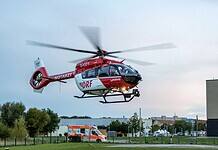
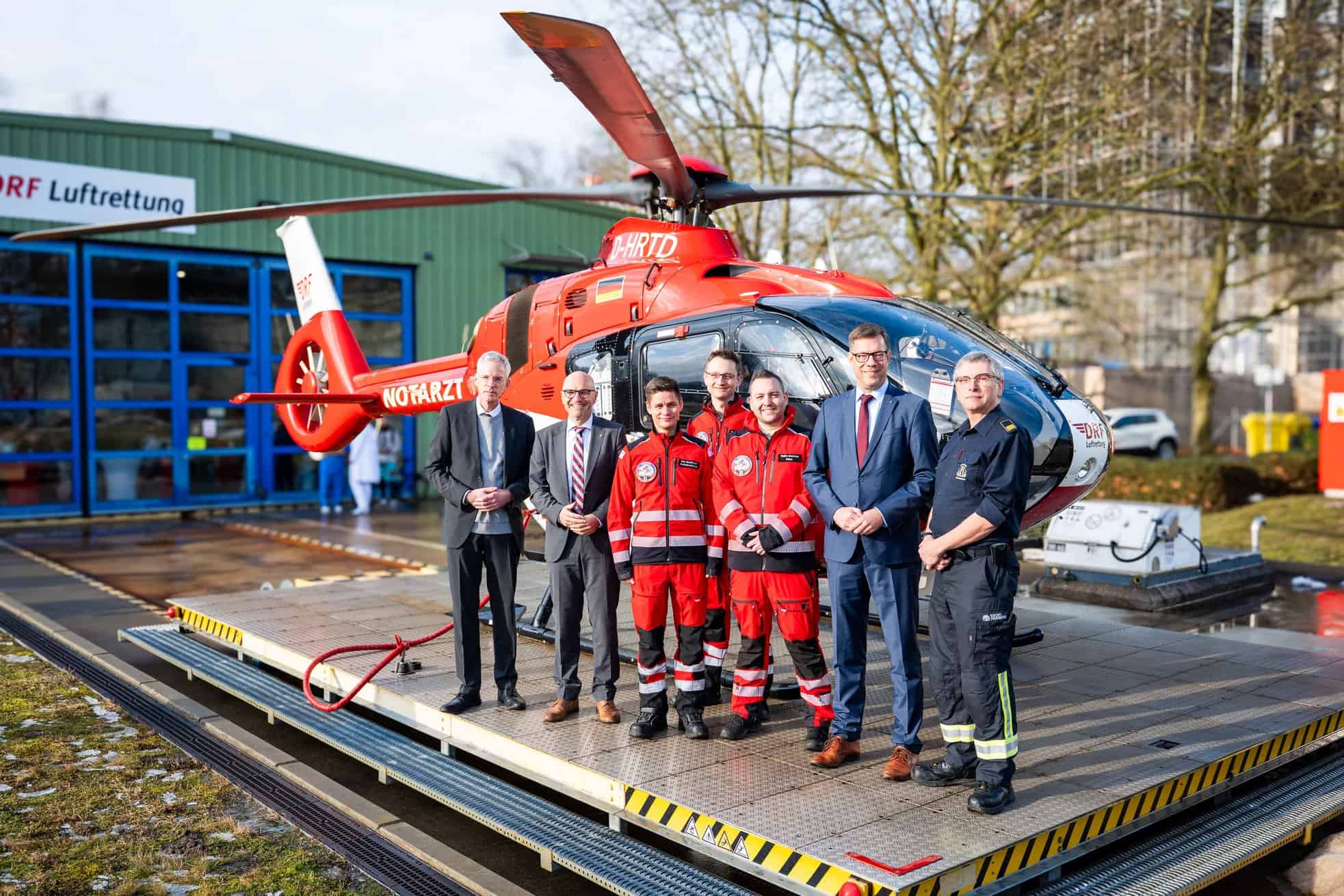
Since the beginning of 2026, DRF Luftrettung has operated the three major rescue helicopter stations in Berlin, located in Marzahn, Steglitz, and Buch. This consolidation enables unified coordination of air-based emergency medical services throughout the capital and surrounding regions. The medical expertise of the crews and state-of-the-art technical equipment ensure rapid and effective rescue operations directly at the scene.
For example, the H135 and H145 helicopters are equipped with state-of-the-art medical technology, enabling optimal patient care. The doctors and paramedics possess the highest medical qualifications and years of surgical experience in air rescue. At the same time, the use of rescue winches allows access to even the most difficult-to-reach emergency locations. Another key feature is the ability to administer blood transfusions directly in the helicopter, significantly increasing the chances of survival in critical cases.
Furthermore, DRF Luftrettung demonstrates its innovative strength by actively participating in the development of hybrid-electric aircraft. These forward-looking technologies promise not only more environmentally friendly air rescue but also expanded operational capability.
Significance for the Berlin metropolitan region and emergency care
Consolidating air rescue bases under a single organization creates reliable structures and strengthens the security of care throughout the city. Close cooperation between DRF Luftrettung (German Air Rescue), the Berlin Fire Department, and hospitals such as Charité ensures efficient procedures and rapid response times in emergencies. This means particularly fast and high-quality emergency care for Berlin’s outer districts, even under challenging operating conditions or at night.
A key aspect is the provision of emergency services via the 112 number, which is valid throughout the European Union and triggers a coordinated rescue chain. The integrated control centers work closely with air rescue teams to keep the so-called pre-hospital time – the time between the occurrence of an emergency and the start of treatment – as short as possible. This significantly increases the chances of survival and recovery in acute emergencies.
As part of the European Emergency Number Day, the importance of these measures is highlighted in order to raise public awareness of the need for rapid response in emergencies. Quick and targeted action by qualified air rescue teams saves the lives and recovery of many people affected.
Specific services and technical equipment of the locations
The Christoph 31 helicopter base at the Charité Campus Benjamin Franklin in Berlin-Steglitz is operational from sunrise to sunset and covers a large area with a radius of approximately 60 kilometers. Rapid dispatch is primarily for cardiovascular emergencies, serious injuries resulting from accidents, and other life-threatening conditions. The crew consists of experienced pilots, paramedics from DRF Luftrettung (German Air Rescue), and emergency physicians from Charité, whose professional collaboration ensures the highest level of medical care. The Airbus Helicopters H135 helicopter is both powerful and equipped with state-of-the-art technology.
The two other locations significantly expand the care network in Berlin. Christoph Berlin, based at the Marzahn Accident Hospital, not only operates with a proven team during the day, but is also the only intensive care transport helicopter in the greater Berlin area to offer a 24-hour operations center. Night flights are ensured by additional pilots, guaranteeing uninterrupted care.
At the Berlin-Buch base, Christoph 100 was commissioned in 2024. Equipped with a rescue winch, it primarily serves as a rapid emergency medical transport vehicle. The use of night vision equipment also enables flights in darkness, which is crucial, especially during the winter months with their short daylight hours. The cooperation with the Berlin Fire Department and the Bundeswehr Hospital makes this location a flagship project of civil-military collaboration.
Formally, all three locations are able to reach deployment sites within a quarter of an hour, which further improves the effectiveness of air rescue in the entire Berlin metropolitan region.
Conclusion – Strengthening air rescue as an indispensable part of emergency care
The takeover and operation of the Berlin air ambulance stations by DRF Luftrettung marks a significant development for emergency medicine in Germany. By pooling expertise, equipping the stations with state-of-the-art technology, and establishing close ties with rescue services and hospitals, high-quality and rapid medical care is ensured.
These measures will significantly increase the reliability of air rescue services throughout the city and beyond. At the same time, DRF Luftrettung, through its project partnerships, promotes innovative technologies that will ensure the future viability of air rescue services. Given the ever-increasing challenges in the healthcare sector, such advancements not only represent a crucial investment in the present but also secure life-saving measures for the population in the long term.
The European Emergency Number Day highlights the societal importance of the emergency number 112 and emphasizes how crucial every minute is in a medical emergency. The comprehensive air readiness of the networked stations and their qualified personnel thus form a cornerstone of modern emergency care in Berlin and throughout Germany.
More about Christoph Berlin
Federal Health Minister Lauterbach accompanies DRF Air Rescue in Christoph Berlin
Federal Health Minister Prof. Karl Lauterbach accompanied the crew of the DRF Luftrettung’s intensive care transport helicopter Christoph Berlin.
The “Christoph Berlin” helicopter of HDM Air Rescue celebrates its 20th anniversary
For 20 years, “Christoph Berlin” of HDM Air Rescue has been taking off daily for missions to provide patients with medical care as quickly as possible…
DRF rescue helicopter Christoph 100 newly stationed in Berlin-Buch
Since the beginning of the year, a new rescue helicopter has been in operation in the skies above Berlin: Christoph 100, operated by DRF Luftrettung. In the presence of…
This might interest you:
European emergency number 112: Rapid assistance and air rescue Emergency evacuation aircraft: DLR Design Challenge in focus DRF Maintenance and DRF Academy at European Rotors DRF Luftrettung reports a positive annual balance with 36,407 missions. Christoph Niedersachsen: 30 years of modern air rescue in Hanover Christoph Europe 5: 24-hour air rescue from Niebüll to DenmarkWeitere NEWS:
European emergency number 112: Rapid assistance and air rescue (11.02.2026)
Eurofighter Typhoon with Aerodynamic Modification Kit (08.02.2026)
UFO calls on Lufthansa CityLine cabin crew to stage a warning strike (10.02.2026)
Lufthansa A321 in historic parabolic design (07.02.2026)
Engine problem on a Turkish Airlines A330: Emergency landing in Kolkata (09.02.2026)
Shanghai: Tempting nonstop flights from Almaty with Air Astana (05.02.2026)