Inhaltsverzeichnis
Every minute counts
In medical and technical emergencies, immediate action is crucial to saving lives or preventing serious long-term damage. The emergency number 112 was specifically introduced to ensure quick and easy contact with the appropriate emergency services. This Europe-wide standardized number helps ensure that no valuable time is lost in critical situations. Minimizing the so-called pre-hospital time is particularly important in acute illnesses such as heart attacks or strokes, as this refers to the period from the onset of the emergency until the start of treatment in a suitable hospital. Air rescue with rescue helicopters and specialized teams offers one way to shorten this time and ensure high-quality initial care.
Integrated control centers play a key role in emergency medical care by immediately coordinating the appropriate medical resources after a call is received. This coordinated collaboration within the emergency response chain includes ground operations, emergency physicians, and air ambulance services. Their shared goal is to optimally tailor patient care to the specific emergency situation, thereby sustainably improving survival rates and recovery outcomes. The European Emergency Number Day, held annually on February 11th, raises public awareness of this importance and demonstrates the true diversity and interconnectedness of emergency response structures.
The crucial role of 112 in life-threatening situations
The emergency number 112 is primarily intended for life-threatening and urgent medical emergencies. These include serious accidents with multiple injuries, suspected heart attacks or strokes, circulatory collapse, severe respiratory distress, as well as severe bleeding or poisoning. By dialing this number, callers immediately activate a comprehensive network of professional rescue services, including ambulances, emergency physician vehicles, and, in complex cases, air rescue.
The staff in the integrated control centers are specially trained to ensure a rapid and appropriate response based on the description of the emergency. They have clear protocols that trigger the immediate dispatch of ground-based emergency physicians or air ambulance services in the presence of typical symptoms. This not only significantly reduces the time until help arrives but also optimizes care by deploying specialized emergency medical teams and modern technology directly at the scene. Furthermore, the targeted selection of the appropriate hospital for transport means that the patient is moved to a specialized treatment center as quickly as possible after initial care.
Non-life-threatening medical complaints that require medical attention but not immediate emergency treatment are handled in Germany through the on-call medical service, which can be reached by calling 116 117. This system supplements emergency care by relieving the burden on the 112 emergency number and ensures that urgent but non-acute problems can be treated promptly.
Air rescue: Fast and specialized help from the air
Within the complex system of emergency medical services, air rescue occupies a prominent position. Given difficult traffic conditions, long distances, or particularly severe injuries, air rescue enables the rapid transport of medical personnel and patients. This is of essential importance in the care of the seriously injured and critically ill. The close integration of air rescue with other elements of the emergency medical services chain significantly improves the chances of survival and recovery.
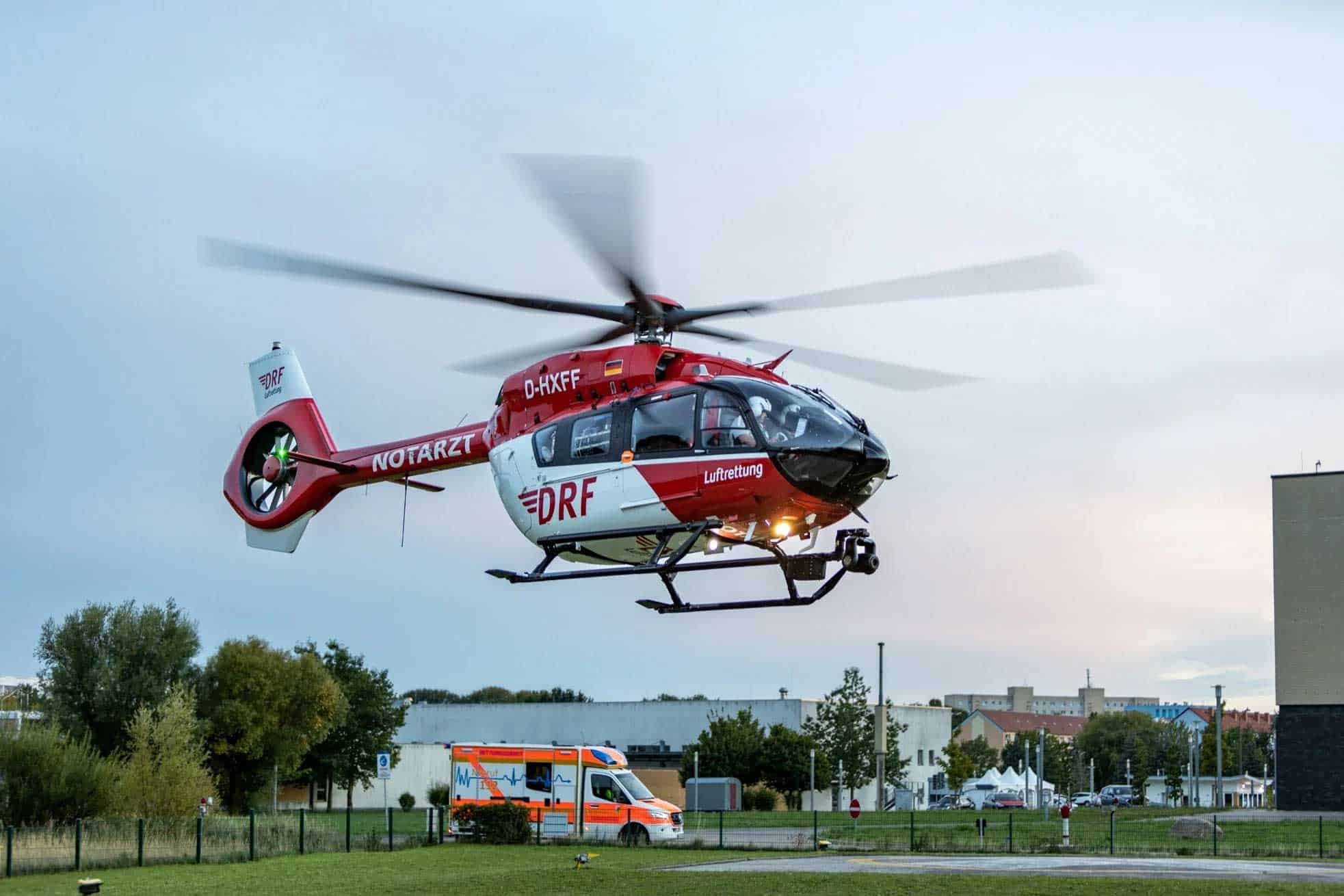
DRF Luftrettung (DRF Air Rescue) operates at 32 locations in Germany and employs highly qualified emergency physicians and paramedics who use state-of-the-art medical equipment to provide immediate, optimal diagnostics and initial care on-site. The use of modern technology also allows for the direct transfer of patients to the best specialist clinic, ideally avoiding lengthy hospital stays and expensive rehabilitation, thus contributing to cost savings in the healthcare system.
Continuous optimization of resource management and the collaboration of rescue services is a key priority. Dr. Jörg Braun, Head of Medicine at DRF Luftrettung (German Air Rescue), emphasizes the importance of case-specific dispatching to meet the needs of both the patient and the entire healthcare system. The organization is also committed to expanding air rescue services at night and in adverse weather conditions, as well as improving the digital networking of all involved parties. These developments aim to further increase the accessibility and effectiveness of such missions.
European 112 Day – Awareness and networking at the highest level
February 11th is firmly established as European 112 Day and holds special significance in raising public awareness of the importance of rapid and professional emergency assistance. This initiative was launched in 2009 by European institutions such as the Parliament, the Council, and the Commission, and highlights the advantages of a single emergency number. The 112 number was established as a free, area code-free number in the EU as early as 1991, and for over 25 years now, it has enabled Europe-wide, 24/7 access to fire and rescue services.
Besides the unified numbering system, intensive European cooperation is also evident in cross-border rescue operations. One example of this is the DRF Luftrettung (German Air Rescue) teams, which collaborate with ARA Flugrettung (ARA Air Rescue) at stations such as Christoph Europa 5 in Niebüll or in southern Europe to ensure cross-border emergency care. These collaborations demonstrate the great potential and added value of targeted networking and coordinated operations for the population of Europe.
Conclusion: Cooperation of all actors in the rescue chain
The unified emergency number 112 is a crucial component of life-saving emergency medical services, with an impact extending far beyond Germany. Rapid alerting, coordinated deployment planning, and the integration of air rescue services ensure an efficient and patient-centered rescue chain. Modern medical equipment and specialized training for emergency physicians guarantee the highest level of care directly at the scene. Furthermore, European Emergency Number Day raises awareness of this vital number and the procedures behind it.
Life-saving care is only possible through close cooperation between all actors in the emergency response chain, including emergency dispatch centers, ground-based ambulance services, and air rescue. The continuous improvement of technologies and operational strategies, supported by comprehensive digital networking, will contribute to even better and faster support for patients in need in the future. Therefore, using the emergency number 112 offers an excellent opportunity to quickly and competently organize help in an emergency and thus save lives.
The European emergency number is a toll-free, cross-border emergency call system in Europe, which can be reached by calling 112.
More information about the emergency number 112
Dortmund Airport Fire Brigade to the Europe-wide emergency number 112
On Europe-wide Emergency Number Day, the Dortmund Fire Department and Dortmund Airport are providing information about the Europe-wide emergency number 112. Firefighters from the city and the…