Inhaltsverzeichnis
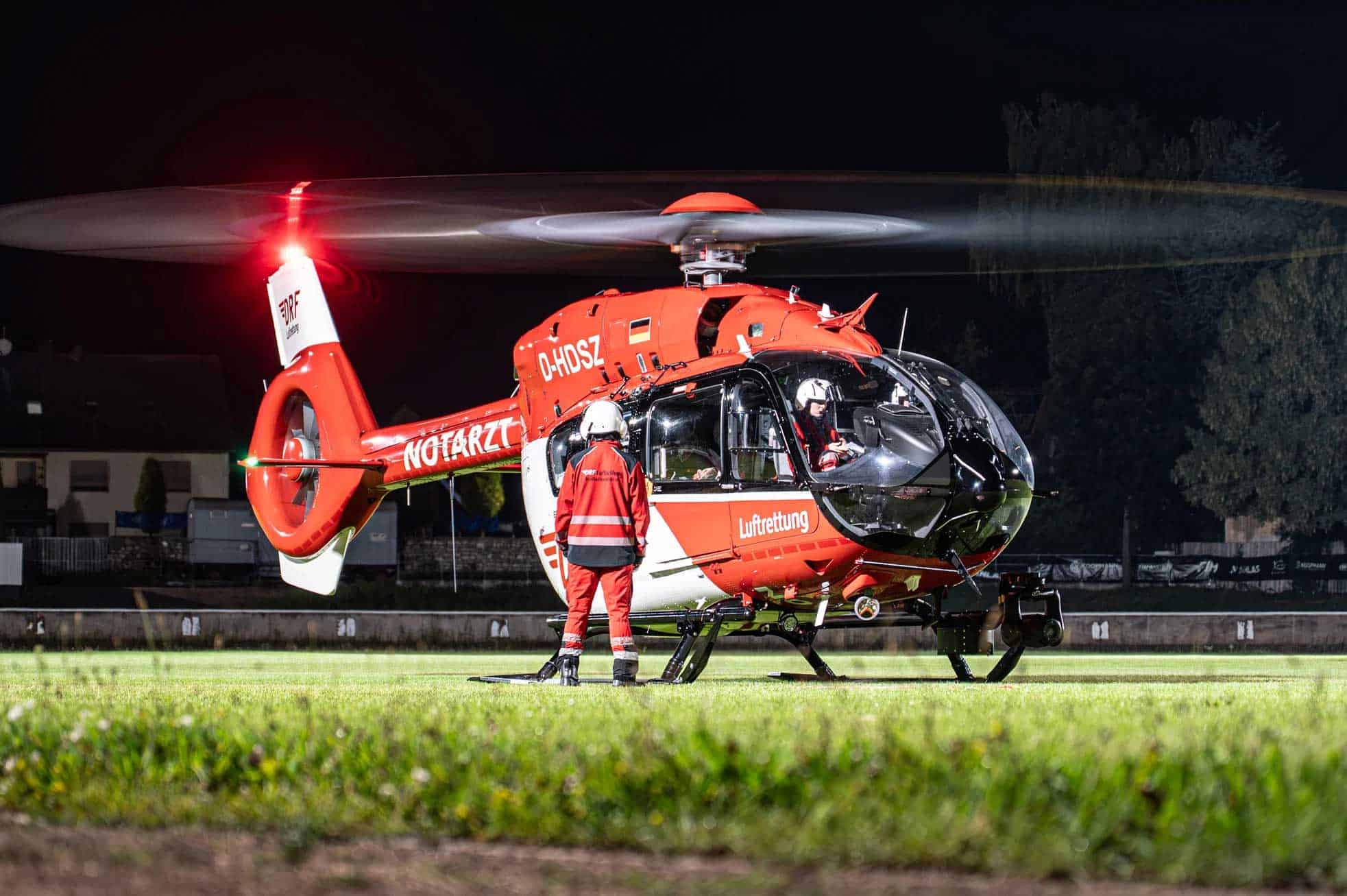
A total of 36,407 missions were carried out by helicopters and airplanes.
Air rescue is an essential part of Germany’s rapid and effective emergency medical services. It enables patients in critical situations to receive medical care and be transported within the shortest possible time. The figures from DRF Luftrettung (German Air Rescue) over the past few years impressively illustrate the increasing relevance of this service: In 2024, a total of 35,850 missions were recorded, representing an increase of 1.6 percent compared to the previous year. The rise in missions at night is particularly noteworthy, indicating a growing need for 24-hour emergency assistance. This development underscores the ongoing contribution of air rescue to high-quality and rapid medical care, especially in time-critical situations.
Role of modern technology and diagnostics at the scene of an incident
The effective care of patients in emergency situations depends significantly on the quality of on-site diagnostics and initial treatment. DRF Luftrettung therefore utilizes state-of-the-art medical technology to ensure a precise and rapid assessment of the patient’s condition. This includes the use of mobile ultrasound devices, which allow for the immediate detection of internal injuries and bleeding. Similarly, since 2023, small, portable blood gas analyzers have been in widespread use, providing diagnostic results at the scene that previously required extensive laboratory testing.
These point-of-care technologies enable timely and targeted initiation of therapy and the selection of the ideal receiving hospital for the patient. This not only improves the chances of survival but also reduces the length of hospital stay and the need for rehabilitation. Furthermore, innovative research projects, such as those for the early diagnosis of cerebral hemorrhages through protein blood tests, support the continuous optimization of emergency medical care.
Challenges and demands for the future of emergency care
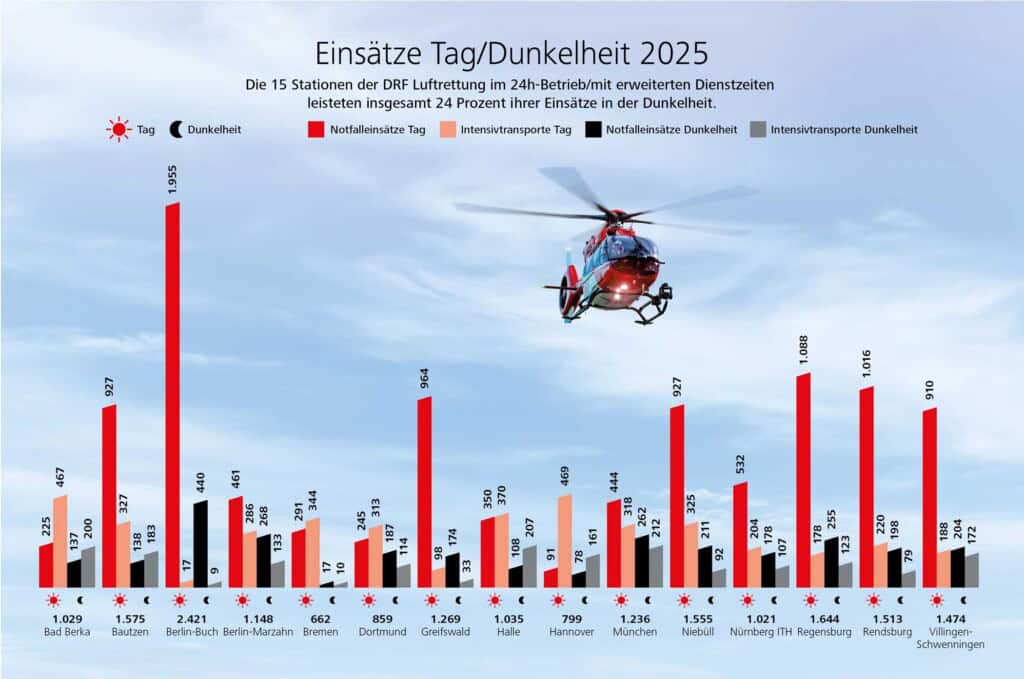
Despite advanced technology and increasing mission numbers, air rescue services still face challenges. The expansion of comprehensive 24-hour emergency medical services is recognized as a particularly urgent need. Currently, crews are on call around the clock at 13 stations, and two additional stations offer extended operating hours. Nevertheless, the increasing number of missions at night, especially during the autumn and winter months, demonstrates that the availability of nighttime air rescue services is not yet sufficient across the board. From a technical standpoint, most stations are equipped for night flights, necessitating a political decision to extend operating hours and implement 24-hour air rescue services to meet the needs of the population.
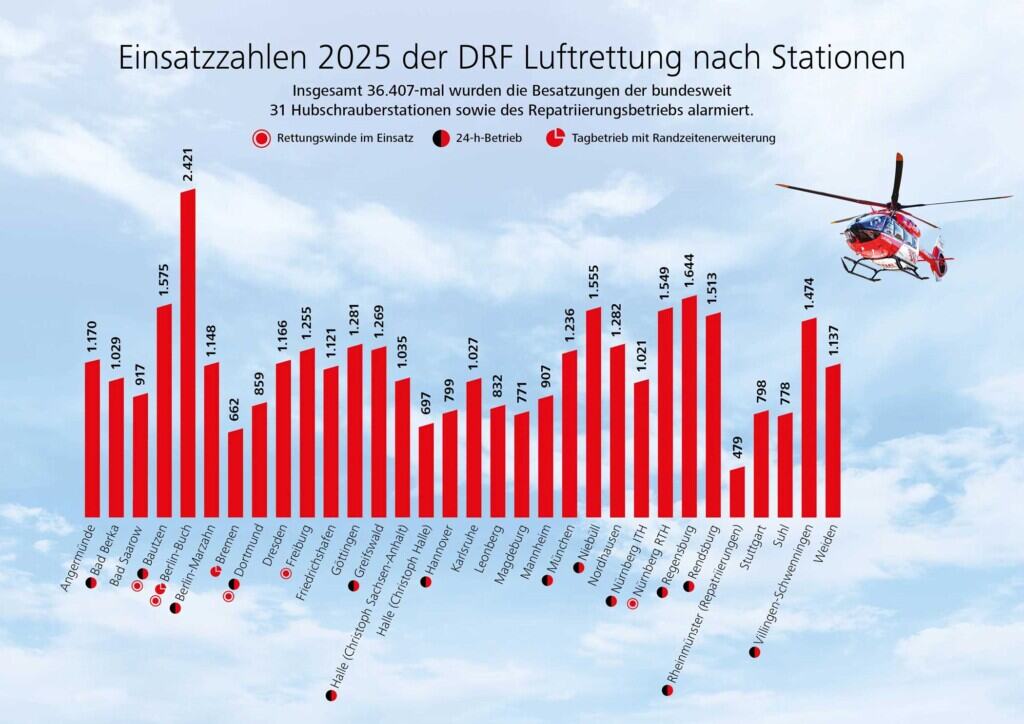
Darüber hinaus fordert die DRF Luftrettung eine konsequente Reform der Notfallversorgung, die eine bessere Vernetzung aller Akteure über Landkreis- und Bundeslandgrenzen hinweg ermöglicht und die Digitalisierung des gesamten Rettungssystems vorantreibt. Auch gesetzliche Anpassungen sind notwendig, um Einsätze bei widrigen Wetterbedingungen rechtssicher zu gewährleisten und somit die Verlässlichkeit der Luftrettung weiter zu steigern.
Fleet modernization: Focus on safety and efficiency
Another important aspect for the quality of air rescue services is the technical equipment of the helicopters used. DRF Luftrettung operates one of the most modern helicopter fleets in Europe, with its H145 and H135 models. These aircraft are characterized by their versatile dual-use capabilities – they are equally suitable for rapid emergency response and complex intensive care transfers between hospitals. Their high payload capacity allows for the transport of additional medical equipment or the deployment of specialized teams, for example, for the care of children.
Modern technology, including the Helionix cockpit, four-axis autopilot, and anti-collision system, ensures increased flight safety even in difficult weather conditions and during night flights. The cooperation with Airbus Helicopters will result in the acquisition of ten additional H140 helicopters, thus continuing the fleet modernization with a focus on the future.
Importance of air rescue in complex emergencies
The urgency of air rescue is particularly evident in cases of serious injuries or illnesses, which is why cardiovascular diseases such as heart attacks and strokes are the most frequent reasons for call-outs. Helicopter crews also prove indispensable in accidents and at locations difficult to access in challenging terrain, thanks to their use of rescue winches. These winches often enable the rapid extrication and initial medical care of patients, which is crucial, especially in time-critical situations. Furthermore, DRF Assistance, with its air ambulance team, recorded a significantly increased number of worldwide patient repatriations in 2024, underscoring the international importance of air rescue.
Consequences of the accompanying measures for the healthcare system
A well-functioning air ambulance system has a lasting positive impact on the healthcare system. Early, precise diagnosis and immediate care at the scene shorten hospital stays and reduce the need for extensive rehabilitation. This relieves the burden on the healthcare sector and lowers the overall costs associated with treating seriously ill or injured patients. At the same time, efficient emergency care increases patient satisfaction and trust in the healthcare system. Professional and reliable air ambulance services ensure that an adequate level of medical assistance is guaranteed even in structurally weak or remote regions.
Conclusion and outlook
Air rescue services in Germany are of a high standard, as evidenced by the increasing number of missions, the consistently high quality of medical care, and the continuous modernization of technical equipment. However, the growing demands of more frequent missions at night and more complex emergencies make it clear that expanding night and 24-hour air rescue services is urgently needed. DRF Luftrettung’s demands for reforming emergency care and improving the networking of all stakeholders aim to increase the overall effectiveness and efficiency of the rescue system.
With continuous fleet modernization and the use of innovative medical technology, the organization is well-positioned for the future. Collaboration with political decision-makers will be crucial in shaping legal frameworks and funding so that air rescue can secure and expand its vital role in the German healthcare system in the long term.
This site is also available on:
 Deutsch