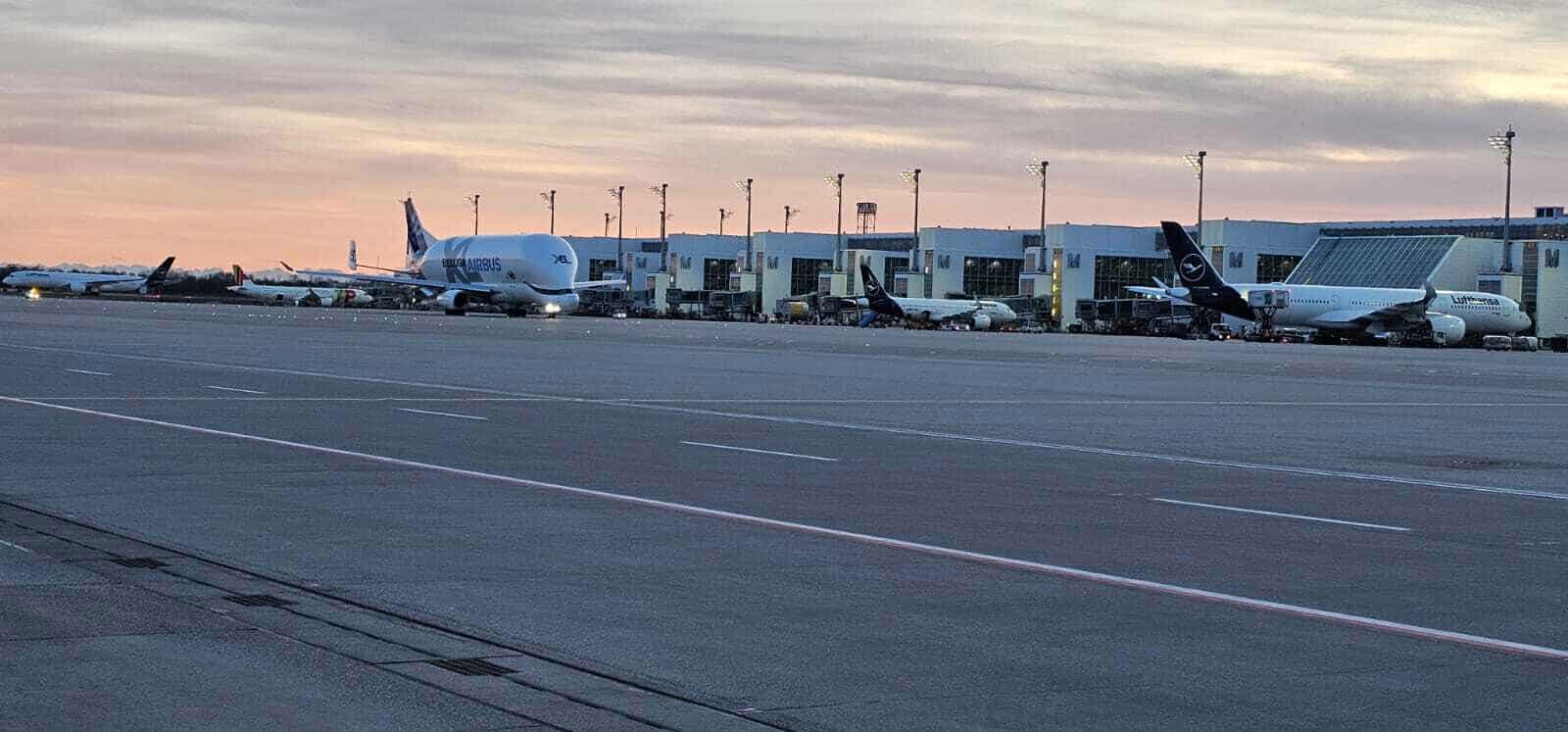
Reduce disruptions
SITA, the world’s leading specialist in IT and communication solutions for the aviation industry, has launched the “Advance Flight Delay Notification API.” This innovative interface provides airports and airlines with early information about potential delays, enabling teams to act sooner and mitigate disruptions before they escalate. The early warning system allows for proactive measures to be taken to make flight operations more efficient.
Avoid costs due to flight delays
When arrival airports receive late notification of flight delays, the resulting costs far exceed the original schedule: ground teams wait, gates are blocked, crew duty times are exceeded, and passengers miss their connections. These avoidable costs also cause frustration and potential reputational damage. As traffic increases and recovery margins shrink, SITA has introduced the Advance Flight Delay Notification API.
The financial impact of late intervention is already substantial. The International Air Transport Association (IATA) estimates that delays in air traffic management in Europe alone have cost €16.1 billion over the past decade. Much of this cost is not caused by the delay itself, but by the lack of timely information. This information is essential for adjusting plans, reallocating resources, and protecting future schedules before disruptions spread.
The Advance Flight Delay Notification API provides automated early warnings and real-time updates.
SITA’s Advance Flight Delay Notification API is designed to close this gap. The solution uses real-time departure information combined with business logic based on expected flight duration to anticipate potential delays and automatically notify destination airports. It delivers automated early warnings and real-time updates on delayed or potentially disrupted flights directly to destination airports. This gives airline and airport arrival teams the necessary time to adjust their operational plans earlier, reducing the impact on aircraft handling, crew scheduling, gate allocation, and passenger connections.
The solution provides centralized alerts and push notifications to key stakeholders at arrival airports, supporting clearer coordination and more effective resource planning. Aircraft service teams, ground staff, and onward crews receive early insights into incoming disruptions. This helps avoid downtime, last-minute changes, and unnecessary strain on already limited operations.
The Advance Flight Delay Notification API is delivered over secure, encrypted HTTP connections and eliminates repeated schedule requests and manual updates. Automated notifications inform passengers when a flight is expected to depart 15 minutes later than originally scheduled. This gives teams valuable lead time to adjust passenger handling, aircraft maintenance, and onward flight plans.
Precise real-time operational data for airports
The Advance Flight Delay Notification API is offered as a subscription service and is part of SITA’s broader flight information API portfolio, enabling airlines and airports to securely share accurate, real-time operational data with trusted partners across the aviation ecosystem.
“Most disruptions are not caused by the delay itself, but by how late it becomes visible to the teams tasked with managing it,” said Martin Smillie, Senior Vice President of Communications and Data Exchange at SITA. “Across the industry, arrival airports continue to be forced to react rather than proactively. The Advance Flight Delay Notification API changes this model by providing earlier, reliable signals, enabling timely, not rushed, operational decisions and reducing the impact on passengers, costs, and airline network performance.”
About SITA
As a technological driving force in the aviation industry, SITA makes air travel safer, easier, and more sustainable. The company operates in more than 200 countries and territories. Approximately 2,500 customers rely on SITA technology at over 1,000 airports and in around 19,600 aircraft. The company supports more than 70 governments in combining secure borders with seamless travel. SITA manages 45-50% of the industry’s data exchange, ensuring a highly complex, global, and reliable network.
SITA is undergoing dynamic transformation: From advanced self-service and operations management to airport design and digital boundaries, the company is shaping the next generation of travel – supported by acquisitions such as Materna IPS, ASISTIM, and CCM. Furthermore, SITA is expanding into the cruise, rail, and urban air sectors with initiatives like SmartSea. As part of its ambitious climate strategy, SITA is reducing emissions by 4.2% annually and aims for net-zero emissions by 2050. These science-based targets are validated by the SBTi. The portfolio also helps customers reduce their own carbon footprint. For more information, visit: www.sita.aero.
Mehr zu Frühwarnsyteme
30 minutes until tsunami: DLR’s early warning system and remote sensing
On December 26, 2004, a powerful earthquake off the coast of Sumatra triggered a devastating tsunami…
Emirates’ innovative approaches to minimizing turbulence in air traffic
The challenge posed by turbulence in air traffic is steadily increasing worldwide, affecting both airlines and passengers.