Inhaltsverzeichnis
Background and current situation at Lufthansa CityLine
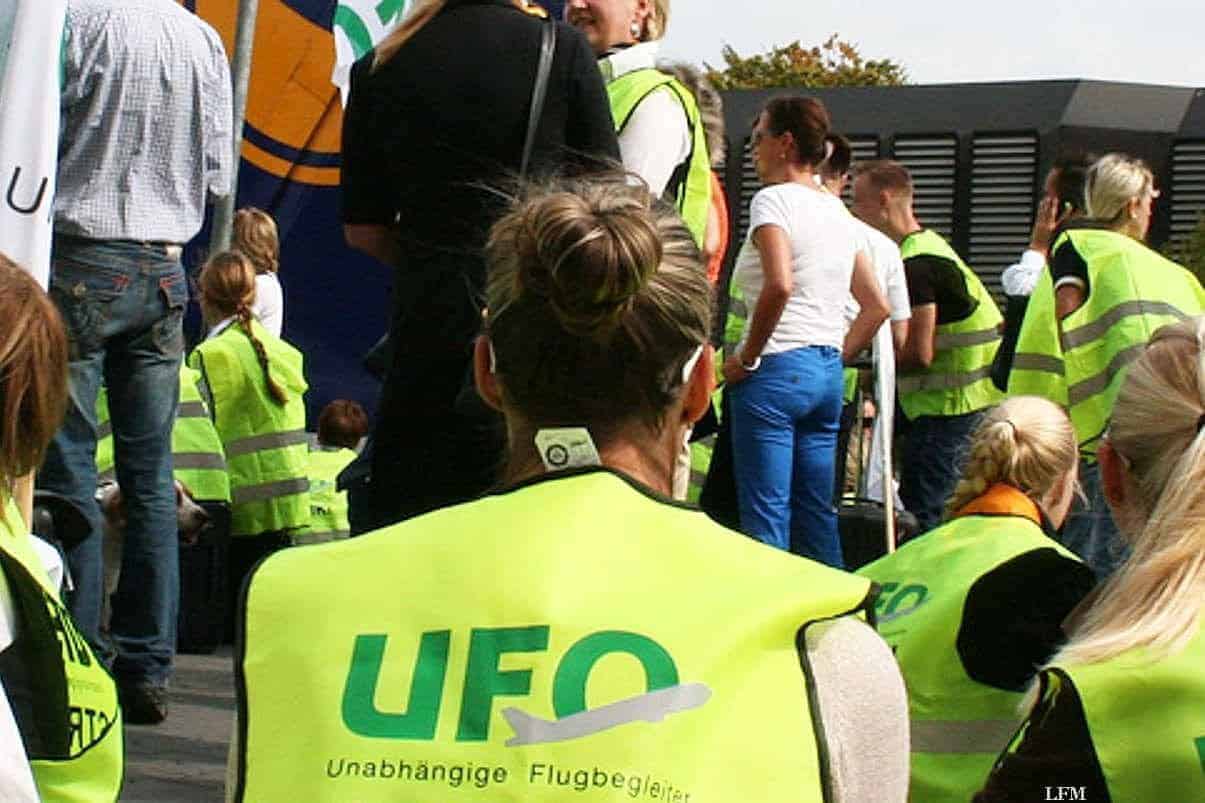
Lufthansa CityLine is facing a fundamental restructuring that will significantly impact the flight operations of this Lufthansa subsidiary. The closure of flight operations has been publicly announced and has a direct impact on cabin crew, who are facing considerable financial uncertainty. Despite the apparent impending closure, management has so far refused to negotiate a collectively agreed social plan that would offer the affected employees adequate security and support. The response to this is the mobilization of cabin crew by the Independent Flight Attendants’ Organization (UFO), which has called for a warning strike.
The strike has been announced for February 12, 2026, and will last the entire day, from midnight to 11:59 p.m. During this time, all Lufthansa CityLine flights at various major German airports will be affected. These include the airports in Frankfurt, Munich, Hamburg, Bremen, Stuttgart, Cologne, Düsseldorf, Berlin, and Hanover. The action is a clear indication of the employees’ discontent and their urgent need for a social plan to mitigate the financial and emotional impact of the closure.
Collective bargaining negotiations and the demands of the cabin crew
The central demand of the cabin crew and UFO, the union representing flight attendants, is a binding collective bargaining agreement that includes provisions regarding severance pay and social security in the event of impending job loss. Such security should ensure that the affected employees do not leave their employment unprotected and without prospects.
In this situation, Lufthansa CityLine management often argues that no formal closure decision has yet been made and therefore there is no urgent need for action. However, this argument is met with great incomprehension by the employees, because the closure of flight operations has effectively already been decided and the consequences for the workforce are clearly evident. The continued refusal to negotiate a social plan is perceived as cynical, as it exacerbates the catastrophe for those affected.
The UFO union and its head of collective bargaining, Harry Jaeger, emphasize that there is no alternative to a collectively bargained social plan. Offers of transfers to other Lufthansa subsidiaries, which often offer worse working conditions, or only vague hints about possible prospects within the Lufthansa parent company are not an adequate solution. Instead, cabin crew need a clear and binding agreement that provides economic security, so that they have at least a degree of stability in a time of great uncertainty.
Impact of the warning strike and its significance for the aviation industry
The announced warning strike aims to significantly increase pressure on management and underscore the urgency of their demands. Strikes in air transport not only lead to considerable disruptions in flight schedules but also to financial burdens for the company and can damage its image with customers and partners. According to UFO, the over 98 percent approval rating in their member survey demonstrates the seriousness of the situation for cabin crew at Lufthansa CityLine.
For the industry, this is yet another indication of how difficult situations can become when companies respond to economic pressures with staff reductions without adequately fulfilling their social responsibility. The warning strike is not an end in itself, but a last resort to push for a collective bargaining agreement that establishes the basis for fair treatment of the affected employees. The aviation industry, with its focus on cost management and operational restructuring, is constantly operating in a tense environment where employee rights and social standards are often at risk.
Furthermore, the Lufthansa CityLine case exemplifies the challenges facing the entire industry regarding personnel management, collective bargaining, and social security during corporate restructuring. The refusal to implement a social plan despite the existential threat to employees underscores the need for collectively bargained solutions that extend beyond short-term, isolated measures.
Perspectives and possible solutions
Should the employer seriously enter into negotiations regarding the social plan, which is crucial for employees, UFO signals its willingness to end the warning strike immediately. This leaves room for constructive dialogue, which could lead to a fair and comprehensible solution. A transparent and coordinated approach to this issue could not only improve trust between employees and employers but also make a significant contribution to maintaining social stability.
An effective social plan would need to provide realistic severance payments that take into account the degree of impact and previous length of service. Furthermore, it could include training measures and support for career reorientation to make the transition to a new professional future as smooth as possible.
Equally important are clear deadlines and binding regulations to reduce uncertainty for cabin crew. This can help mitigate the negative psychological and financial consequences of the impending closure. How a company handles such situations is crucial for its reputation as a responsible employer.
Challenges in the aviation industry regarding operational closures and restructurings
The situation at Lufthansa CityLine presents a complex example of the challenges facing the aviation industry during operational closures and restructurings. The cabin crew is in a precarious position, as flight operations are being discontinued without a collectively agreed social plan being offered that would at least provide financial and job security. The employee representatives’ response, a large-scale warning strike, reflects this injustice.
The management’s refusal to negotiate social security provisions is perceived as cynical by the predominantly affected employees and exacerbates their uncertainty and fears for their livelihoods. Therefore, it is essential that such a social plan be negotiated quickly and bindingly.
Only in this way can the damage to cabin crew be minimized and the fundamental uncertainty that has accumulated over a long period be reduced. At the same time, this is an expression of a fundamental responsibility towards employees that goes beyond purely economic considerations. The aviation industry needs sustainable and socially just restructuring solutions that go beyond mere cost-cutting measures.
The upcoming warning strike underscores the urgent importance of such collective bargaining agreements and how essential it is to protect employees from the consequences of operational changes. The aviation industry thus faces the challenge of balancing social responsibility with economic constraints – a delicate balancing act that requires considerable tact.
The developments at Lufthansa CityLine will therefore not only influence the future of this company, but also symbolically represent the social challenges currently facing many companies in the aviation industry. It is hoped that the management will recognize its responsibility and be prepared to enter into constructive collective bargaining negotiations as quickly as possible, so that this conflict-ridden phase can be brought to a swift and socially responsible end.
Demands for a collective bargaining agreement – social plan for the cabin crew of CLH
- 1. Notice periods for redundancies
- Up to 2 years of employment duration: 6 months to the end of the quarter
- Employment duration of more than 2 and up to 5 years: 9 months to the end of the quarter
- Employment duration of more than 5 and up to 10 years: 12 months to the end of the quarter
- More than 10 years of employment: 18 months to the end of the quarter
- 2. Severance payments:
- Contractual severance pay entitlement in the event of redundancies: €15,000 base amount for each employee plus 3 times the value of one gross monthly salary per year of employment (basic salary, flight allowance and any LFA allowance according to the current working time ratio, unless this is lower than the average of the last 36 months; in which case the latter is decisive; parental leave or part-time work during parental leave is always taken into account with a fictitious full-time salary).
- 3. Claims in the event of a change to another flight operator during the ongoing employment relationship (before redundancies are declared):
3.1. Exemption:
During the ongoing employment relationship, there is an entitlement to time off for a transfer to another flight operation for the duration of the training phase and for a further 3 years after completion of the training, during which time there is the possibility of returning to CLH with a notice period of 2 months, provided that no redundancies have yet been issued.
3.2. Reimbursement of expenses:
If training becomes necessary as a result of a change to another flight operation within the group, CLH will cover the costs of hotel accommodation at the training location for the duration of the training measure, as well as the costs for arrival and departure once per training week.
3.3. Salary increase:
In the event of a transfer to another flight operation within the group (this includes all companies in Germany in which DLH holds shares of more than 50%), the remuneration will be increased by CLH during the training phase and for a further three years after completion of the training up to the current gross monthly salary (basic salary, flight allowance and any LFA allowance according to the current working time ratio, unless this is lower than the average of the last 36 months; in which case the latter is decisive; parental leave or part-time work during parental leave is always taken into account with the fictitious full-time salary).
3.4. Reimbursement of moving costs:
In the event of a transfer to a different station than the current home base location, the relocation costs for the entire household will be fully covered under the exemption according to section 3.1, with a minimum lump sum of €7,000 being paid.
3.5. Payment of a mobility bonus (as an alternative to severance pay) in the event of a permanent change of employer with a change of station (due to expiry of time or waiver of the right to return according to 3.1):
To mitigate the consequences of a change of posting location, the employee (regardless of employment level) receives a lump sum of €50,000.
- 4. Time off and continued payment of wages for job searches / interviews:
- Employees are to be released from their work duties to search for a new job and to attend job interviews. This release of up to two working days is granted with continued payment of wages.
- If these two days are demonstrably insufficient, a third day of leave will be granted under the same conditions. The leave can be requested in writing at any time.
Scope and Term:
The collective bargaining agreement on the social plan shall apply to all cabin crew employees with employment contracts who have not already opted for partial retirement or the severance payment for employees nearing retirement under expired partial retirement regulations and are therefore not covered by those regulations. The term of the collective bargaining agreement on the social plan shall commence retroactively on January 1, 2026, and may be terminated for the first time with three months’ notice, effective December 31, 2029.
UFO STRIKE PRIBEL 2026 LUFTHANSA CITYLINE
More about UFO and Lufthansa CityLine

UFO members at Lufthansa CityLine vote for crisis collective agreement
The ballot at the Independent Flight Attendants’ Organization (UFO) regarding the adoption of the “Corona Crisis” collective bargaining agreement at Lufthansa CityLine has concluded. With 91.06 percent of the votes cast, the agreement was approved…

UFO and Lufthansa CityLine agree on fare package
The Independent Flight Attendants’ Organization (UFO) reached a collective bargaining agreement with Lufthansa CityLine (CLH) last week. This is the first crisis collective agreement between…