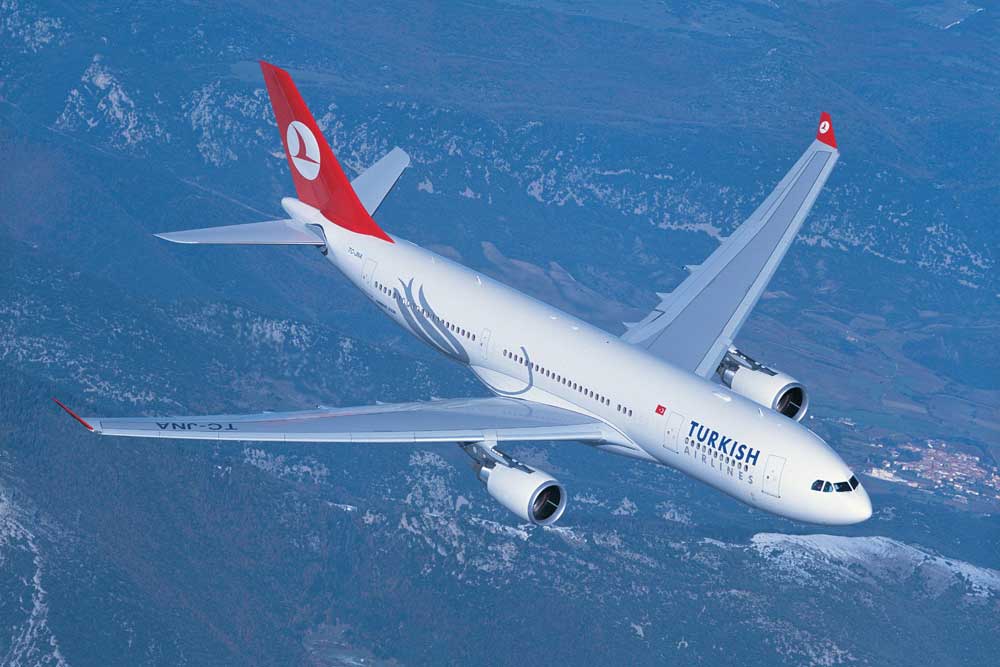
Incident involving a Turkish Airlines plane after takeoff from Kathmandu
Technical challenges are not uncommon in aviation operations, but a swift and professional response to unexpected events is crucial for the safety of passengers and crew. A recent incident highlights the importance of effective emergency procedures in air traffic: A Turkish Airlines Airbus A330 was diverted to Kolkata for an emergency landing immediately after takeoff from Kathmandu Airport due to an engine problem. Such situations require a detailed analysis of the circumstances, the technical aspects, and the measures taken to safely resolve the issue.
Technical malfunction immediately after takeoff
An Airbus A330 is one of the world’s most widely used long-haul aircraft and is known for its reliability. The crew immediately reported the malfunction and decided to divert the aircraft safely to the nearest suitable airport, in this case Kolkata. Diversion is a crucial component of the emergency procedures taught to every pilot during training, as is the careful management of engine power in the event of a malfunction.
Kolkata was chosen as the alternate airport based on several factors: distance, airport facilities, weather conditions, and the availability of technical resources for any necessary repairs. The successful transfer underscores the close cooperation between flight crews, air traffic control, and ground crews.
Importance of aircraft maintenance and technology at Turkish Airlines
As one of the largest airlines in Europe and the Middle East, Turkish Airlines has strict maintenance guidelines and continuously invests in the training and technological equipment of its aircraft. In the event of an engine problem like the one with the Airbus A330, both modern diagnostic systems and experienced technical personnel are deployed. The rapid identification of the problem directly during operation and the subsequent safe landing maneuver are the result of these extensive preparations and the system of checks.
Furthermore, it should be noted that modern aviation technology relies heavily on preventive maintenance strategies, which also integrate flight data recorders and condition monitoring systems to identify risks early. The airline’s and the responsible team’s response to the engine problem reflects the high standards implemented in aviation worldwide.
Safety measures and procedures in case of engine failures
An engine problem presents a critical situation for any pilot, but one that is managed through comprehensive training and standardized procedures. Aircraft manufacturers like Airbus and airlines maintain detailed protocols for a wide variety of malfunctions. For example, if one of the two engines of an A330 fails, pilots must manage a “one engine inoperative” situation, which means, among other things, that they can safely maneuver and land the aircraft even without some of its propulsion power.
The cockpit crew’s recognition of the problem, direct communication with air traffic control, and the rapid initiation of necessary measures prevent more serious situations. The challenge is particularly heightened during takeoff, as in this incident in Kathmandu, because the aircraft is still flying at low altitude and has limited options for evasive action.
Importance of Kathmandu and Kolkata airports in international air traffic
Tribhuvan International Airport in Kathmandu is Nepal’s main air traffic hub and plays a central role in the region’s international air traffic despite the challenging geographical conditions. The demanding approach route over the surrounding mountains requires special attention and expertise from pilots.
Netaji Subhas Chandra Bose International Airport in Kolkata is a major hub in eastern India with well-equipped maintenance facilities, making it a logical choice for diversion in emergencies. Its transport links and technical resources enable rapid and efficient support for aircraft in distress. This interoperability between the airports ensures that even unexpected incidents can be managed without major risks.
Integration of modern technology and communication in crisis management
A key factor in successfully resolving the engine problem was the efficient use of modern communication technology and air traffic control systems. Real-time communication via radar and satellites allowed air traffic control to immediately coordinate appropriate measures.
The cockpit crew used advanced diagnostic systems that provided immediate information about the anomaly, allowing them to focus on resolving the problem. Simultaneously, the ground crew in Kolkata was prepared to quickly receive the arriving Airbus A330 and initiate technical checks.
Experiences from the aviation industry in dealing with engine problems
Past experience shows that engine failures on an aircraft, although rare, can pose a serious safety risk that should not be underestimated. However, comprehensive training and drills for emergency situations significantly minimize the risk of an accident.
Over the years, Turkish Airlines has established a high standard of flight safety. The swift decision to deviate from the original flight plan and initiate a diversion demonstrates the importance of reacting quickly and decisively to warning signs. The proactive safety culture of airlines is particularly scrutinized in such incidents and is closely monitored by regulatory authorities and the public.
Passenger rights and welfare after a diversion
Following the aircraft diversion, the needs and safety of the passengers were paramount. Airlines are obligated to fully inform passengers about changes to the flight schedule and ensure appropriate care. This includes, among other things, provisions during the waiting period, connecting flights, and, if necessary, alternative travel options.
The coordination between the ground crew, the cabin crew and the respective airport authorities ensures that passengers receive optimal support and care after a technical problem.
Further investigations and maintenance measures following the incident
Following the safe landing of the Airbus A330 in Kolkata, comprehensive technical investigations were initiated to determine the cause and extent of the engine problem. Such analyses are essential to prevent recurrences and to continuously improve aircraft safety.
In the aviation industry, such incidents often lead to recommendations or adjustments in maintenance plans, as well as inspections of engine components. Manufacturers and airlines work closely together to optimize standards.
Conclusion: Safety and professionalism are paramount.
The incident involving an Airbus A330 belonging to a renowned airline after takeoff from Kathmandu vividly illustrates the importance of rapid responses, precise safety protocols, and the ability to react effectively to unforeseen events. By diverting the flight to Kolkata, the engine problem was resolved without endangering human lives.
The coordination between crew, air traffic control, and ground personnel, coupled with advanced technology and robust maintenance processes, contributes significantly to the high safety standards in international air transport. Such incidents serve as a reminder of how complex, yet effective, the interplay of various elements in aviation must be to ensure the safe transport of millions of people worldwide.
More about Turkish Airlines

Dürer Lounge for Turkish Airlines passengers at Nuremberg Airport
Turkish Airlines passengers with Miles&Smiles frequent flyer status ELIT or ELIT PLUS and ELIT Card, as well as Star Alliance Gold Card holders and Business Class passengers…
Turkish Airlines and AnadoluJet expand their services in Turkey
Turkish Airlines and AnadoluJet will further expand their flight offerings in the coming weeks. Passengers will then be able to fly to up to nine destinations in Turkey…