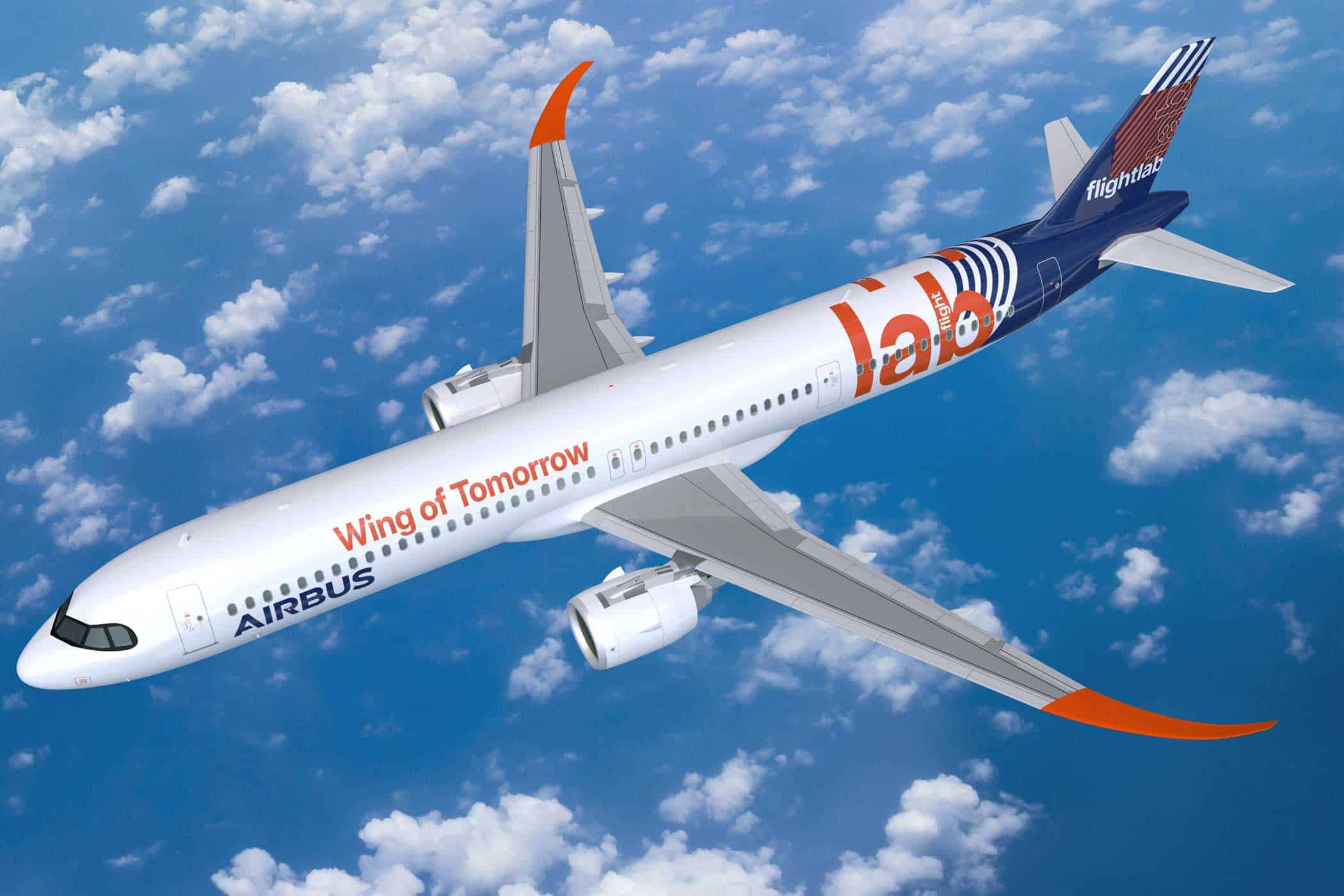
Introduction to the flight test program for high-aspect-ratio wings
As part of a major research initiative, Airbus is launching a new flight-test campaign to conduct real-world testing of the performance of high-aspect-ratio wings for the next generation of single-aisle aircraft. This project marks the next step in an extensive development program designed to play a pivotal role in shaping the future of modern commercial aircraft. The planned tests will help explore the potential for aerodynamic efficiency and push the boundaries of technology.
Development and Significance of Flight Tests
Over the next three years, Airbus will design and manufacture full-scale wing extensions and install them on the A321neo – one of the most widely used single-aisle aircraft – for in-flight testing. Measuring several meters in length, these wing sections simulate folding wings in their fully extended position. State-of-the-art measurement technology will be used to precisely capture flight behavior in order to evaluate the impact of the increased wingspan on the jet’s handling and overall efficiency.
The initiative is not only a remarkable technological undertaking but also a testament to Airbus’s long-standing commitment to aviation innovation. It focuses on directly reducing fuel consumption through aerodynamic improvements that can positively influence the environmental footprint of modern aircraft.
Use of modern simulation and testing methods
Recent advances in digital simulations and wind tunnel testing form the basis for the final design of the planned wing extensions. This preparatory work is essential to ensure the safety and reliability of the flight tests. The flight data obtained will be used to minimize risks and determine the true significance of the performance benefits resulting from the enlarged wings.
The goal is to achieve maximum aerodynamic efficiency – and thereby significantly reduce fuel consumption – through longer, lighter, and slimmer wings. The wing components are being manufactured at Airbus’s Wing Technology Development Centre in the UK, while the testing will ultimately take place at the Airbus site in Toulouse, a hub for aviation development.
Technological innovations and funding programs
Prior to this program, Airbus had already built three very large ground-based wing demonstrators with a wingspan of 17 meters to gain fundamental insights. This enabled the practical viability of over a hundred manufacturing and assembly processes to be tested. This underscores the industrial advantages of this technical evolution.
The entire project has received financial support from the Aerospace Technology Institute since 2014. The £227 million in funding comes from collaborative programs involving the ATI, the UK Department for Business and Trade, and Innovate UK. These partnerships aim to secure long-term technological leadership in the aviation industry.
Wing technology as a key lever for aircraft efficiency
Aircraft wing design is a key factor in optimizing the performance of future aircraft. Greater wingspans result in significantly better lift distribution and substantially reduce induced drag. At the same time, longer wings place greater demands on structural strength and aircraft handling.
Airbus is setting new standards in the research of high-aspect-ratio wings by not only focusing on drag reduction benefits but also developing innovative solutions for integrating them into existing aircraft models. The planned flight tests aim to demonstrate how these wings affect flight characteristics and handling under real-world conditions.
Aviation climate goals require advanced technologies that reduce fuel consumption and emissions. By further developing wing technology, Airbus can make a significant contribution to improving sustainability in aviation. The combination of longer and lighter wings offers not only economic benefits for airlines but also environmental advantages through reduced fuel consumption.
Implementation challenges and future perspectives
Integrating large-scale wing extensions onto a commercial aircraft presents a number of challenges. The increased load levels impact the wing structure and the overall aircraft design. Conducting comprehensive flight tests makes it possible to analyze these loads in detail and derive the necessary adjustments.
The measurement and sensor technology on the wing extensions captures minute changes in structure and aerodynamics during flight. This data is essential for maintaining safety standards and fully leveraging the potential of the new technologies. Airbus uses these insights in the development process for future aircraft designed to be both more efficient and more environmentally friendly in scheduled service.
Furthermore, the results of the Wing of Tomorrow program are influencing manufacturing technologies. Innovative production processes and materials that make the wings both lighter and more robust play a central role in this regard. The program also demonstrates that modern aerospace engineering increasingly employs a multi-method approach, closely integrating digital simulation, wind tunnel testing, and actual flight trials.
Key role in aviation development
The current flight test campaign for innovative, high-aspect-ratio wings plays a key role in the future development of aviation. Airbus’s long-term vision for the “Wing of Tomorrow” program aims for significant efficiency gains that are not only economically attractive but also necessary from an environmental policy perspective.
The combination of technical innovations, interconnected engineering expertise, and government funding support creates a compelling concept for addressing the challenges facing the future of aviation. The results of these trials will open up new avenues – not only for Airbus but for the entire industry – to make aircraft more sustainable, safer, and higher-performing.
The insights gained from flights with extended wings will influence the design, production, and operation of the next generation of single-aisle aircraft. Overall, the program reinforces Europe’s position as a leader in aviation technology while fostering the development of technologies that can contribute to more globally responsible aviation.
Innovative wing technologies for increasing efficiency in aviation
Along with the engines, wings are among the most significant levers for improving the efficiency of modern aircraft. In this context, Airbus continuously explores new ideas and technologies, often inspired by observations in nature. The goal is to steadily optimize wing design and thereby make a significant contribution to the development of the next generation of aircraft.
The Wing of Tomorrow research programme
One of Airbus’s most extensive research and technology programs is “Wing of Tomorrow.” This program is dedicated to the development and manufacture of advanced wing technologies. It focuses equally on researching new wing designs to optimize aerodynamic performance and on developing innovative industrial manufacturing processes aimed at increasing production rates while simultaneously reducing costs.
The work carried out under the program is crucial for meeting the requirements of future single-aisle aircraft. By realizing wings that are longer, lighter, and more slender, both drag and fuel consumption can be significantly reduced. In this way, the “Wing of Tomorrow” makes a significant contribution to the environmental sustainability of air transport.
The eXtra Performance WING demonstrator
In parallel with the “Wing of Tomorrow” initiative, Airbus is accelerating the development of the “eXtra Performance WING” demonstrator – a project led by the Airbus subsidiary UpNext. This project involves developing a wing capable of changing shape during flight to further enhance aerodynamic efficiency. This adaptive wing technology mimics natural mechanisms that allow birds to adjust their flight configuration to changing conditions.
Assembly of the demonstrator in Cazaux, southern France, is nearing completion. The maiden flight, which will be remotely controlled, is scheduled for late 2026. The test data obtained are intended to deepen the understanding of variable wing structures and represent a significant step toward implementation for serial production.
Shared goal: Progress for single-aisle aircraft
Both the Wing of Tomorrow program and the eXtra Performance WING demonstrator share the goal of further advancing wing technology for the next generation of single-aisle aircraft. These innovations aim to maximize aerodynamic efficiency and reduce the environmental footprint of aviation.
The combination of long-term research and advanced demonstrator technology enables Airbus to establish new design guidelines that go beyond current standards. This allows for significant improvements in both performance and environmental compatibility – two factors that are inextricably linked in the future of aviation.
Natural inspiration and industrial innovations in wings
Inspiration drawn from nature plays a vital role in the further development of wing technologies. The flexibility and adaptability of bird or bat wings serve as a model for enhancing aerodynamic efficiency through morphing wing structures. These natural principles are translated into technically feasible concepts that offer advantages at higher flight speeds and across various flight phases.
Innovative materials, improved manufacturing technologies, and intelligent control mechanisms are key elements in this process. Airbus pursues an integrated approach that closely interlinks digital simulations, experimental analyses, and manufacturing methods. This enables the production of novel wings that are both higher-performing and more cost-efficient.
Innovative wing systems also allow for the dynamic adjustment of wing shape. This ensures optimized airflow during flight, which in turn reduces drag and, consequently, fuel consumption. The challenge lies in integrating these complex systems into existing aircraft architectures while simultaneously ensuring the highest levels of safety and reliability.
Impact on the future of aviation
Advances in wing technology have a direct impact on the entire aviation industry. Improved aerodynamic characteristics lead to lower emissions, contributing significantly to the achievement of global climate goals. Furthermore, they offer airlines economic savings through reduced fuel consumption and increased range.
Thanks to its ongoing programs, Airbus is positioning itself as a pioneer in sustainable aviation technology. Insights gained from the “Wing of Tomorrow” initiative and the eXtra Performance WING demonstrator form the foundation for future aircraft models that are both more environmentally friendly and more cost-efficient.
Equipped with state-of-the-art sensor technology, the aircraft provide valuable data for the continuous optimization of wing architectures and enable new technologies to be brought to market faster and more safely. This also encompasses modular and adaptable designs capable of flexibly meeting specific flight operational requirements.
Wing technology – Levers for increasing efficiency
Alongside engines, wing technology remains one of the key levers for enhancing the efficiency of modern aircraft. Airbus’s innovation programs are driving a sustainable transformation in aviation. The combination of scientific research, technological implementation, and industrial production opens up new opportunities to make the aircraft of the future not only higher-performing but also more environmentally conscious. Pioneering projects such as “Wing of Tomorrow” and the “eXtra Performance WING” demonstrator are making these goals tangible and achievable, playing a decisive role in shaping the next generations of single-aisle aircraft.