Introduction to Airbus Unmanned Aerial Systems
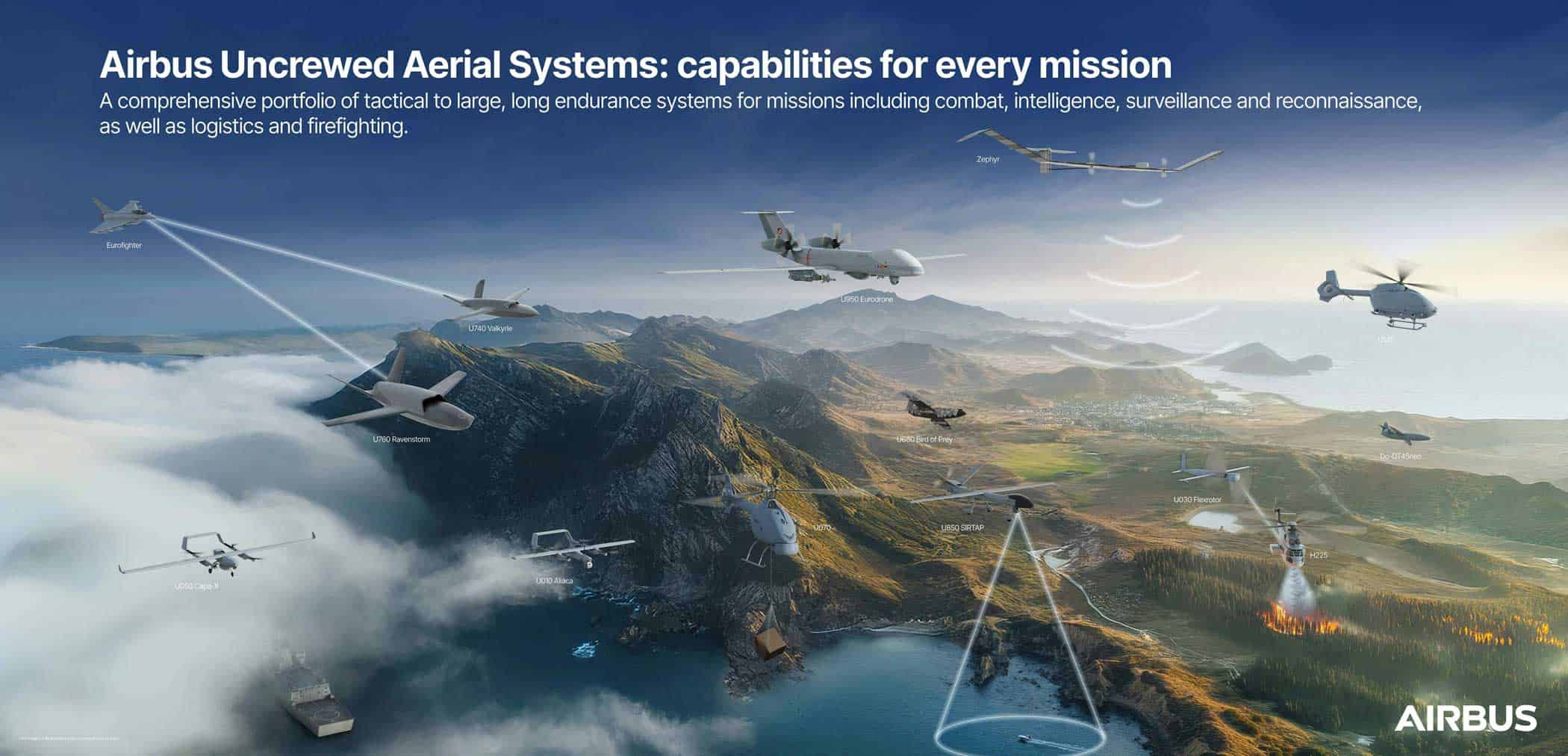
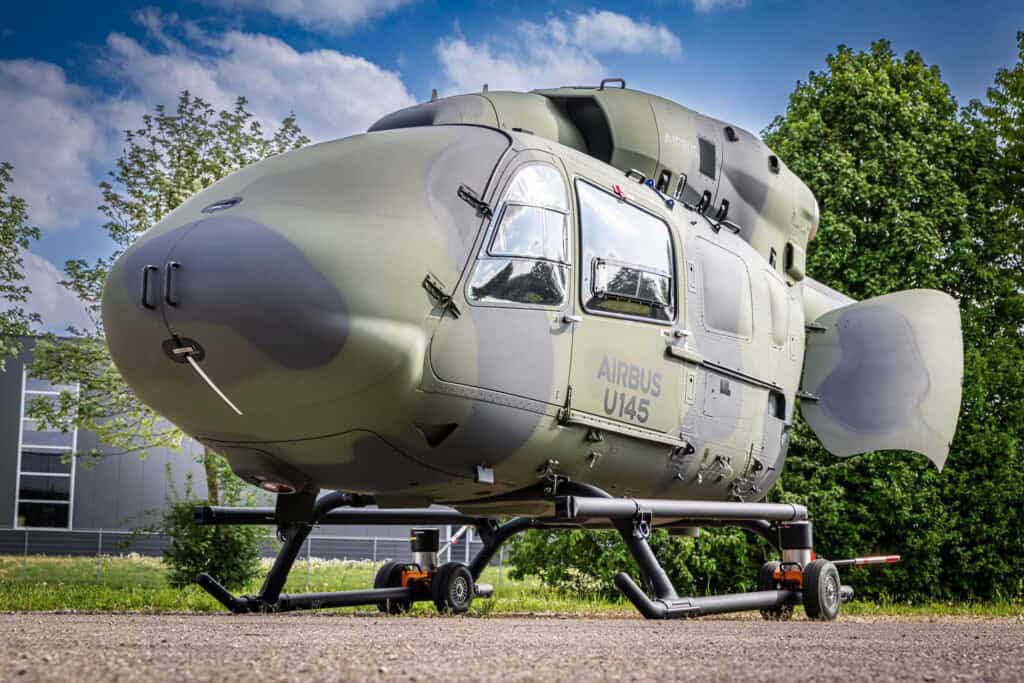
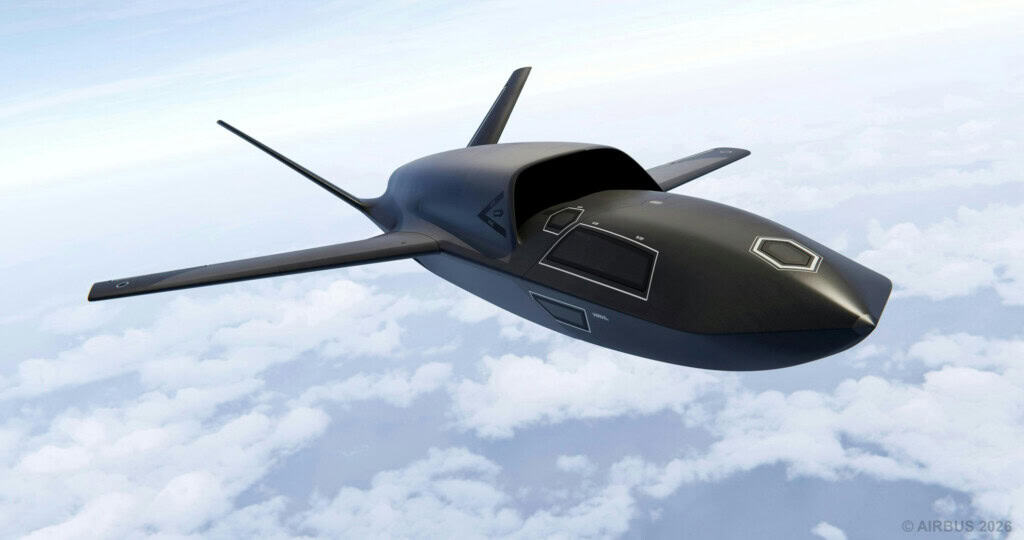
At the International Aerospace Exhibition (ILA) in Berlin, Airbus is showcasing an exceptionally diverse and comprehensive portfolio of unmanned aircraft systems (UAS). With this display, the company underscores its leading position in autonomous flight technology designed to meet the demands of modern defense strategies. Two significant developments are being highlighted in particular: the newly unveiled U145 – an autonomous, unmanned version of the proven H145 helicopter – and the U760 Ravenstorm, a combat system designed to operate alongside manned combat aircraft in air-to-air combat, air-to-ground strikes, and electronic warfare.
With these innovations, Airbus demonstrates its commitment to strengthening sovereign air forces through a wide range of drones and drone systems – spanning everything from the rapid interception of hostile drones and tactical reconnaissance to strategic, long-endurance surveillance platforms. The development aims to create systems featuring open architectures and European mission systems that can be seamlessly integrated into international defense networks.
Diverse applications for unmanned platforms
The U145 is based on the well-known H145 and features a modular design that supports both civil and military applications. Airbus primarily envisions its use for extensive supply lines, a capability that is particularly significant in operational scenarios involving major logistical challenges. Furthermore, the aircraft’s flexibility allows for adaptation to roles such as disaster management, firefighting, armed reconnaissance, surveillance, and even operation as a “mothership” drone for launching additional unmanned assets.
In the unmanned combat platform segment, Airbus is leveraging the extensive expertise gained from two decades of collaboration on the Barracuda demonstrator. The U760 Ravenstorm represents the next generation of Unmanned Collaborative Combat Aircraft (UCCA). With impressive dimensions and versatile capabilities – including precision-guided air-to-ground weapons, various air-to-air missiles, and electronic warfare systems – it is designed for complex multi-domain operations. Its completion is scheduled for the early 2030s, making it a key component of future military air fleets.
In parallel, Airbus is developing another key platform – the U740 Valkyrie – in collaboration with Kratos. Equipped with the company’s own highly autonomous and secure multi-platform mission system, MARS, the Valkyrie will be available to the German Air Force starting in 2029 as the first operational, sovereign UCCA. This system enables air-to-ground missions as well as coordinated teaming with the Eurofighter.
Lightweight tactical drones for diverse requirements
In the realm of small and tactical drones, Airbus offers various models that – thanks to their differing payload capacities and flight times – are ideally suited for surveillance and reconnaissance missions. For instance, the U010 Aliaca, with a total weight of 25 kg, carries a payload of up to 3 kg for six hours of flight and is excellently suited for image acquisition and analysis to support decision-making.
The U030 Flexrotor extends these capabilities to a flight time of up to 14 hours – maintaining the same total mass while offering an increased payload capacity of 8 kg – which particularly supports long-endurance missions. The U050 Capa-X offers even greater flexibility; with a weight of 120 kg and a capacity for up to 20 kg of equipment, it allows for modular adaptations to suit a wide range of operational scenarios, including diverse terrain types and mission profiles.
In addition, the U680 Bird of Prey is a specially developed drone interceptor designed to respond rapidly to mass threats from attack drones during operations. Capable of neutralizing multiple medium-sized, one-way drones in a single mission, it significantly enhances air defense effectiveness and was brought to operational status in record time following a very rapid maiden flight.
The central role of the MARS mission system and the strategic Eurodrone
A common denominator among many of these innovative unmanned systems is the MARS (Multiplatform Autonomous Reconfigurable and Secure) mission system developed by Airbus. It combines an AI-powered software foundation – ensuring a high level of platform autonomy – with scalability across the entire product range. MARS is already integrated into the UCCA aircraft Ravenstorm and Valkyrie, as well as the Bird of Prey; in the future, it will also be installed in the Eurodrone, a strategic MALE (Medium-Altitude Long-Endurance) platform set to play a crucial role in securing European air and maritime surveillance.
The Eurodrone is designed for independent ISTAR missions – including surveillance, early detection, and anti-submarine warfare. With its first scheduled flight in 2029, this major system will set a new standard for autonomous and strategic reconnaissance.
Conclusion: A comprehensive offering for modern defense needs.
With its broad and technologically advanced portfolio, Airbus demonstrates its readiness to sustainably strengthen sovereign air forces through innovative drone solutions amidst Europe’s rapidly evolving security landscape. The combination of tactical and strategic systems, unmanned helicopters, and collaborative combat platforms creates a comprehensive offering that is flexible and adaptable to the diverse requirements of multilateral defense cooperation.
By integrating state-of-the-art autonomous mission systems such as MARS and focusing on open system architectures, Airbus is not only a pioneer in the adoption of digital and autonomous technologies but also a key partner for the future of air combat and European security architecture. These developments will play a pivotal role in efficiently expanding air force capabilities and providing new tactical options for air defense in complex battlefields.