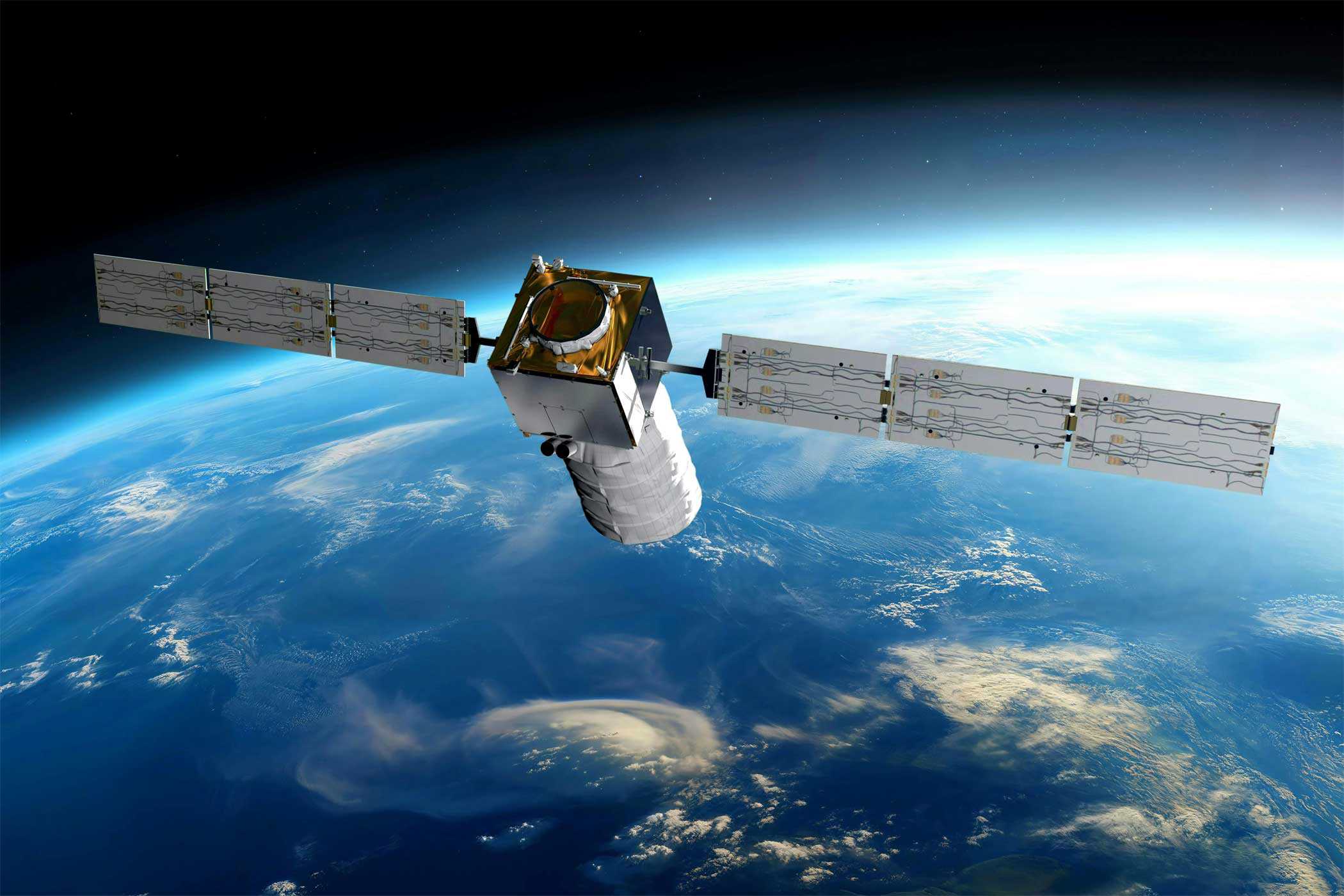
Introduction to the significance of Aeolus-2 for weather observation
The development of satellites for wind measurement represents a significant advancement in meteorological research and global weather forecasting. The contract awarded to Airbus Defence and Space by the European Space Agency (ESA) for the development of Aeolus-2 marks a new milestone, building upon the success of the original Aeolus satellite. Aeolus-2 aims to further enhance the accuracy of numerical weather models, providing critical data to weather services and scientific institutions worldwide. This mission exemplifies the close collaboration between European organizations and industrial partners in deploying innovative technologies for atmospheric monitoring.
Advances in wind measurement from space
Conventional weather forecasting is often limited by spatial gaps in data and the restricted vertical resolution of atmospheric data. Aeolus-2 aims to overcome these challenges by employing state-of-the-art Doppler wind lidar technology, which enables the global acquisition of high-resolution vertical wind profiles. This technology measures wind speed and direction based on the Doppler shift of light backscattered by minute atmospheric particles, such as dust, ice, and water vapor. The resulting data improve our understanding of atmospheric circulation and significantly enhance the accuracy of weather forecasts.
Technological innovations and scientific significance of the project
The Aeolus-2 mission will build upon the technological achievements of the first Aeolus satellite, which launched in 2018 and provided data until 2023. At that time, the new data source enabled a four percent improvement in numerical weather forecasts, with the polar and equatorial regions benefiting particularly from the enhanced data. Aeolus-2 will be equipped with an improved Doppler wind lidar that uses ultraviolet lasers to scan the entire globe every seven days. The technology takes measurements at 0.01-second intervals and covers altitudes of up to 30 kilometers, allowing for better monitoring of critical atmospheric layers.
In addition, Aeolus-2 will feature an extra detector to measure atmospheric aerosols. This information is significant not only for weather forecasting but also plays a crucial role in understanding air pollution and its climatic impacts. The interaction between solar radiation and these particles significantly influences the climate and weather patterns. Such detailed space-based measurements enable better analysis and modeling of both short-term weather events and long-term climate trends.
Impacts on meteorological centers and societal benefits
Data provided by the Aeolus-2 satellite will support major weather centers such as the UK Met Office and the European Centre for Medium-Range Weather Forecasts (ECMWF). These institutions use the precise wind data to refine complex weather models, leading to more reliable forecasts. This enables the timely detection and more accurate prediction of extreme weather events – such as storms, hurricanes, or unusual atmospheric phenomena – thereby contributing significantly to public safety.
An improved understanding of atmospheric wind structures also impacts various economic sectors, particularly agriculture, transportation, and energy supply. More accurate wind forecasts enable more efficient planning and risk mitigation – for instance, in the operation of wind farms or in air traffic management. The rapid availability of data – within 120 minutes of collection – offers a significant advantage for real-time applications and emergency management.
European and British cooperation on Aeolus-2
The collaboration between ESA, EUMETSAT, and industrial partners such as Airbus Defence and Space (UK) serves as an exemplary model for European space exploration and science. The contract for the development of Aeolus-2 was signed during an official ceremony at ESA’s ECSAT site in Harwell, UK. Representatives from ESA and the UK space agency emphasized the mission’s importance in maintaining and advancing Europe’s global leadership in atmospheric observation.
The UK’s involvement is reflected not only in industrial expertise but also in the numerous highly skilled jobs created and secured through the development work on Aeolus-2. Airbus’s leadership of the project from the UK makes it possible to contribute British expertise to the global space sector while simultaneously advancing innovative technologies for Earth observation and climate research.
Furthermore, ongoing investments in ESA and EUMETSAT demonstrate how political and financial support motivates key players and fosters cooperation in the space sector. Aeolus-2 is thus both a scientific and an economic project that positions Europe as a pioneer of modern technologies.
Conclusion: The future of atmospheric observation from space
The realization of Aeolus-2 marks the next step in the evolution of global space-based wind measurement. The project combines innovative technologies, international partnerships, and scientific expertise to achieve lasting improvements in the quality and accuracy of weather forecasts. The ability to capture rapid, precise vertical wind profiles will help strengthen meteorological models and refine the prediction of extreme weather events – a crucial benefit for society, the environment, and the economy.
Particular emphasis is placed on the significance of the collected data for analyzing atmospheric circulation and long-term climate patterns. Thanks to its advanced instruments, Aeolus-2 enables comprehensive observation on a scale that was not previously possible.
Close cooperation between European institutions and British industry ensures that the insights and technologies gained are utilized efficiently – not only in research but also in the practical applications of international weather services. This plays a pivotal role in keeping Europe at the forefront of global Earth observation and climate research while simultaneously generating societal value through precise, reliable weather forecasts.
In conclusion, the Aeolus-2 program is set to revolutionize the evolution of weather observation and, through precise wind measurements, make a lasting contribution to humanity and its management of the global climate.