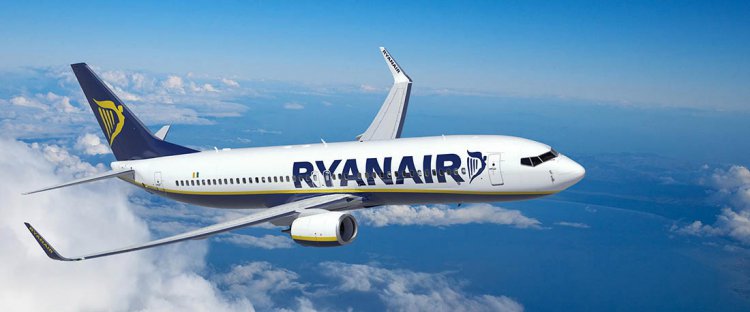
Cabin window breaks during flight
Thessaloniki/Memmingen. Dramatic scenes unfolded on a Ryanair flight from Thessaloniki to Memmingen. Shortly after takeoff, a sudden decompression occurred on board a Boeing 737-800 after a cabin window was damaged. Eyewitnesses reported a loud bang, and immediately afterwards, oxygen masks dropped from the overhead panels.
Passenger partially pulled out of the cabin
The situation became particularly critical for a 61-year-old passenger seated by the affected window. According to initial reports, he was partially pulled out of the cabin. Several fellow passengers reacted with quick thinking and held onto the man until the crew could bring the situation under control. The passenger sustained shoulder and neck injuries as well as abrasions and received medical attention after the aircraft returned safely to Thessaloniki.
Immediately after the incident, the pilot initiated a descent and returned to the departure airport. Ryanair subsequently provided a replacement aircraft to transport the passengers to Memmingen. The cause of the incident is currently under investigation. Preliminary information suggests that a problem with the right engine may have caused flying debris to damage the window; however, this sequence of events has not yet been officially confirmed.
Aviation authorities have launched investigations.
The incident ranks among the most extraordinary occurrences in European air travel in recent years and once again raises questions regarding technical safety and emergency procedures in aviation. The relevant aviation authorities have launched investigations.
Aviation emergency procedures
Aviation emergencies follow globally standardized procedures. Airlines, pilots, air traffic controllers, and emergency personnel regularly train for these scenarios to ensure that actions remain as structured as possible, even in extraordinary situations.
The most important steps are:
- Recognizing and assessing the situation: The flight crew identifies the problem – such as engine failure, smoke, loss of pressure, or a medical emergency – using established checklists.
- Immediate measures: Depending on the emergency, actions such as activating oxygen masks, initiating an emergency descent, or shutting down an engine are taken. The safety of the aircraft is the top priority.
- Communication: The pilots inform air traffic control and, if necessary, declare an emergency (“Mayday”) or an urgency (“Pan-Pan”). At the same time, the cabin crew is informed of the incident.
- Cabin management: Flight attendants secure the cabin, calm the passengers, check seatbelts, and—if necessary—prepare for an emergency landing or evacuation.
- Decision regarding landing: The flight crew decides, based on the situation, whether to return to the departure airport, divert to the nearest suitable airport, or – if possible – continue the flight.
- Ground preparations: The airport fire department, emergency medical services, and other response teams are alerted and stand ready for the landing.
- After landing: the injured receive medical attention, the aircraft is inspected, and the responsible authorities begin analyzing the cause.
Example: Pressure loss in the cabin
In the event of sudden decompression – such as might occur with a damaged window or structural damage to the fuselage – measures requiring immediate action apply:
- The oxygen masks drop automatically from the overhead compartments.
- The pilots immediately put on their oxygen masks.
- The aircraft descends as quickly as possible to an altitude of approximately 3,000 meters (10,000 feet) or lower, where the air again contains sufficient oxygen.
- Subsequently, a precautionary landing is carried out at the nearest suitable airport.
These procedures are regulated internationally by standards set by the International Civil Aviation Organization (ICAO) and by national aviation authorities. Airlines supplement these requirements with their own operations and emergency manuals, as well as regular simulator training for flight and cabin crews.