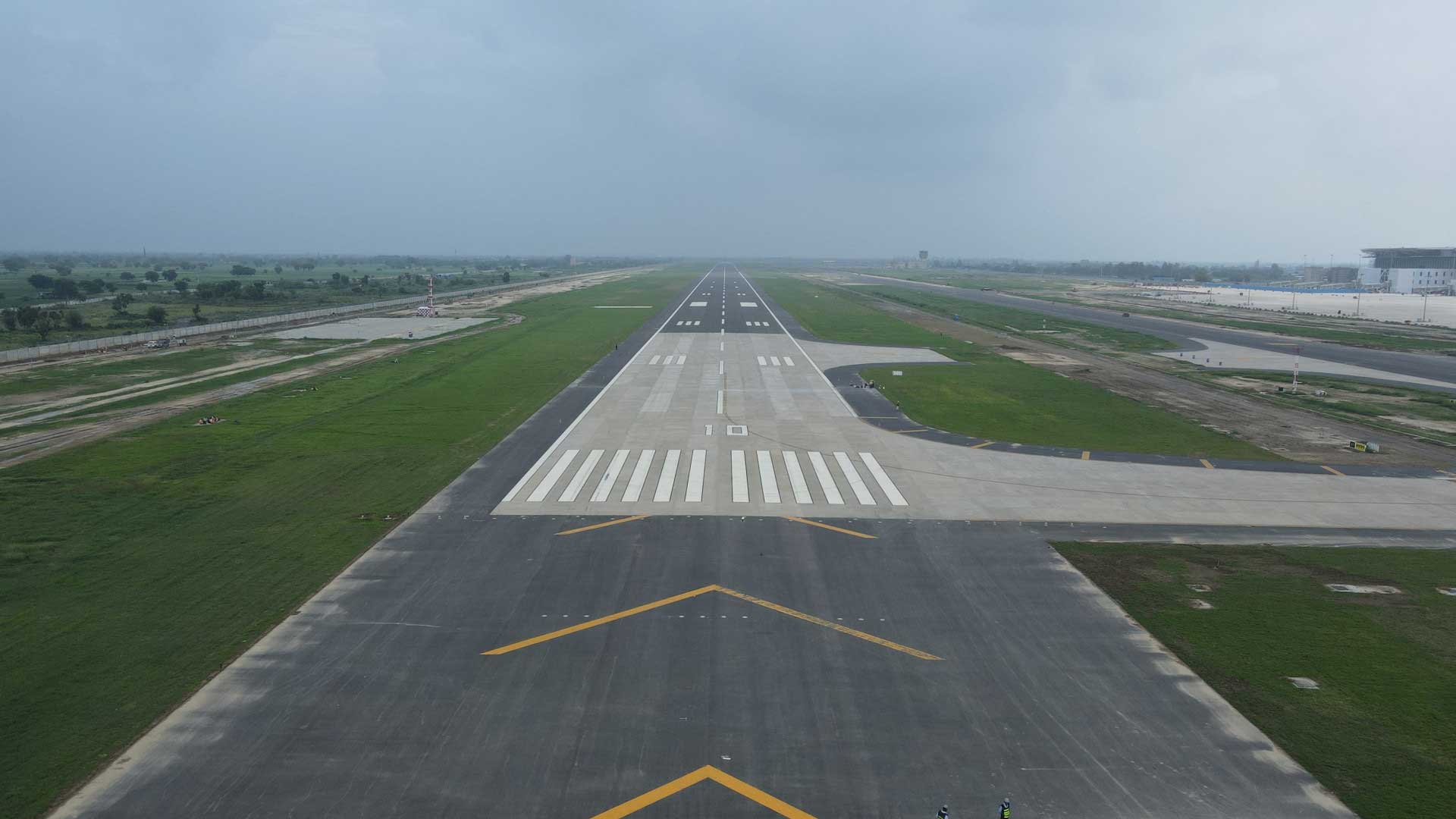
Noida Airport: Supplementing the air transport infrastructure in the region
The new Noida International Airport in the Greater Delhi region of India has reached a significant milestone: it has received its official operating license, paving the way for the commencement of flight operations. Developed and built by Zurich Airport AG of Switzerland, this project represents a crucial addition to the region’s air transport infrastructure. The license was issued by the Indian Directorate General of Civil Aviation (DGCA) in accordance with all necessary legal requirements. This enables future commercial flight operations, and the airport is also equipped with comprehensive safety standards, operational procedures, and the necessary infrastructure.
Licensing and security audits
The issuance of the operating license by the DGCA marks the official start of air traffic at Noida Airport. This approval is accompanied by further safety reviews, most recently completed by the Bureau of Civil Aviation Security (BCAS) for both passenger and cargo flights. These regulatory approvals are essential to ensure compliance with international and national regulations. In addition to safety aspects, infrastructure such as runways, navigation systems, emergency procedures, and operational protocols were also inspected and approved for flight operations. These comprehensive requirements guarantee safe and efficient operations at the highest standards.
Preparations are already underway in parallel with the central and state governments for the official opening ceremony, as well as with the various service providers and partners for the successful launch of flights. Commercial passenger and cargo traffic is expected to commence within 30 to 45 days of the opening.
Noida Airport: Development and Infrastructure
The airport’s development was planned in several phases over a projected period of 40 years, with Phase 1 already completed. This phase involved the implementation of comprehensive infrastructure measures that form the basis for operations: a runway, a passenger terminal, and approximately 25 aircraft parking positions. Extensive test flights and system calibrations, including a validation landing with an Airbus A320, successfully demonstrated the airport’s technical capabilities in 2024 and 2025. The necessary infrastructure for ground-based services such as taxi and shuttle services, cargo handling, in-flight catering, and aircraft refueling has been established and contractually agreed upon with partners. Hotel operations, as well as restaurants and commercial facilities, are also part of the offering.
The airport charges have been provisionally set, thus establishing the economic basis for operations. The responsible Airport Authority of India is overseeing the correct commissioning of the navigation and monitoring systems, which ensure the safe handling of air traffic.
Airlines and future plans
Noida Airport will initially focus on domestic flights and cargo handling. International flights are planned to commence later in 2026, once all necessary conditions are met. Well-known airlines such as IndiGo, Akasa Air, and Air India Express have already committed to integrating the new airport into their route networks. Furthermore, other airlines have expressed interest in connecting to Noida. Negotiations with freight companies and major logistics providers are also at an advanced stage to accommodate the anticipated high volume of goods traffic.
Expanding services and developing infrastructure are intended to ensure stable growth and a gradual increase in traffic volume. Future plans include two runways and expanded terminal facilities, enabling capacities of up to 70 million passengers per year.
Transport connections and regional importance
A key factor in the airport’s success is its excellent connectivity to major economic centers and tourist destinations. The main transport link is the six-lane Yamuna Expressway, which provides direct and rapid access to the Greater Noida region and other surrounding cities. Furthermore, its proximity to the metropolitan areas of Delhi, Noida, and Gurugram, as well as to major cities in western Uttar Pradesh, is emphasized.
For travelers wishing to visit pilgrimage sites and tourist attractions, the airport’s location is also advantageous. Agra, home of the world-famous Taj Mahal, Mathura, and Vrindavan are all within a two-hour drive, making the airport an attractive starting point for tourism.
Investment and operator structure
Noida Airport is part of a public-private partnership project, in which local authorities work together with an international operator. Zurich Airport AG, through its subsidiaries, acts as both investor and operator. The investment made in the first construction phase under the concession agreement amounts to approximately 750 million Swiss francs, making it one of the largest Swiss infrastructure investments in India.
Operational responsibility lies with Yamuna International Airport Private Limited (YIAPL), which is implementing this complex project in partnership with the government of Uttar Pradesh and the concessionary authority, Noida International Airport Limited. The management structure is multinational, with Indian and Swiss executives, ensuring a combination of local expertise and international experience.
Expansion in Indian air transport
The granting of the operating license for the new Noida Airport marks a significant step for aviation in the Greater Delhi region. Extensive preparations in infrastructure, security, and services have ensured the site is ideally equipped for flight operations. Thanks to its strong connections to key economic and tourism regions, the airport will become a central hub for passengers and cargo.
The investment by Flughafen Zürich AG underscores the market’s significant potential and the strategic importance of this expansion in Indian air traffic. For decades to come, the airport’s development will contribute to a sustainable expansion of the transport network while simultaneously providing crucial impetus for the region’s economic development.
The establishment of the airport as a hub for national and, in the future, international connections will bring many benefits – from improved mobility and increased trade to the promotion of tourism. The next steps, including the official inauguration and the commencement of flight operations, are being followed with great interest, as they mark the beginning of a new era for air transport in India.
This development exemplifies how modern transport infrastructure is designed in a dynamic growth market to meet the challenges of the 21st century and to provide sustainable, safe and efficient solutions for passenger and freight transport.
More about Noida Airport