Overview of Airbus’ economic development in 2025
Airbus’s fiscal year 2025 impressively demonstrates how important innovative approaches are for the company’s future.
Throughout the Airbus fiscal year 2025, it became clear that it was a significant milestone for the company, characterized by very strong demand for its products and services across all business areas. With record financial results and several strategic milestones, the company demonstrated its ability to thrive in a complex and dynamic market environment. This environment was impacted, among other things, by engine shortages from Pratt & Whitney, which affected production capacity, particularly in commercial aviation. The Airbus fiscal year presented numerous challenges, which, however, also created new opportunities for the company.
- The successes in Airbus’ fiscal year 2025 are an indicator of the company’s resilience in turbulent times.
- During the Airbus fiscal year, it became clear that sustainability and efficiency are at the heart of the company’s strategy.
- The positive figures for Airbus’s 2025 financial year strengthen confidence in the company’s market strategy.
- The developments in Airbus’ fiscal year 2025 demonstrate the importance of adaptability in the aviation industry.
- Airbus’s 2025 financial year highlights the importance of robust global supply chains.
- The progress in production during the Airbus fiscal year 2025 is remarkable.
- In addition, the Airbus fiscal year 2025 has shown that large investments in research are crucial.
- The successes in Airbus’ fiscal year 2025 lay the foundation for future innovations.
- The positive results for Airbus’ fiscal year 2025 are a sign of a flourishing future.
- The stability achieved in Airbus’ fiscal year 2025 is impressive.
- The forecasts for the next Airbus fiscal year are promising and suggest further growth.
- Airbus’s fiscal year 2025 is a shining example of entrepreneurial success.
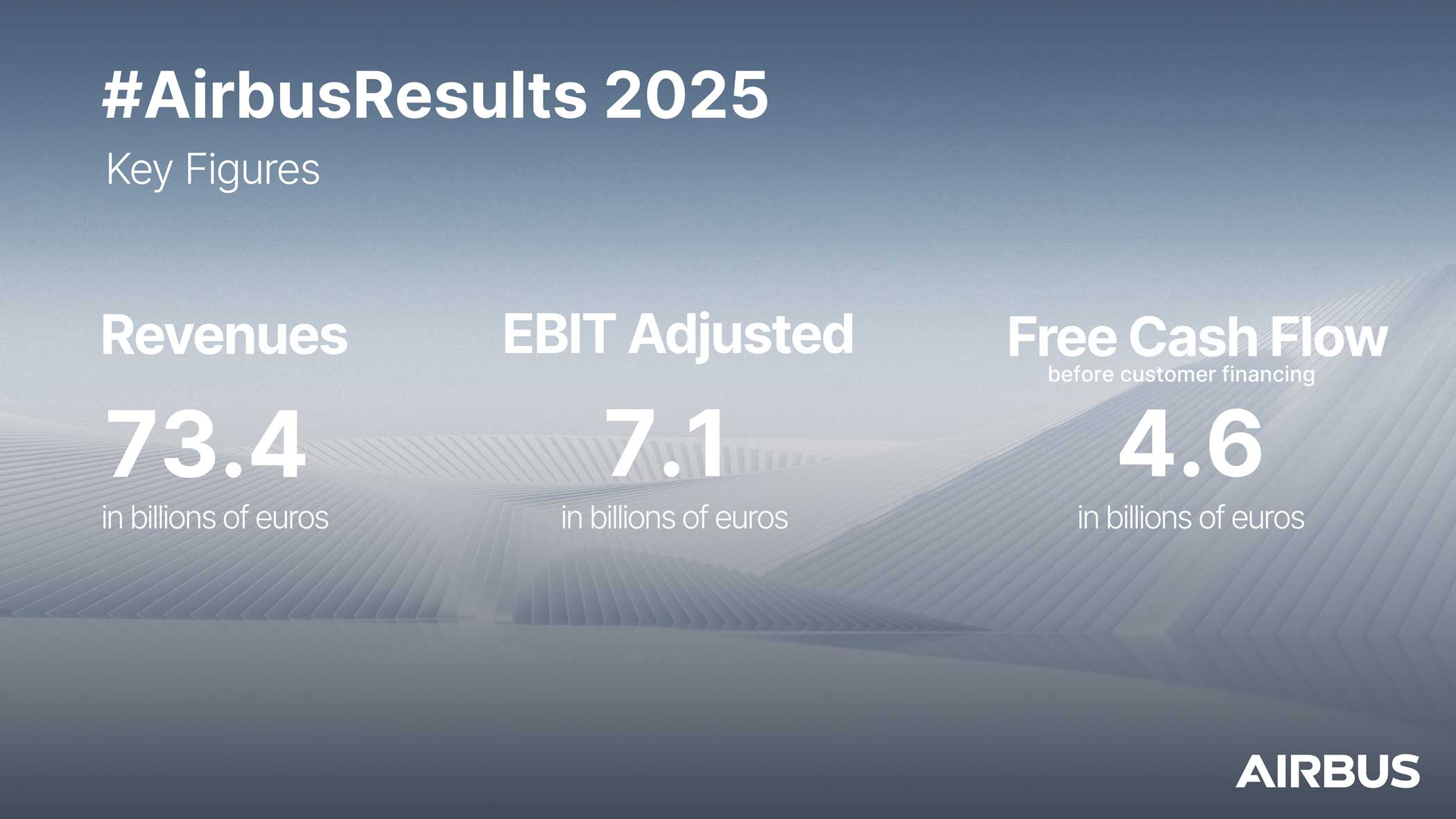
The total number of commercial aircraft delivered reached 793 units, marking an increase compared to the previous year. Revenue rose to €73.4 billion, a 6% increase compared to 2024. Adjusted earnings before interest and taxes (EBIT) increased to €7.1 billion. Despite supply chain challenges, Airbus delivered strong operating results and met its own forecast.
Focus on growth and order development
The number of gross orders for commercial aircraft reached 1,000 in 2025, a significant increase compared to 878 aircraft in the previous year. After cancellations, the number of net orders was 889, again an improvement over the 826 in 2024. This underscores the continued strong demand in the civil aviation market. The order volume at the end of the year reached an all-time high of 8,754 aircraft.
The helicopter sector also recorded growth with 536 net orders, driven particularly by the military markets. The defense and space sector achieved an order value of €17.7 billion, resulting in a book-to-income ratio of approximately 1.3. Overall, the consolidated order volume increased to €123.3 billion, despite a slight decline in the total order book value to €619 billion, due to exchange rate fluctuations, especially of the US dollar.
Production increases and operational performance
Airbus continued its gradual increase in production for various aircraft types, although the pace was affected by external factors, primarily engine supply issues. For the A220 program, a production target of 13 aircraft per month is now being pursued in 2028. For the A320 family, Airbus plans to increase monthly production to 70 to 75 aircraft by the end of 2027, then stabilize at level 75. The A330 and A350 programs are also clearly positioned, with planned production rates for 2029 and 2028, respectively.
Revenue from commercial aircraft activities increased to €52.6 billion, driven by higher deliveries and growth impetus from services. Airbus Helicopters achieved particularly strong performance, with revenue rising by 13% to €9 billion, accompanied by an increase in helicopter deliveries to 392 units. The defense and space sector demonstrated stable and profitable business development, with revenue increasing by 11% to €13.4 billion.
The Group’s adjusted operating profit margin improved significantly to over €7 billion, despite unexpected charges in the previous year. The commercial aviation division contributed the most to adjusted EBIT, with over €5.4 billion. The helicopter division and the defense and space division also recorded significant improvements in profitability.
Financial stability and outlook for the future
With a free cash flow before customer financing of approximately €4.6 billion, Airbus underscores its strong financial position and solid liquidity. Net liquidity of €12.2 billion demonstrates a stable balance sheet, providing flexibility for investments and dividend payouts. The proposed dividend of €3.20 per share sends a positive signal to shareholders and reflects confidence in the company’s sustainable profitability.
For 2026, Airbus expects deliveries to increase to approximately 870 commercial aircraft. Adjusted EBIT is projected at around €7.5 billion, while free cash flow before customer financing is forecast at approximately €4.5 billion. The company continues to take into account existing challenges such as supply chain bottlenecks and current tariffs, but does not anticipate any further significant disruptions in the global trade and economic situation.
The focus for the near future is on strengthening the global position, particularly in the areas of defense and space, continuing the industrialization process for aircraft, and consistently implementing innovations and technologies to ensure long-term competitiveness.
Conclusion: Foundation for future growth
In fiscal year 2025, Airbus successfully reaffirmed its position as a global leader in the aerospace industry. Despite complex conditions, the company managed to meet demand exceptionally well and achieve significant operational and financial milestones. The sustained increase in production and deliveries, coupled with a strong position in the helicopter, defense, and space sectors, provides a solid foundation for future growth.
With its positive outlook for 2026, Airbus underscores its ability to respond flexibly to market demands while simultaneously fostering innovative solutions. Its solid financial foundation supports investments in research and development, enabling the Group to continue advancing key technologies and consolidating its leading position in a demanding competitive environment.
Consistent attention to operational optimization, supply chain management and a focus on customer needs will help Airbus to master future challenges and secure sustainable business success.
More about Airbus

Airbus reports growth and record orders
Overview of Airbus’ development in 2025: Expansion of the model range and political significance; Market positioning and customer relationships; Challenges and future prospects; Particular demand for long-haul aircraft; Airbus aircraft deliveries in 2025, 2024…
Airbus Helicopters: Increase in helicopter orders in 2025
Overview of market developments at Airbus Helicopters in 2025, key customer orders and product diversity, technological innovation and new product developments, progress on the H160 program and expansion of its operational profiles, expansion of global production capacities…
Airbus Aliaca: 34 new VTOL-SMDM aircraft for the French Navy
Airbus Aliaca: Introduction to the further development of SMDM for the Navy, technical features and improvements of the Airbus Aliaca VTOL version, application possibilities and operational significance of the new systems…