

This site is also available on:
 Deutsch
Inhaltsverzeichnis
Introduction to unmanned aerial systems and their increasing importance
Unmanned aerial systems (UAS) are gaining increasing importance in both military and civilian applications. This growth is fueled by the need for efficient surveillance, reconnaissance, and a wide range of tactical and humanitarian missions. In particular, the further development and integration of UAS technologies in maritime contexts represents a crucial component in strengthening the sovereignty and operational capabilities of modern navies worldwide. The French Ministry of Defence has taken a significant step in this direction by awarding the serial production contract for the VSR700 unmanned aerial vehicle to Airbus Helicopters and the Naval Group. This development demonstrates the commitment to creating state-of-the-art solutions for intelligent surveillance and versatile operational capabilities.
Development and industrial implementation of the VSR700
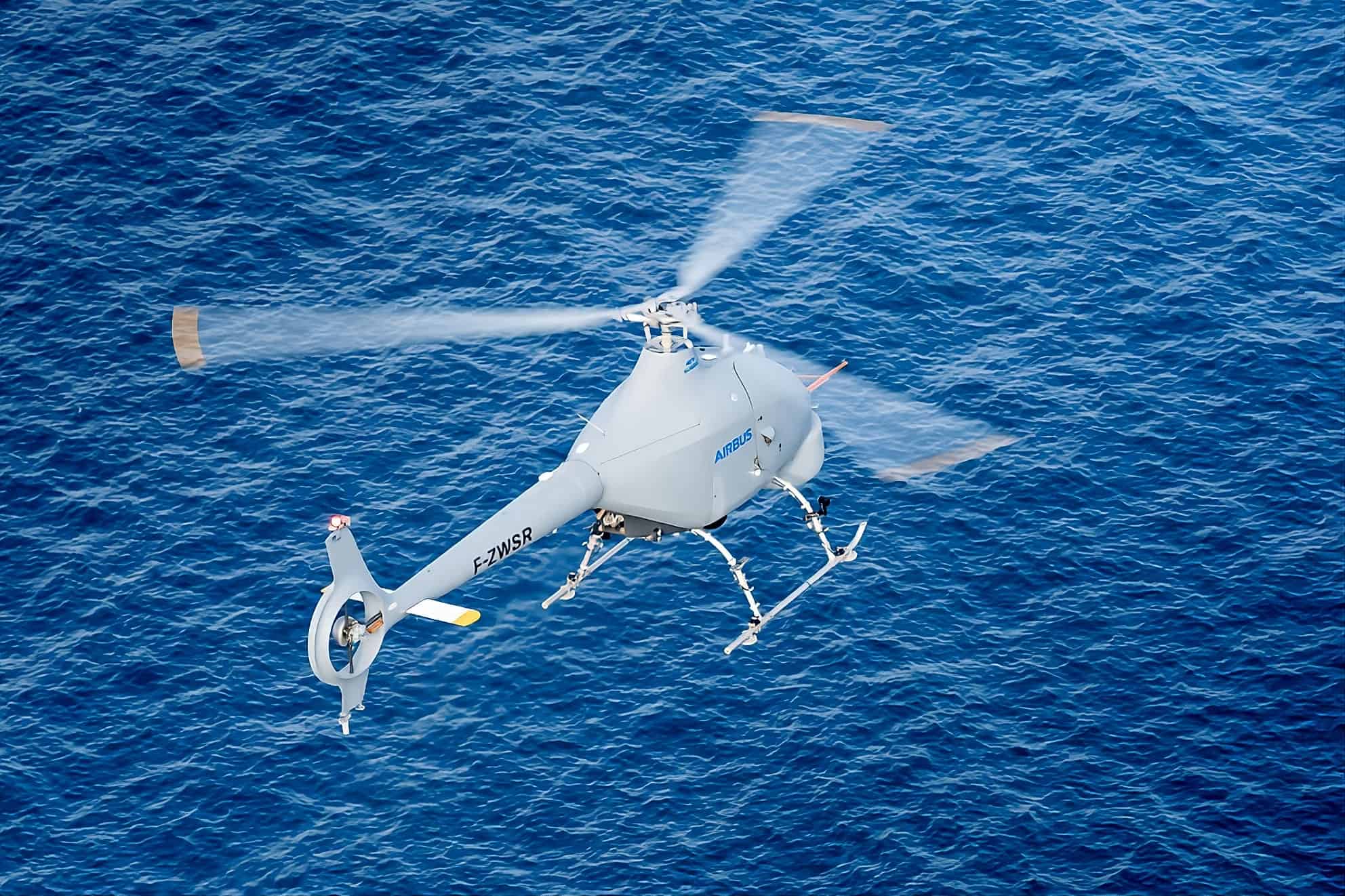
The VSR700 is based on a proven manned platform, the Cabri G2 from Hélicoptères Guimbal, and has been specifically further developed for unmanned operations. This core technology guarantees a solid foundation in terms of flight performance and aeronautical safety. Through collaboration between the French Navy, the DGA (Direction générale de l’armement), and the Naval Group, the UAS has been prepared for a wide range of missions, with a focus on durability and versatility.
Series production of the six VSR700 systems is scheduled to begin in 2028; a significant milestone made possible by a dedicated industrial infrastructure. This infrastructure allows Airbus Helicopters to meet the specific requirements of its Unmanned Aircraft Systems business unit by scaling efficiently while consistently maintaining the highest standards of aeronautical safety and performance. Close collaboration with the Ministry of Defence ensures that the operational needs of the Navy remain the focus, guaranteeing a reliable and high-performance platform for future missions.
Technical specifications and application roles of the VSR700
The VSR700 is versatile and contributes to expanding the Navy’s reconnaissance and surveillance capabilities. It is primarily designed for ISR (Intelligence, Surveillance and Reconnaissance) missions and is equipped with state-of-the-art equipment such as a surveillance radar, an electro-optical system, and an automatic identification system (AIS). This sensor technology enables detailed situational awareness and target identification over long distances, even under challenging environmental conditions.
The integration of the VSR700 into the Navy’s complex ship systems is carried out, among other things, by the Naval Group, which provides the Steeris® Mission System, a platform adapted to the ship’s command structure. This system ensures that the UAS data is seamlessly integrated into the overall architecture and enables efficient interaction with other ship systems.
Furthermore, the VSR700 is not limited exclusively to military networks. The system’s adaptability allows for civilian applications such as firefighting and disaster relief, where long-range flight and precise monitoring play a crucial role.
Multirole skills and teaming concepts
A key feature of the VSR700 is its multirole functionality. The system can perform a wide range of tasks, from logistical resupply to armed reconnaissance missions, in both maritime and terrestrial environments. This flexibility opens up new operational scenarios that can complement or partially replace traditional manned aircraft, thereby reducing risks to pilots and lowering operating costs.
The VSR700’s ability to collaborate with manned helicopters in so-called HTeaming missions is particularly innovative. This cooperative teaming enables coordinated mission execution, where manned and unmanned systems combine their respective strengths. For example, manned helicopters can perform complex target acquisition, while the UAS takes over additional sensors or attack options, significantly increasing the mission’s effectiveness and flexibility.
Security aspects and future prospects
A key concern in the development and production of unmanned aerial systems is ensuring the highest safety and performance standards. The VSR700 has undergone extensive testing on land and at sea to verify its reliability under a wide range of operating conditions. Compliance with aeronautical safety regulations is just as essential as ensuring interoperability with existing weapon systems and ship architectures.
The deployment of UAS like the VSR700 demonstrates how modern aeronautical systems are transforming maritime surveillance. They enable navies to significantly expand their reconnaissance capabilities without having to fully assume the risks and costs of manned aircraft. In the long term, the development of such systems is likely to influence the strategic planning and execution of major operations and set new standards in hybrid warfare.
The serial production and subsequent deployment of the VSR700 by the French Navy thus represents not only a technological innovation, but also a groundbreaking development for maritime security and the expansion of reconnaissance and operational capabilities. Furthermore, such systems offer potential for international export and civil-military cooperation, underscoring the global significance of this technology.
New era of maritime reconnaissance and surveillance
Unmanned aerial systems like the VSR700 are an essential component of modern naval technology and play a crucial role in expanding surveillance and operational capabilities. By combining robust engineering, advanced sensor systems, and innovative teaming concepts, the VSR700 efficiently meets both military and civilian requirements. Support from the French DGA and the production partnership with Airbus Helicopters and the Naval Group underscore Europe’s growing commitment to the advancement of unmanned systems.
The upcoming integration of the VSR700 into the French Navy’s operational fleet from 2028 onwards marks a significant step towards the deployment of modern drone technology. Its versatile applications, advanced industrial capabilities, and comprehensive sensor suite lay the foundation for a new era of maritime reconnaissance and surveillance. This not only strengthens national security but also fosters innovation and competitiveness in the dynamic global market for unmanned aerial systems.