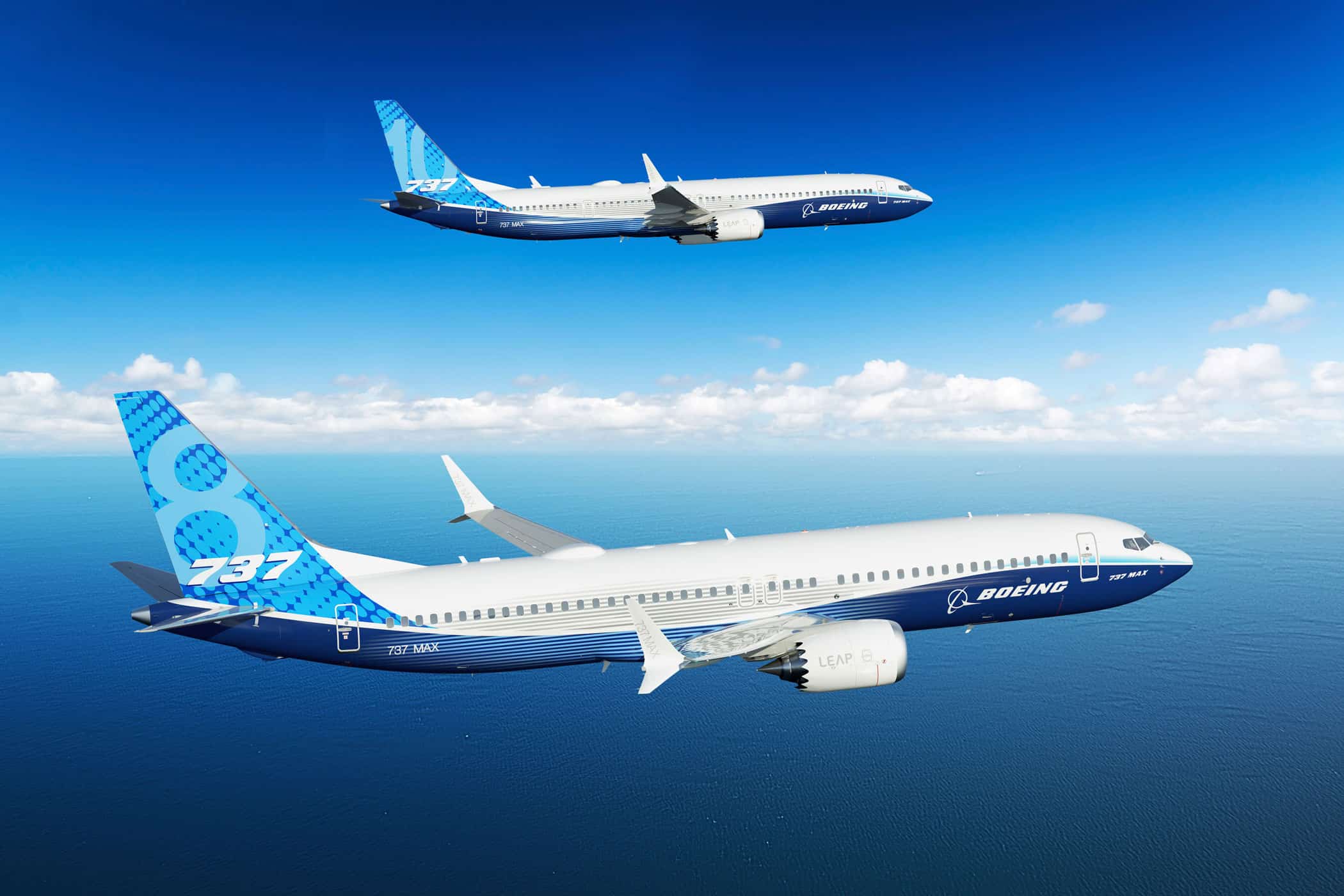
New Boeing 737 MAX aircraft for a sustainable aviation future
The aviation industry is undergoing a significant transformation, with efficiency and sustainability taking center stage. The recent agreement between Boeing and Air India represents a major step in this direction. The acquisition of 30 new Boeing 737 MAX aircraft underscores Air India’s commitment to meeting the demands of growing air traffic and equipping its fleet with modern, economical, and environmentally friendly aircraft. This commitment provides insight into the strategic development of the Indian aviation market and its role on the global stage.
Expansion of fleet size and capability
Air India has deepened its relationship with Boeing by expanding its order to a total of nearly 200 aircraft across the Boeing single-aisle and widebody families. This expansion includes the 737-8 and 737-10 models, selected for their efficiency, flexibility, and cost savings. The 737-8 is particularly well-suited for frequent domestic and short-haul flights, thanks to its impressive range and reliability. In contrast, the 737-10, with its greater passenger capacity, allows for optimal service on higher-volume routes without compromising operating costs.
This dual strategy in aircraft selection demonstrates how Air India is addressing the challenges of a dynamic market by striking a balance between capacity and economic efficiency. The addition of 30 more jets to the fleet reflects expectations that air traffic in India and across South Asia will continue to grow, supported by forecasts indicating a need for over 3,000 new aircraft in the next twenty years.
Strategic importance and market positioning
Air India’s decision to rely on modern and fuel-efficient aircraft such as the 737 MAX is part of a comprehensive fleet strategy aimed at positioning the company as a globally competitive airline. The selection of these aircraft promises not only lower fuel consumption and associated cost advantages, but also a minimization of environmental impact, which plays a crucial role in the current industry environment.
Boeing’s offer is compelling due to its technological innovations and its ability to meet the needs of airlines seeking to improve their fleet utilization. At the same time, this order supports Air India’s expansion both nationally and regionally by opening up new destinations and enhancing connectivity within India and its neighboring countries.
Paul Righi, Boeing’s vice president for sales and marketing in Eurasia, India and Southeast Asia, highlights the importance of the reliability and versatility these aircraft offer – key criteria for Air India’s growth and development into a leading airline.
Impact on the aviation industry and economic stimulus
Air India’s investment in modern commercial aircraft generates far-reaching effects that extend beyond air transport. The acquisition of new aircraft fosters technological innovation and supports a diverse supply chain, particularly in manufacturing and maintenance. This leads to job creation and the strengthening of economic networks in several countries.
Furthermore, the collaboration between Boeing and Air India strengthens India’s position as a significant market in global air transport. The consistent modernization of the fleet means that the country is not only able to cope with increasing passenger numbers, but can also expand its role as a hub for regional air connections.
The growing fleet also contributes to sustainable development concepts by integrating the latest technologies for lower emissions and greater fuel efficiency. The importance of these factors is reflected throughout the industry, as environmental protection and economic efficiency are increasingly seen as inseparable goals.
Future prospects for Air India and the region
With the addition of 30 Boeing 737 MAX aircraft, Air India is ideally positioned to meet the demands of a dynamic market and establish itself as a leading carrier in South Asia. Continuous fleet modernization allows the airline to improve passenger comfort and the travel experience while simultaneously increasing operational efficiency.
The focus on efficient single-aisle aircraft also reflects long-term demand driven by rising passenger numbers and increasing short- and medium-haul flights. Together with other market participants and supported by expert forecasts such as Boeing’s Commercial Market Outlook, it is evident that the Asian aviation sector exhibits one of the most dynamic growth trajectories worldwide.
Furthermore, this development exemplifies a sustainable and economical aviation strategy that meets the needs of passengers, airlines and the environment alike.
Promoting innovation, efficiency and sustainable growth in the aviation industry
The expansion of Air India’s fleet by 30 modern Boeing 737 MAX aircraft is a significant step towards promoting innovation, efficiency, and sustainable growth in the aviation industry. This new order aligns with the global trend towards fuel-efficient and economical aircraft, enabling the airline to meet the increasing demands of an expanding air travel market.
By strategically combining 737-8 and 737-10 models, Air India is creating a flexible fleet concept suitable for different segments, thus maximizing cost efficiency. At the same time, this investment in modern technology reinforces the airline’s competitive advantage in one of the world’s fastest-growing regions.
The partnership with Boeing exemplifies how technological advancements, sustainable economic viability, and forward-looking market strategies can work together to drive the aviation industry forward. By strengthening its infrastructure and network, Air India is making a significant contribution to the development of air traffic in India and across Southeast Asia, while simultaneously creating economic opportunities on a global scale.