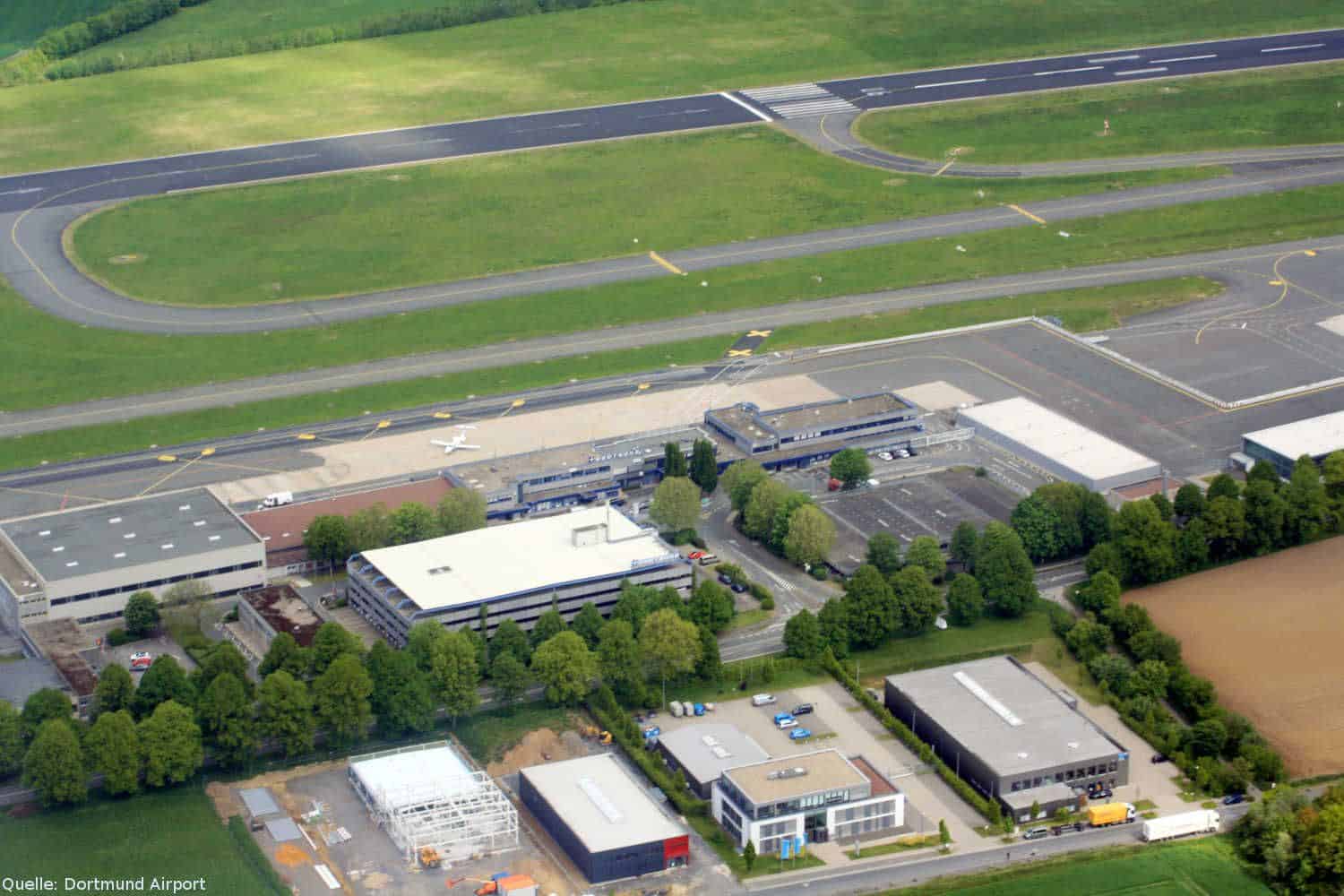
Dynamic developments at the Dortmund air transport hub
The air transport sector in Germany continues to undergo transformation, shaped by complex economic and geopolitical factors. Amidst these challenges, Dortmund Airport stands out due to a remarkable upward trend, supported by targeted modernization measures – including the implementation of state-of-the-art CT technology. The supervisory board’s recent meeting highlighted the airport’s strategic direction, aimed at maintaining long-term competitiveness and sustainably enhancing passenger comfort.
Despite a nationwide forecast of slightly declining passenger numbers – driven by factors such as rising jet fuel prices and increased regulatory costs associated with the location—Dortmund is recording robust growth. Passenger numbers are rising significantly, a trend attributable to strong demand and the airport’s successful route network management. The projected 3.5 million passengers for the current year reflect a healthy performance and position Dortmund as a key player in regional and national air travel, supported by the implementation of innovative CT technology.
Challenges in German Air Transport: Location Costs and Market Volatility
The economic conditions facing German airports are currently challenging. Government-imposed location costs – including fee structures and regulatory requirements – significantly impact competitiveness. Consequently, the airport association ADV has revised its passenger forecasts, projecting a nationwide decline in passenger numbers to 217 million by 2026, representing a 1.4 percent downward trend compared to the previous year.
This lower number of passengers can be attributed to various external factors, including fuel price trends and geopolitical uncertainties that influence travel decisions. Against this backdrop, the industry is calling for a significant reduction in government levies and an adjustment of the regulatory framework in order to maintain the long-term competitiveness of Germany’s aviation infrastructure and ensure connectivity to both domestic and international destinations.
In contrast to the nationwide trend, however, Dortmund is showing a positive trajectory, driven by the successful opening of new routes and the increasing utilization of larger aircraft types. This enables the airport to further strengthen its position as a key transport hub in the Ruhr region.
Strategic investments in modernization and new technologies
A key topic at the supervisory board meeting was the modernization of security screening processes through the implementation of new computed tomography (CT) systems. This technology represents a significant advancement in baggage and passenger screening, as it not only enhances security but also noticeably improves passenger convenience.
The introduction of CT technology means that electronic devices and liquids in carry-on luggage no longer need to be removed during security screening. This simplifies procedures and significantly speeds up the screening process. Furthermore, the scanners’ improved detection capabilities allow for a more precise threat assessment, thereby enhancing both the security and efficiency of the screening process.
However, the technological requirements entail extensive structural modifications. Dortmund Airport is therefore planning a fundamental redesign of the security screening areas to optimally integrate the new equipment and adapt the infrastructure to the heightened demands. This measure aims to nearly double passenger throughput, thereby reducing queues and making the airport more attractive to travelers overall.
This modernization represents a significant step in the airport’s strategic development and demonstrates a commitment to leveraging innovative technologies to boost efficiency and customer satisfaction. Implementation will be carried out in close cooperation with the Münster district government, although the exact start date has not yet been determined.
Growth Prospects and Economic Significance of the Airport
Regarding traffic figures, August of this year broke the record for the busiest month in the airport’s history. More than 360,000 passengers used Dortmund Airport during the month – a result driven by the appeal of the available destinations and an improved flight schedule.
The launch of eight new flight routes and the increased use of larger aircraft during the summer months have contributed significantly to the growth in passenger numbers. This underscores the airport’s ability to respond flexibly to demand and tap into new markets.
Furthermore, the growth of Dortmund as an aviation hub makes a significant contribution to the regional economy by securing jobs and improving connectivity to national and international transport networks. The airport infrastructure thus serves as a driver of economic development in the Ruhr region, boosting trade, tourism, and other sectors.
Conclusion: Forward-looking development despite challenging conditions
The German aviation sector faces challenges that necessitate closer communication between airport operators, policymakers, and the business community. Although the overall passenger forecast has been slightly revised downwards, Dortmund’s development shows positive momentum, underpinned by strategic investments in infrastructure and technology.
The modernization of security checkpoints through state-of-the-art CT scanners represents a significant step forward, enhancing operational efficiency and offering greater travel convenience. At the same time, Dortmund Airport’s sustained growth trend demonstrates its ability to operate successfully under challenging conditions.
Through the consistent implementation of innovative measures and the sustainable expansion of its route network, the airport is well-positioned to meet the growing demands of the future. This demonstrates a commitment to maintaining Germany’s competitiveness as an aviation hub and playing a significant role in European air travel.
Developments at Dortmund Airport thus exemplify the balance between traditional challenges and a modern readiness to innovate within the aviation industry.