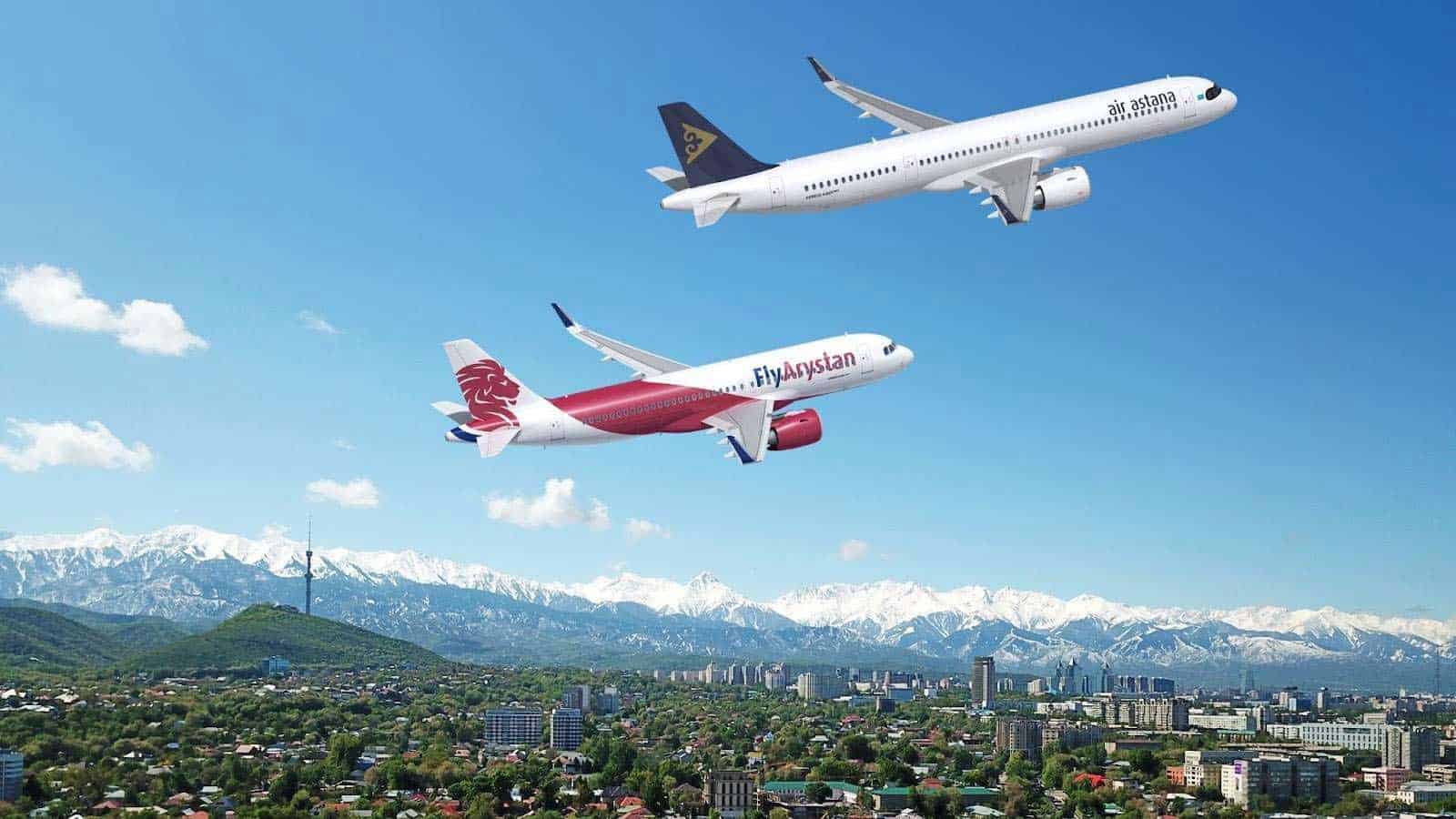
Order for 25 aircraft of the Airbus A320neo family
Air Astana Group, one of the leading airlines in Central Asia and the Caucasus, is strengthening its market position through a significant expansion of its aircraft fleet. For the first time in the company’s history, it has placed a direct order for 25 aircraft from the Airbus A320neo family – a new record for the group. This investment is not only an operational milestone but also underscores a strategic focus on sustainability and efficiency in air travel. The order consists of five A320neo and twenty A321neo aircraft, and it coincides with the twentieth anniversary of Air Astana putting its first A320 into service.
Fleet Expansion and Modernization
The selection of the Airbus A320neo family for fleet expansion reflects Air Astana’s focus on technological and operational efficiency. Aircraft in this series are distinguished by their advanced engines and aerodynamic enhancements, which significantly reduce fuel consumption and, consequently, CO₂ emissions – a key priority in the context of global discussions on sustainable aviation. For Air Astana, this represents a crucial step toward reducing its environmental footprint without compromising peak performance or passenger comfort. The airline’s current fleet already includes 59 aircraft from the Airbus A320 family, making this new order a logical expansion and renewal.
By incorporating the A321LR variant of the A321neo – optimized for long-haul flights – Air Astana is opening up new markets and destinations. These aircraft make it possible to cover long distances with a consistent cabin configuration while offering a high level of service and comfort. The combination of premium offerings and efficient range positions Air Astana as a competitor with an exceptional product in the single-aisle aircraft segment.
Economic and environmental significance of the Airbus A320neo family
Die Airbus A320neo-Serie hat sich weltweit als bevorzugtes Modell in der Kurz- und Mittelstreckenluftfahrt etabliert. Mit über 19.000 Bestellungen ist sie das meistverkaufte Flugzeug in der Kategorie der einstrahligen Verkehrsflugzeuge. Die technologische Weiterentwicklung der neo-Familie ermöglicht eine Reduktion des Kraftstoffverbrauchs um mindestens 20 Prozent im Vergleich zu Vorgängermodellen. Dadurch werden nicht nur die Betriebskosten für Airlines signifikant gesenkt, sondern auch die Emissionswerte nachhaltig verbessert.
These advantages are of great importance, particularly in a dynamic growth market like Central Asia. Airlines in this region benefit from a combination of cost-efficiency and environmental compatibility, enabling them to accommodate rising passenger numbers while simultaneously meeting regulatory requirements regarding emissions. Air Astana – a subsidiary associated with Lufthansa – is leveraging these advancements to enhance its competitiveness and secure long-term, sustainable growth.
Sustainability and forward-looking propulsion technologies
A standout feature of the Airbus A320neo family is its compatibility with Sustainable Aviation Fuel (SAF). These alternative fuels play a crucial role in improving the carbon footprint of air travel. Air Astana’s investment in the A320neo fleet not only secures short-term efficiency gains but also lays the foundation for sustainable operations in line with global climate goals.
Airbus is pursuing the ambitious goal of ensuring that its aircraft models are fully equipped to operate on 100 percent SAF (Sustainable Aviation Fuel) by 2030. This will revolutionize the airline industry and further drive fleet modernization with a focus on environmental responsibility. For Air Astana, this represents a strategic positioning as a pioneer in the use of eco-friendly technologies within one of the world’s fastest-growing regions.
Strategic significance for air transport in Central Asia
Air Astana’s decision to expand its fleet with Airbus A320neo aircraft offers far-reaching benefits for the entire region. Connectivity between Kazakhstan and international markets will be significantly improved. The long-term goal of cementing Air Astana’s status as the leading airline in Central Asia and the Caucasus requires state-of-the-art aircraft, excellent service, and economic efficiency.
Expanding the fleet with a mix of aircraft – utilized by both the main carrier and its low-cost subsidiary, FlyArystan – enables a flexible and extensive service offering. This not only strengthens the existing route network but also opens up new connections and markets. Furthermore, the high cost-efficiency of the A320neo family ensures that this can be achieved under economically stable and sustainable conditions.
Concluding Remarks
With its substantial order of 25 new aircraft from the Airbus A320neo family, Air Astana has reached a significant milestone in the modernization of its fleet and the advancement of climate-friendly aviation in Central Asia. These new aircraft offer a combination of range, comfort, and efficiency, specifically tailored to the requirements of complex markets. They underscore the company’s commitment to sustainable growth, technologically advanced solutions, and the highest operational standards.
The sustainable development of air transport is a global challenge that Air Astana is actively addressing with this strategic move. The introduction of new en route aircraft and the use of SAF (Sea-Aircraft) are clear steps towards an environmentally conscious and competitive future. In doing so, Air Astana is not only contributing to the strengthening of regional air transport but also setting standards for the aviation industry in one of the world’s most dynamic regions.
More about Air Astana and Airbus
Air Astana and Airbus: 20 years of successful cooperation
A milestone in the history of aviation in Kazakhstan – expansion and modernization of the fleet – development of the route network through modern aircraft
Air Astana Group expands fleet to 60 jets with addition of Airbus A320neo
The Air Astana Group, a leader in Central Asia, has expanded its fleet to 60 aircraft with the addition of another Airbus A320neo. This expansion supports…
Air Astana expands Airbus fleet with new A320neo
Air Astana has continued expanding its fleet with the acquisition of a new Airbus A320neo. The delivery in Almaty demonstrates the national airline’s commitment to…