
Introduction
With a new direct flight service, Air Astana is establishing a significant link between Central Asia and Japan. Starting in late November 2026, Kazakhstan’s leading airline will operate non-stop flights twice a week between Almaty and Tokyo-Narita. This route network expansion not only underscores Kazakhstan’s growing importance as an aviation hub but also fosters economic and cultural ties within the Asia-Pacific region. As an established airline group with a growing fleet, Air Astana continues to strengthen its market position, offering passengers a modern travel option that includes both Business and Economy classes.
Strategic Importance of the New Route
The launch of direct flights to Tokyo marks a significant step in Air Astana’s strategy to establish Kazakhstan as a leading hub for Central Asia and the Caucasus. As a global metropolis offering major economic and tourism appeal, Tokyo provides travelers from Central Asia with new opportunities to connect with the rest of Asia. By operating the Airbus A321LR – an aircraft designed for efficient long-haul flights – Air Astana ensures that passengers reach their destinations in comfort and with competitive travel times.
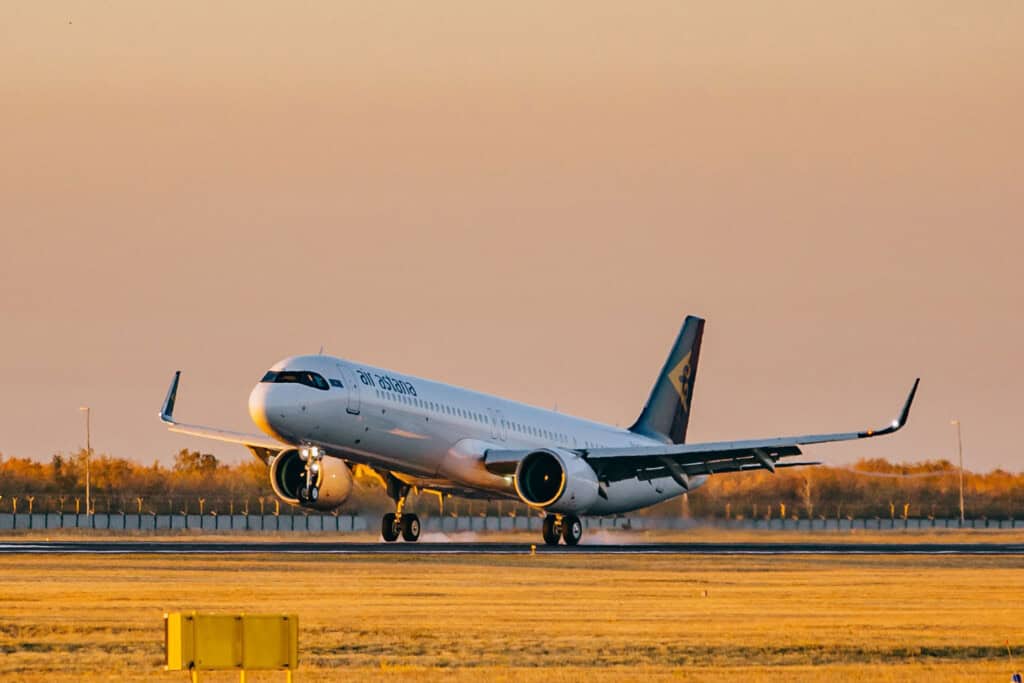
The flight route, operating on Mondays and Thursdays, involves a flight time of approximately seven and a half hours to Tokyo and nine hours for the return journey to Almaty. Furthermore, the codeshare agreement with Japan Airlines allows for the seamless booking of connecting flights, further enhancing the appeal of this new route. This partnership enables Air Astana to expand its international reach and offer its customers a wider range of destinations.
Impact on economic and cultural relations
Air travel is a crucial factor for economic exchange and cultural interaction between countries. Establishing the connection between Almaty and Tokyo not only supports tourism but also facilitates business travel and trade activities between Kazakhstan and Japan. Both countries stand to benefit from the enhanced connectivity fostered by this new flight route.
For companies in Kazakhstan, the direct link to one of the world’s major metropolises opens up opportunities to deepen partnerships with Japanese firms or tap into new markets. At the same time, the faster and more convenient travel route fosters the exchange of culture, education, and technological expertise. This integrative effect is supported by Air Astana’s existing air services – including its low-cost subsidiary FlyArystan – which offer a wide range of connections within the region.
Air Astana Group: Fleet, Services, and Awards
The Air Astana Group operates as one of the largest aviation providers in Central Asia and the Caucasus, offering a comprehensive portfolio of services. With a fleet of 63 aircraft, the Group provides a wide range of flight connections, spanning domestic routes within Kazakhstan to international destinations in Europe, the Far East, the Middle East, and India. The operations of its two subsidiaries – the full-service airline Air Astana and the rapidly growing low-cost carrier FlyArystan – enable the Group to serve diverse market segments and offer state-of-the-art travel concepts.
Numerous awards attest to the quality and commitment of the Air Astana Group: for 15 years, it has been recognized as the best airline in Central Asia and the CIS. Furthermore, it received a five-star rating from the Airline Passenger Experience Association, underscoring its high service quality within the industry. Its listing on various stock exchanges – both Kazakh and international – reflects the company’s economic stability and growth prospects.
Conclusion
The launch of direct flights from Almaty to Tokyo marks a milestone in Air Astana’s expansion and strengthens Kazakhstan’s role as an aviation hub for Central Asia. This new connection not only supports the goal of expanding the region’s route network but also fosters economic and cultural ties between the countries involved. Connectivity with Japan Airlines via codeshare agreements enhances the route’s tourism and business potential while ensuring great flexibility for travelers.
With a modern fleet, a combination of full-service and low-cost offerings, and a clear growth strategy, the Air Astana Group has established itself as a leading player in the region’s aviation sector. For travelers, the new route offers not only comfortable flight options but also direct access to one of Asia’s most economically significant and culturally rich destinations. This underscores the dynamism and future potential of aviation in Central Asia, as well as its role as a link to global markets.
With this move, Air Astana continues to expand its route network and actively shape transport links between Asia and Central Asia in the 21st century – a role that is vital for both the economy and cultural exchange.