Introduction to Cooperative Aviation Technology
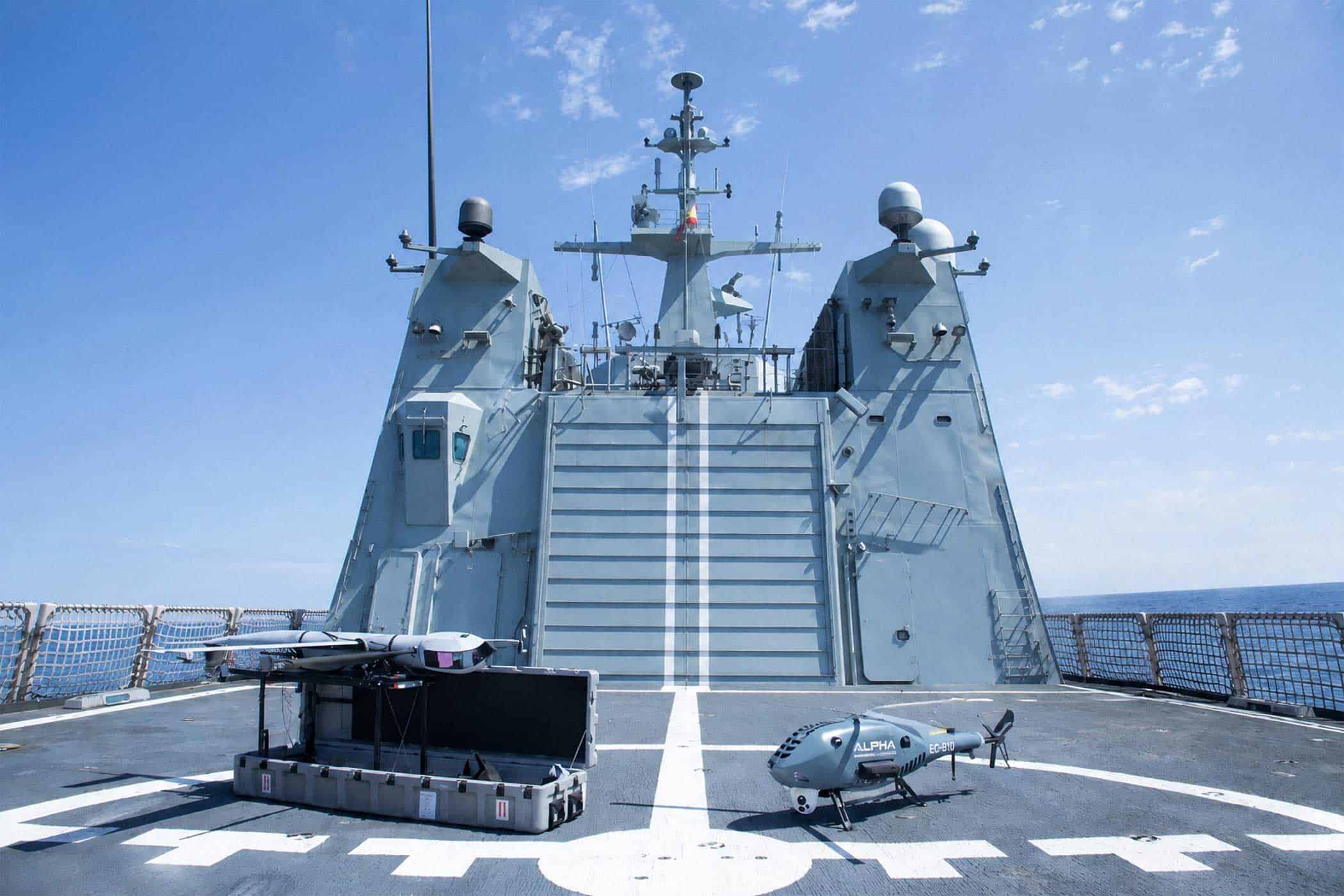
Recent military advancements demonstrate an increased utilization of Unmanned Aircraft Systems (UAS) in conjunction with manned vehicles to significantly enhance operational effectiveness across a wide range of theaters. In a notable instance from Spain, complex flight trials involving the interplay of various aircraft were successfully conducted at the Port of Rota. This exercise centered on the coordinated deployment of a Spanish Navy H135 helicopter, two distinct unmanned aircraft – the Airbus Flexrotor and the Alpha Unmanned Systems A900 – and the offshore patrol vessel Rayo. At the heart of this exercise was Airbus Helicopters’ HTeaming solution, a modular system designed for the control and integration of both manned and unmanned aircraft.
This exercise provided a valuable opportunity to validate the control and interoperability of drones and manned platforms in real time. It enabled the seamless transmission and sharing of imagery and sensor data among the participating units, thereby establishing holistic domain connectivity between air and naval forces and granting ships access to information from areas extending far beyond the range of their own sensors.
Technical Implementation and Procedure of the Exercise
The tactical tests included, among other things, the take-off and landing operations of two unmanned aerial vehicles on the moving offshore patrol vessel Rayo. These complex maneuvers highlight the challenges that modern mission commanders must face in multi-domain operations. A pilot aboard the manned H135 helicopter assumed control of the two drones using the HTeaming tablet – a device that impressed with its system-agnostic design, thereby enabling the seamless integration of the Alpha Unmanned Systems A900 without any restrictions.
The exercise involved a simulation of a high-speed waterborne pursuit as part of an ISTAR (Intelligence, Surveillance, Target Acquisition, and Reconnaissance) operation, in which both drones served as the “sensor eyes” for the overarching mission command. They tracked a target vessel and transmitted live video feeds, which were available for real-time analysis both aboard the helicopter and on the patrol boat. The data acquired was immediately fed into the advanced NAIAD system – developed by Navantia – to ensure the tactical command, control, and interoperability of unmanned aerial, surface, and underwater systems via the Spanish Navy’s SCOMBA combat system.
The Importance of Collaboration and Innovative Technologies
This collaboration between Airbus Helicopters, Navantia, and Alpha Unmanned Systems – along with the support of the Spanish Navy – impressively demonstrates how diverse technologies and specialized resources can be combined to push the boundaries of defense technology. The expertise in developing modular manned-unmanned teaming systems, as well as the capability to integrate sensor-derived data into existing combat management systems, underscores the progress being made toward sovereign European defense capabilities.
Airbus Helicopters’ HTeaming solution played a pivotal role in this process. It enables operational forces to conduct flexible and effective missions by facilitating the direct in-flight control of unmanned aerial vehicles while simultaneously integrating sensor data captured by these UAVs into the overall tactical picture. The transmission of the acquired information is facilitated by the Helicopter Integrated Tactical System console, which acts as a bridge between aircraft integration and maritime databases, thereby ensuring seamless compatibility with Navantia’s tactical systems.
Future developments aim to build upon this successful exercise and, among other things, foster the advancement of drone swarms. Of particular note in this context is the targeted and coordinated control of multiple unmanned systems simultaneously, intended to enhance effectiveness in surveillance and combat operations. Furthermore, the further interconnection of the air and maritime operational domains – as well as integration with ground vehicles – is being increasingly explored to enable a comprehensive and efficient multi-domain strategy.
Outlook on the Future of Multi-Domain Operations
The increased utilization and integration of manned and unmanned aircraft in maritime contexts symbolize a decisive paradigm shift in military operational command. Such multi-domain operations significantly enhance the reach, responsiveness, and situational awareness of deployed forces. The improved capability to transmit critical data from long distances to the command ship in real time substantially enhances situational awareness and, consequently, decision-making processes.
Furthermore, the modular design of systems such as HTeaming offers not only flexibility regarding future upgrades and expansions but also a reliable interface for various manufacturers and platforms. This openness is essential for rapidly and efficiently introducing innovations amidst the increasing competitive pressure in the field of defense technologies.
With a view toward future challenges, the integration of drone swarms represents a promising development. This involves the coordinated control of multiple unmanned units capable of both conducting surveillance and supporting offensive operations. Connecting these systems with established tactical networks – such as NAIAD and SCOMBA – creates a comprehensive infrastructure that enables maritime forces to operate successfully in complex operational scenarios.
These advancements not only continue the history of manned-unmanned teaming technology but also set new standards for operational collaboration between air and naval forces. Alongside technological innovation, strategic cooperation between companies and government institutions plays a decisive role in meeting the demand for innovative, sovereign defense solutions and strengthening Europe’s role on the global stage.
Conclusion: Acquire and Share Critical Information in Real Time
The recent tactical flight trials off the Spanish coast impressively underscore the relevance of – and progress in – the integration of manned helicopters and unmanned aerial vehicles in maritime defense. The collaboration between Airbus Helicopters, the Spanish Navy, Navantia, and Alpha Unmanned Systems impressively demonstrates how modern technologies and cooperation enhance the capability to acquire and share critical information in real time.
The use of modular control solutions such as HTeaming – and their integration into existing combat systems –ensures the optimal utilization of synergies between platforms. This enhances the ability to respond flexibly to evolving threat scenarios and to optimize the security situation in maritime areas.
With a focus on the further development of drone swarms and the enhanced integration of air and naval forces, the next phase of military tactics and technology is already poised for launch. The successes achieved to date serve as a testament both to the potential of such systems and to the importance of international cooperation in delivering innovative defense solutions for future challenges. The advancing digitalization and networking of weapon systems open up sustainable opportunities for a modern, effective, and sovereign defense strategy.
More about Airbus
Applications in Surveillance, Reconnaissance, and Electronic Warfare: The rapid development of unmanned aerial systems plays a decisive role in modern defense and surveillance.
Concepts for Next-Generation Rotorcraft: The advancement of military helicopter technology lies at the heart of the latest initiatives from Airbus Helicopters, which is now presenting its innovative concepts for…