Introduction to the New Composite Competence Center
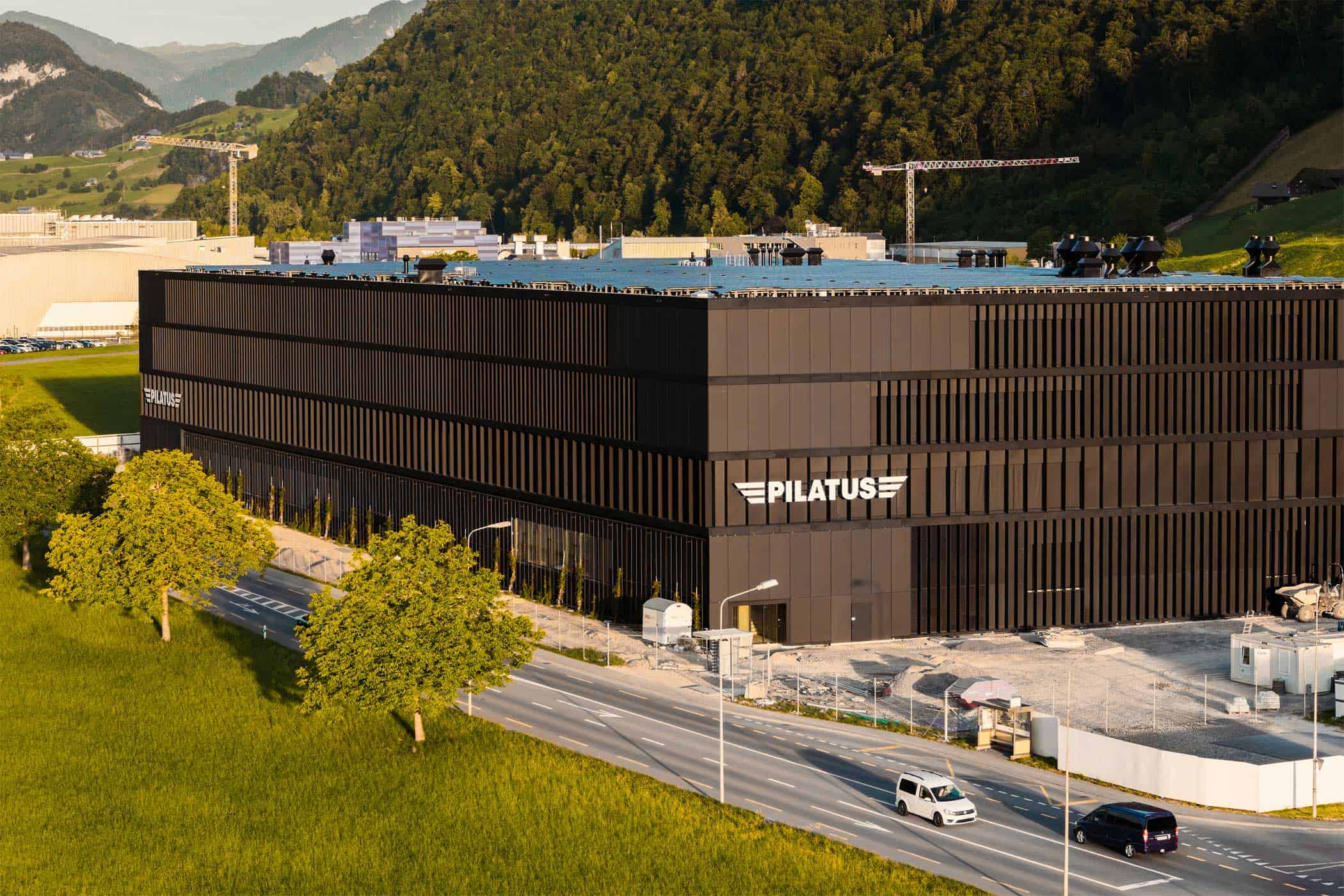
With the construction of the new “Schwarzhorn” facility at its site in the Canton of Nidwalden, Pilatus Aircraft Ltd has achieved a significant milestone in the aviation industry. This state-of-the-art competence center for fiber-reinforced plastics – also known as composites – consolidates the development and manufacturing of these innovative materials under one roof for the first time. The building accommodates around 300 employees, providing them with cutting-edge workspaces in a forward-looking environment. Its design incorporates the highest sustainability standards, making it an outstanding example of responsible and efficient construction in Switzerland.
The use of composites represents a technological advancement for Pilatus, significantly enhancing the performance and efficiency of its aircraft models. While these materials were previously used primarily for non-load-bearing secondary structures, the introduction of the PC-24 Super Versatile Jet marks the first time a primary structural component is made of composite material, demonstrating the efficiency potential of these materials in aircraft manufacturing.
Technological innovations and manufacturing processes at Schwarzhorn
The building known as “Schwarzhorn” is not only a symbol of the fusion of Swiss engineering and modern architecture but also consolidates all composite production stages at a single central location. Every phase – from raw material delivery and storage to component manufacturing, detailed assembly, and surface treatment, through to warehousing and order picking – takes place in optimally equipped areas. This integrated process landscape supports efficient workflows and enables the production of high-quality end products, which are delivered as complete kits directly to final aircraft assembly.
Self-sufficiency in plastics manufacturing allows individual specialist disciplines to focus fully on their core tasks and maximize value-creation potential. Furthermore, the infrastructure is designed to integrate advanced manufacturing technologies and automated testing systems. This not only enhances product quality but also drives continuous improvements in productivity. Another key success factor is the close integration of manufacturing and development, which shortens innovation cycles and enables flexible solutions for changing requirements.
Sustainability as a key feature of the new building
Schwarzhorn’s commitment to sustainability is reflected in a wide range of environmental measures that go far beyond standard practices. The building features extensive photovoltaic arrays on the roof and façade, which independently cover a significant portion of its energy needs. In addition, process waste heat is effectively recovered, and groundwater is utilized for both heating and cooling, substantially reducing external energy consumption.
The aim to have this competence center certified to the prestigious LEED Platinum standard reflects a commitment to responsible, resource-efficient construction. LEED criteria focus not only on low energy and water consumption but also on minimizing the environmental footprint throughout the building’s entire lifecycle. This sustainable approach not only supports environmental protection but also promotes employee well-being and underscores the importance of future-readiness in the aviation industry.
Expansion of Composite Use and Strategic Significance for Aviation
The decision to use load-bearing components made of fiber-reinforced plastic in future aircraft manufacturing marks a groundbreaking development for Pilatus. Utilizing composites in primary structures – such as control surfaces – enables aircraft weight reduction, which directly contributes to improved fuel efficiency. This innovation is essential for sustainable aviation solutions and drastically reduces CO2 emissions, allowing Pilatus to make a significant contribution to climate protection.
The expanded use of composites offers further potential for additional aircraft models and components. Such a comprehensive center of competence based in Switzerland strengthens not only the company’s innovative capacity but also Switzerland’s position as a leading production and development hub in the aviation industry.
Economic and societal aspects of the Schwarzhorn project
With an investment of around 100 million Swiss francs, this competence center represents the largest single investment in Pilatus’s infrastructure to date. This funding underscores the high priority the company places on the further development of its technologies and the preservation of skilled jobs. The Nidwalden location benefits from this investment through the creation of long-term jobs and the strengthening of the regional economy.
Moreover, Schwarzhorn serves not only as a production facility but also as a training and innovation center where specialists undergo further training and new processes are tested. This reinforces Switzerland’s role as a key player in high-tech aviation and helps to firmly establish knowledge and expertise in the field of fiber-reinforced plastics for the long term.
Summary and Outlook
The opening of the new composites competence center marks a significant step forward for Pilatus and the entire Swiss aviation industry. Through the systematic integration of development, manufacturing, and sustainability, a state-of-the-art platform is being created at the Nidwalden site that accelerates innovation and boosts competitiveness. The use of composites for primary structural aircraft components paves the way for lighter and more environmentally friendly aircraft.
The combination of technological excellence, economic strength, and a sense of ecological responsibility makes the project a model for the future of aircraft manufacturing. In doing so, the Schwarzhorn becomes not only a center for excellence in aviation technology but also a symbol of sustainable development and progress in the region.
In the coming years, the role of composites will continue to grow, and the synergies realized at the competence center will help Pilatus continue producing innovative aircraft characterized by high efficiency and low environmental impact. The building’s sustainable design and forward-looking use of resources set benchmarks that can inspire other industries as well.