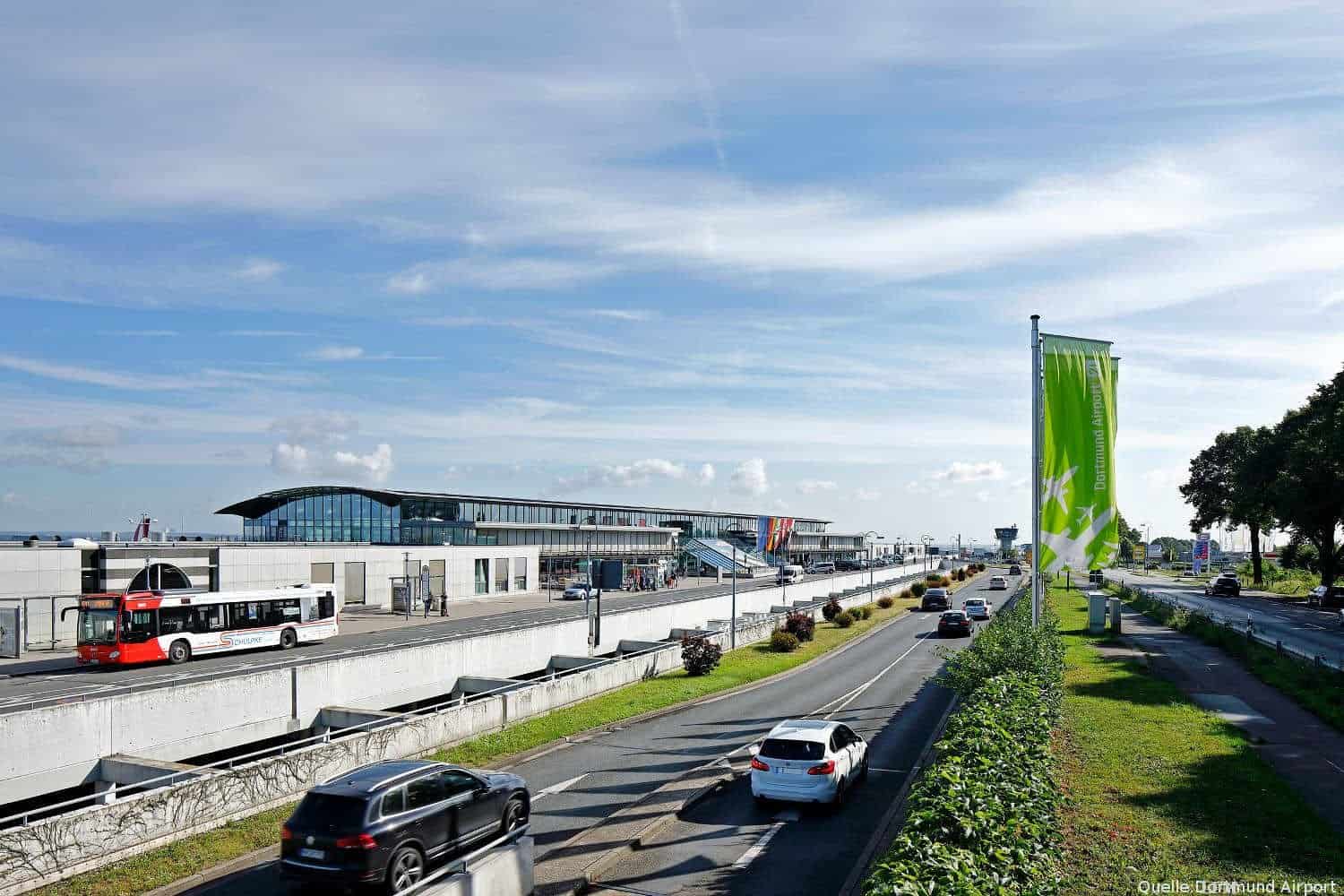
Continuous growth at Dortmund Airport
Air traffic figures at Dortmund Airport showed significant growth in the third quarter. With over a million passengers recorded between July and September, the airport demonstrated a stable and positive traffic trend, reinforcing its position as a key regional hub. Various factors contributed to this success, including an increasing number of airlines, new flight routes, and higher travel volumes during the summer months.
Of particular note is the significant growth in Wizz Air passenger numbers. The Hungarian airline recorded an increase in passenger volume of approximately 13 percent compared to the same period last year. This positive trend underscores Wizz Air’s importance as a key partner for the airport in opening up new markets and expanding the route network.
The exceptionally high volume of travel during the summer holidays is also a major factor contributing to the increase in passenger numbers. During the summer months, the number of holiday travelers exceeded 530,000, setting a new record for comparable periods. August, in particular, saw the highest monthly figure of the year, with over 360,000 passengers. This trend reflects not only the airport’s appeal as a starting point for holiday travel but also the high load factors of the aircraft in operation.
Current passenger figures and their significance for regional aviation
The cumulative passenger figures of more than 2.62 million for the current year show an increase of around 179,000 travelers compared to 2025. This rise could be interpreted as an indicator of a sustained positive trend in the aviation industry. It suggests that Dortmund Airport has successfully established itself as a competitive hub in the Ruhr region, appealing to both business and leisure travelers.
Securing and increasing seat load factors is of great importance to airport operators, as this significantly impacts operational efficiency. High aircraft load factors help ensure economic sustainability while simultaneously expanding the range of options available to passengers. Furthermore, the route network plays a central role: a diverse portfolio of destinations makes it possible to meet varied customer needs and to balance out seasonal and regional fluctuations.
Against this backdrop, Dortmund Airport is seizing the opportunity to expand its flight schedule and open up new travel options. The targeted development of new destinations enhances the overall offering for the region, which in turn contributes to increased passenger numbers. Consequently, the airport’s strategic focus is on placing greater emphasis on attractive destinations in Southern and Central Europe, alongside existing routes.
Expanding flight options and the route network
The introduction of eight new flight routes this year represents a significant expansion of the service offering. Connections to major European cities such as Milan, Palermo, and London create new options for travelers and strengthen the airport’s international character. Expanding such networks fosters not only tourism but also exchange between economic regions.
Another highlight is the addition of Rome as a new destination starting October 25. Rome is one of Europe’s most popular travel destinations, offering a wide range of opportunities for both tourists and business travelers. This destination perfectly complements the airport’s portfolio and underscores its commitment to providing passengers with an extensive and attractive range of options.
In addition to the number of destinations, the quality of flight connections remains a key factor. Cooperation with established airlines and the integration of new partners make it possible to optimize flight frequencies while simultaneously offering attractive prices. These factors contribute to increasing customer satisfaction and ensuring stable passenger numbers in the long term.
Furthermore, infrastructure measures are being implemented to improve airport transport and on-site processes. Efficient check-in procedures, modern security standards, and good accessibility by car or public transport enhance passenger convenience. Overall, these measures create an environment that supports positive development through both increased capacity and optimized operations.
Future prospects and challenges of dynamic air traffic development
As it looks toward the final quarter of the year, Dortmund Airport is positioning itself to sustain and further build upon the positive trend in traffic. The growth already achieved provides a solid foundation for meeting—or even exceeding—the annual passenger targets. Studies on regional travel marketing and air traffic analyses indicate that the trend toward increased travel remains steady, driven by rising demands for mobility.
As it looks toward the final quarter of the year, Dortmund Airport is positioning itself to sustain and further build upon the positive trend in traffic. The growth already achieved provides a solid foundation for meeting—or even exceeding—the annual passenger targets. Studies on regional travel marketing and air traffic analyses indicate that the trend toward increased travel remains steady, driven by rising demands for mobility.
The consistent expansion of the route network and the broadening of services are crucial for maintaining competitiveness in the European market. Investments in infrastructure and partnerships with airlines play a vital role in keeping the service offering up-to-date and attractive. At the same time, striking a balance between growth and quality assurance is essential to meet future demands.
In summary, Dortmund Airport has demonstrated significant progress in passenger numbers during the third quarter. This growth is driven by a combination of new destinations, high numbers of holiday travelers, and strong aircraft load factors. Industry challenges are being closely monitored and taken into account, positioning the airport on a promising path for the future.
In conclusion, it remains to be seen how additional destinations—such as Rome—will impact overall traffic volumes and what further innovations and strategic measures will be implemented to strengthen the airport’s market share within the region and beyond. Continuously adapting to passenger needs and developing environmentally sustainable services will undoubtedly be key aspects of the airport’s future development.