Technical Inspection Required / Replacement Bus Service Operating
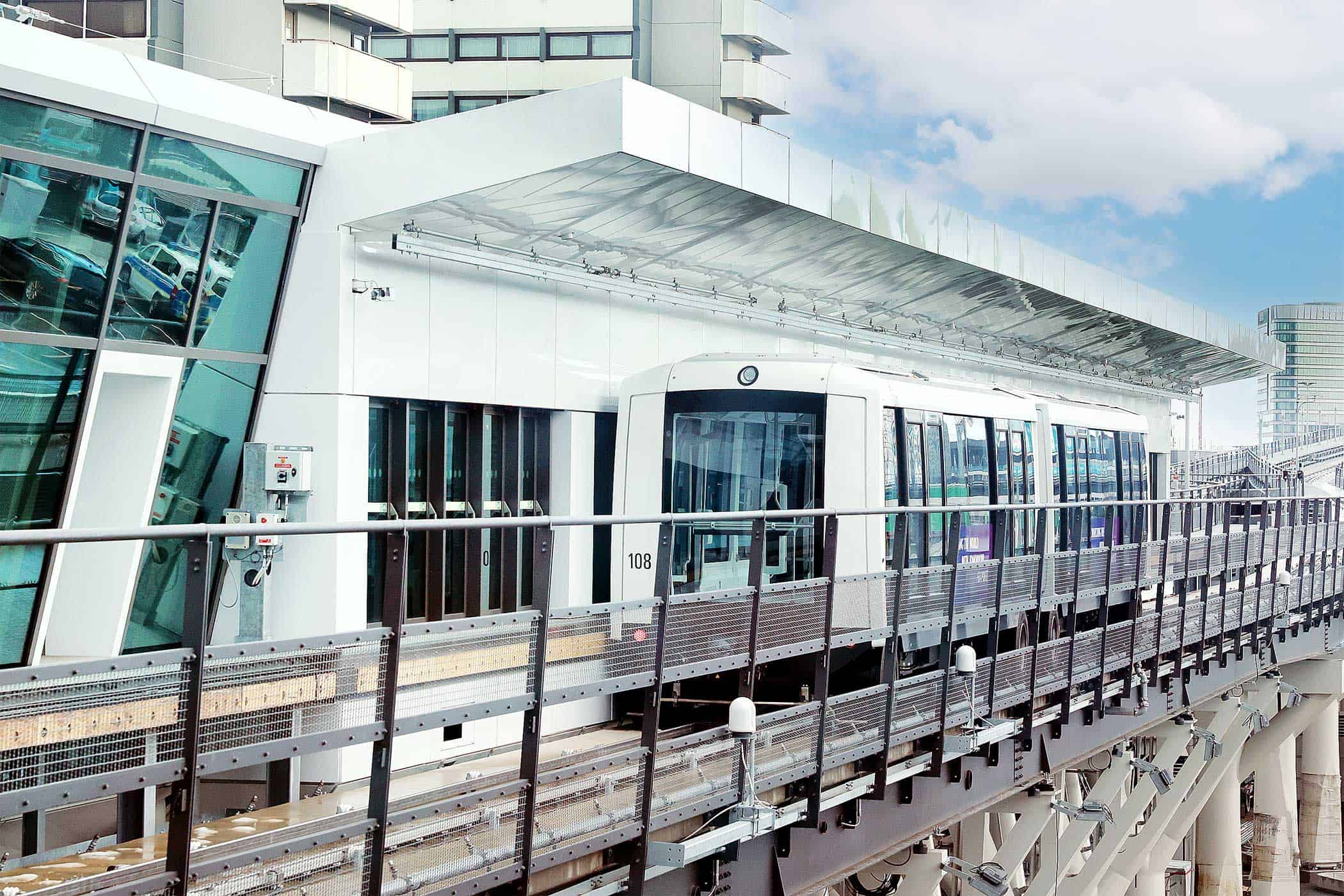
The new Sky Line train at Frankfurt Airport – which connects Terminals 1, 2, and 3 along a route of approximately 5.6 kilometers – represents a groundbreaking innovation in the field of airport mobility. As a fully automated, driverless transport system, it is designed to transport up to 4,000 people per hour in each direction, both comfortably and efficiently. Since entering service, it has transported up to 25,000 passengers and visitors daily. Despite its technological sophistication and high capacity, short-term technical inspections and optimizations have become necessary, resulting in the temporary suspension of the system’s operation. In the interim, comprehensive replacement services have been provided to ensure continued connectivity between the terminals and to minimize disruption to passenger travel.
Causes of Unscheduled Business Interruption
The decision to temporarily suspend operations of the new Sky Line train is based on the urgent need for technical adjustments and optimizations to the complex overall system. Intensive usage during the initial weeks has revealed vulnerabilities and highlighted the need for calibration across various components. The areas under review include both the vehicles themselves and the underlying rail technology systems. Experts from Siemens Mobility – responsible for technical operations – and specialists from Fraport AG are working closely together to identify the root causes of the disruptions and carry out the necessary adjustments. The objective is to guarantee reliable and stable operations.
This cooperative collaboration highlights the complex challenges associated with state-of-the-art automated rail technology. Even advanced systems require regular updates and meticulous maintenance to meet the high quality standards demanded in airport operations. Alexander Heinrich, Operations Manager for the Sky Line train at Fraport, emphasizes the priority of providing all users with a safe, comfortable, and reliable mode of transport. Consequently, the temporary suspension of regular operations is viewed as an unavoidable measure intended to result in improved service quality in the long run.
Replacement Services and Assistance for Travelers
To ensure that passenger and guest mobility remains unimpeded despite the suspension of rail service, a comprehensive bus replacement service has been established. During regular operating hours, up to 20 buses run between the terminals at intervals of two to three minutes. At night – between 11:00 PM and 5:00 AM – a reduced schedule is in effect, with departures every ten minutes. The bus stops are strategically located directly in front of the terminal arrivals areas, allowing travelers to transfer between the buildings with ease.
Service staff are on hand to assist passengers, answer questions, and ensure the smooth flow of transfer processes. Airport management requests that all travelers take these circumstances into account when arriving at or departing from the airport, and plan for extra time to travel between terminals. A separate shuttle service – comprising up to five buses – has also been established for transfer passengers moving within the airside security area, in order to maintain connections within the secure zones.
The substitute transport service thus represents a reliable alternative that guarantees the continued functioning of airport operations. At the same time, this measure underscores the commitment to customer-oriented service, even in challenging situations.
Technological Features and Challenges of the Sky Line
The new Sky Line train at Frankfurt Airport serves as an innovative example of automated local transport within a complex transportation hub. This driverless system enables a flexible, rapid, and efficient connection between the terminals, without relying on manual operation. Fully automated control is ensured through state-of-the-art sensor technology, algorithms, and safety concepts. As a result, the train achieves a capacity of up to 4,000 passengers per hour in each direction – meeting the high mobility demands of an international airport.
The track length of over 5.5 kilometers imposes specific technical requirements, including those related to signaling technology, vehicle maintenance, and synchronization with airport operations. During this preliminary phase of regular operations, fine-tuning of the interfaces between the vehicles and the track system has proven particularly necessary. These represent typical challenges inherent to highly complex transport systems – challenges that became apparent through the system’s intensive utilization and high passenger volumes.
These challenges are not uncommon in the implementation of modern transport projects; rather, they offer opportunities for improvement and adaptation for long-term operation. The continuous further development and regular maintenance of the technical infrastructure are crucial for ensuring quality and safety. The collaboration between Fraport AG and Siemens Mobility underscores the importance of collaborative approaches and interdisciplinarity in such major projects.
Continuity of Airport Operations Despite Restrictions
While the new Sky Line train connecting Terminals 1, 2, and 3 is temporarily out of service, the existing train line linking Terminals 1 and 2 remains fully operational. This ensures that at least a portion of the automated rail system remains capable of handling passenger traffic. The continuity provided by this existing infrastructure allows airport operations to remain stable and enables the passenger flow to be managed – at least in part – via a proven mode of transport.
Overall, it is evident that Frankfurt Airport is well-prepared to handle technical challenges that may arise during the introduction of new system components. The provision of supplementary bus replacement services ensures that no major mobility restrictions occur, even in the absence of regular operations for the Sky Line train. Airport management and its technical partners have mobilized the necessary capacities and resources to ensure smooth operations– a fact that underscores the critical importance of mobility infrastructure within the context of international air travel.
Conclusion: Cooperation between different partners
The temporary suspension of service for the new Sky Line train at Frankfurt Airport stems from the necessity of conducting technical inspections and optimizations designed to ensure the system’s long-term stability and reliability. The challenges inherent in introducing a complex, automated transport system within such a high-traffic environment require an integrated approach bridging technical and operational aspects. During this phase, a replacement bus service provides the necessary connection between terminals, while service-oriented support helps facilitate the daily experience for passengers.
The project demonstrates the complexity of modern airport logistics and highlights the essential nature of continuous technical support, evaluation, and cooperation among various partners. With the completion of all adjustments, regular rail operations are expected to stabilize, and mobility for passengers and guests at Frankfurt Airport is set to become even more comfortable and secure. Simultaneously, the uninterrupted availability of the existing rail line aims to complement the transport services and ensure continuity. For all parties involved, reliable and safe transport lies at the heart of every measure undertaken to meet the exacting demands of international air travel.