Fleet strategy
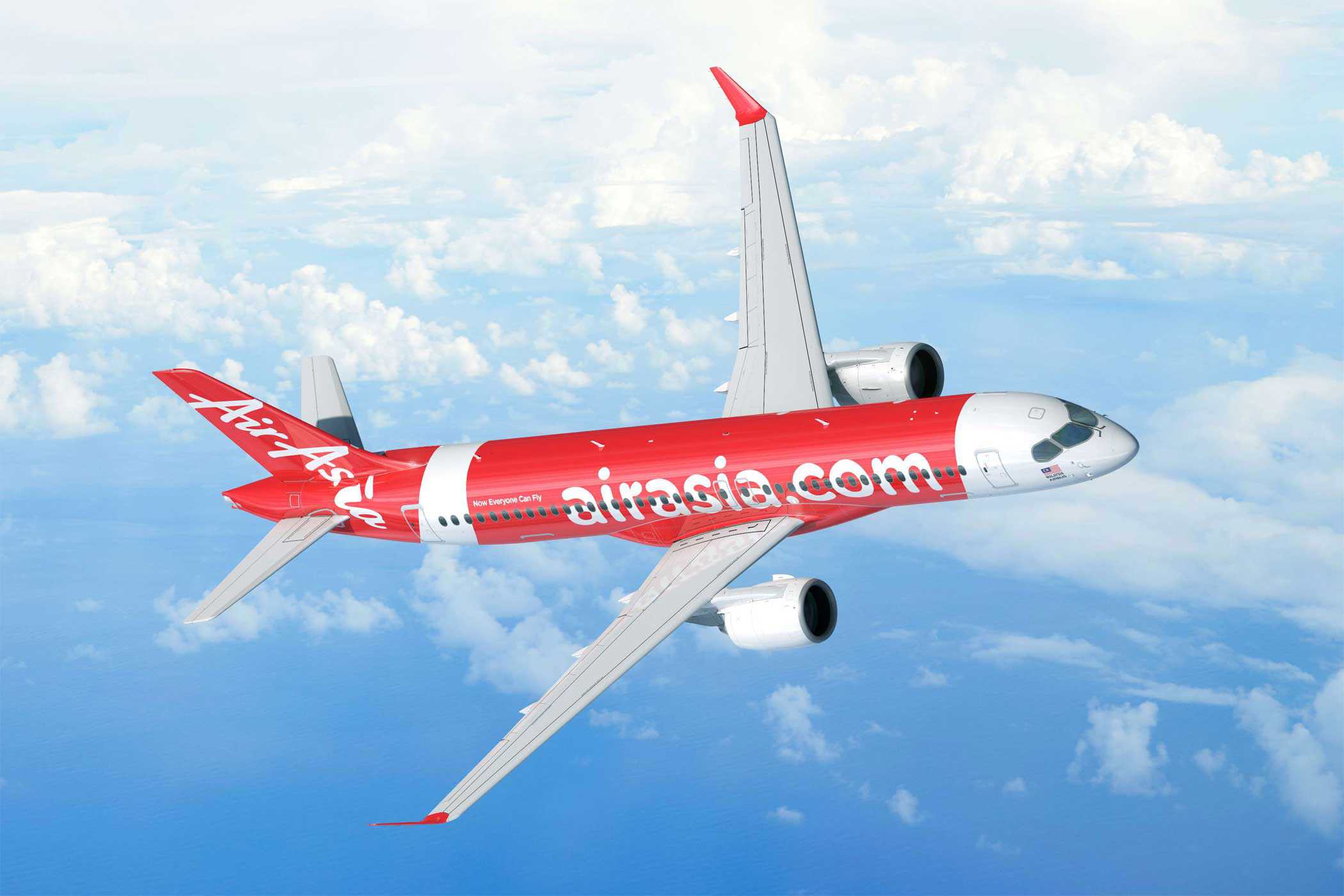
Malaysia’s leading airline, AirAsia, has taken a significant step in its fleet strategy by placing an order for 150 new A220-300 jets. This investment is of great importance to the airline’s expanding global network and simultaneously marks a milestone for the A220 aircraft program, bringing it to a total of more than 1,000 firm orders. The significance of this order lies not only in the number of aircraft involved but also in the innovative design and efficiency of one of the most modern short-to-medium-haul aircraft available today. This move further deepens the collaboration between AirAsia and Airbus, driving the airline’s strategic expansion and creating new opportunities for both regional and intercontinental air travel.
Air Transport Strategy and Network Expansion
AirAsia leverages the advantages of the A220-300 to complement its existing Airbus aircraft portfolio. This addition plays a crucial role in optimizing routes within the ASEAN states and extending the network as far as Central Asia. The A220 enables the airline to serve clusters of small and medium-sized airports that were previously less accessible to larger aircraft. Thanks to its extended range and lower operating costs, AirAsia’s network strategy is shifting toward more flexible route planning, making longer – yet still cost-efficient – flights possible.
By introducing a new cabin configuration with 160 seats –an increase of ten seats compared to previous variants – the airline enhances capacity without compromising on comfort. The integration of additional over-wing emergency exits enables this expansion in full compliance with regulations while simultaneously enhancing on-board safety. These adjustments reflect a carefully planned growth strategy designed to establish AirAsia as a leading low-cost carrier in the Asian region.
Technological Features of the A220 and Environmental Efficiency
The A220-300 belongs to the latest generation of aircraft that set new standards in their category in terms of both range and efficiency. With a range of up to 3,600 nautical miles (approximately 6,700 kilometers) and a seating capacity of 100 to 160 passengers, the aircraft offers an ideal solution for medium-haul routes, which are frequently served by regional airlines.
Particularly noteworthy is the combination of low fuel consumption and a wide cabin, which not only enhances passenger comfort but also significantly reduces operating costs. The reduction in jet fuel consumption is achieved primarily through advanced engines and aerodynamic improvements. The result is a substantial reduction in CO2 emissions compared to older aircraft models, thereby meeting the demands of an increasingly environmentally conscious aviation industry.
Another key aspect is the A220’s capability to operate – right now – on up to 50% Sustainable Aviation Fuel (SAF). Airbus aims to equip all aircraft in its production line to operate on 100% SAF by 2030. This transition represents a crucial contribution to the decarbonization of air transport and supports AirAsia in operating more sustainably and reducing its environmental footprint.
Partnership and Economic Impact
The collaboration between AirAsia and Airbus boasts a long track record of success, which is now being further expanded through this major order. The signing of the purchase agreement took place at the Airbus facility in Mirabel and was attended by high-ranking figures such as Tan Sri Tony Fernandes, CEO of Capital A and Advisor to the AirAsia Group, as well as Lars Wagner, CEO of Commercial Aircraft at Airbus. Political representatives were also present, underscoring the global significance of this agreement.
This investment reflects AirAsia’s strategic objective to open up new markets as the world’s first true low-cost network carrier, while simultaneously maximizing operational efficiencies. The decision to select the A220 is no coincidence, but rather a deliberate choice driven by the optimal cost-benefit ratio that this aircraft type offers. These new aircraft enable AirAsia to expand its route network, thereby allowing it to operate with significantly greater competitiveness within the international arena.
A long-term perspective reveals that such major orders foster growth and connectivity within Asia and beyond. Furthermore, the procurement of state-of-the-art aircraft creates jobs in the maintenance and operations sectors and strengthens economic ties between strategically important regions. These effects extend beyond the aviation industry, contributing to overall economic development.
Summary and outlook
Malaysia’s AirAsia’s decision to acquire a large number of A220-300 aircraft represents a significant step in the evolution of modern short- and medium-haul aviation. The choice of an aircraft type distinguished by high efficiency, modern technology, and increased capacity demonstrates how the airline is adapting to changing demand patterns and the requirements of air travel.
By adopting a new cabin configuration for 160 passengers, AirAsia will be able not only to serve existing routes more efficiently but also to establish new routes that provide access to more remote markets. At the same time, thanks to its range and lower emissions, the A220 offers a sustainable solution that meets growing environmental requirements.
The partnership between Airbus and AirAsia is thus further deepened, with both companies benefiting from each other’s innovative strength and market-oriented approach. This major order serves as a signal for the future of low-cost carriers seeking to thrive amidst rapidly changing international competition. Furthermore, the deployment of the A220 makes a significant contribution to reducing the environmental footprint of air travel.
In the coming years, the introduction of this latest generation of aircraft will undoubtedly significantly influence the dynamics of regional aviation and serve as an example of sustainable and cost-efficient growth within the aviation industry. In doing so, AirAsia positions itself not only as a pioneer in the low-cost segment but also as a frontrunner in technological innovation and environmentally conscious air travel.
More about AirAsia
AirAsia has taken delivery of its first A330neo aircraft from Airbus. It will be operated by its long-haul sister airline, AirAsia X Thailand. The A330neo is being leased through Avolon, and it…
AirAsia is significantly increasing its order with Airbus – not in the form of more aircraft, but of larger ones. The airline intends to place 253 orders for the new A320neo model…