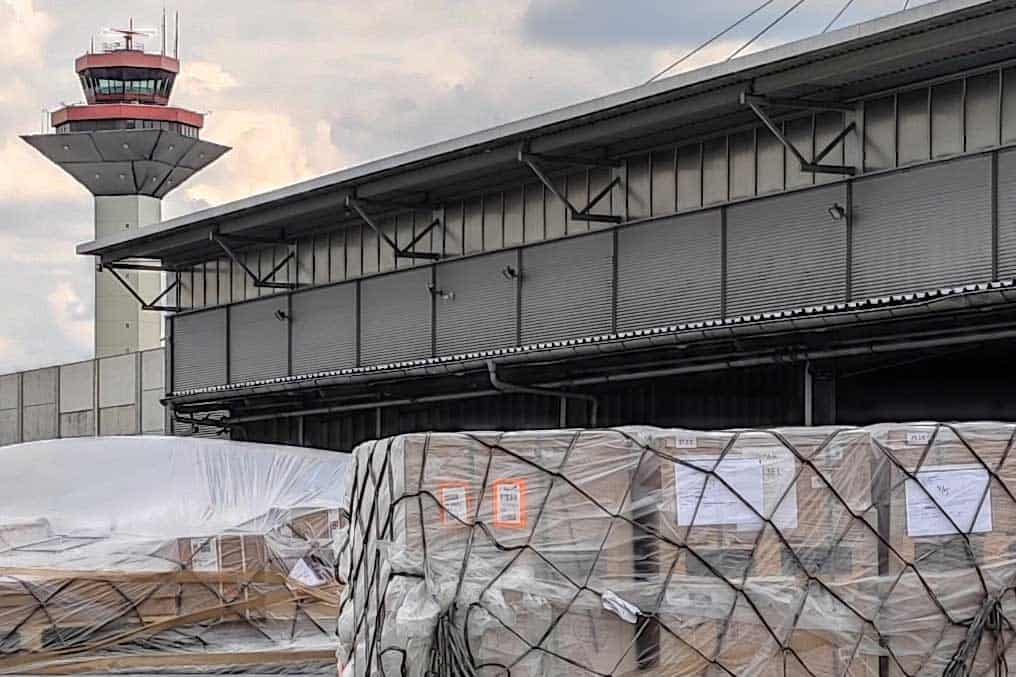
Overview of Air Cargo Development in Germany in Q1 2026
The German air freight industry recorded remarkable developments in the first quarter of 2026, exhibiting positive growth trends despite significant pressures stemming from geopolitical tensions — particularly the war in Iran. The total volume of cargo handled rose significantly, pointing to stable demand and effective logistics processes. This increase is particularly noteworthy against the backdrop of external factors that led to setbacks in other sectors. At the same time, the data reveals distinct seasonal fluctuations characteristic of the air freight industry.
In contrast to the quantitative growth of the air freight industry stand the personnel challenges, which manifest themselves in declining employment figures. This trend points to structural bottlenecks that could impair the industry’s future growth potential. At the same time, an analysis of the political framework highlights the need for strategic adjustments to address the shortage of skilled labor and safeguard competitiveness.
The Impact of Geopolitical Conflicts on Air Cargo Handling
The losses observed in March — during the first quarter of 2026 — are closely linked to the repercussions of the war in Iran. This conflict led to disruptions in air freight operations and negatively impacted cargo volumes, particularly within the affected region. Despite these challenges, the German air freight industry managed to achieve growth of over four percent compared to the same period of the previous year. This development reflects, on the one hand, the resilience of supply chains and, on the other, the adaptability of transport networks.
The interplay between global conflicts and air freight serves as a prime example of how external factors can influence freight rates and operational workflows. Nevertheless, the diversification of transport routes and the optimization of logistical processes help to minimize risks. Companies in this sector must continuously monitor these dynamics in order to adapt their strategies accordingly and ensure sustainable business models.
Seasonal Trends and Their Significance for the Air Cargo Industry
Seasonal fluctuations in air cargo throughput — such as the decline in handled tonnage compared to the fourth quarter of 2025 — are a well-known phenomenon within the industry. These fluctuations frequently stem from demand patterns, economic cycles, and climatic conditions. Consequently, a decline of around ten percent in the first quarter should be viewed less as a cause for alarm and more as an expected development.
For companies in the air freight sector, these influences play a decisive role in resource and capacity planning. Taking seasonal effects into account is essential for efficiently managing personnel, cargo volumes, and infrastructure, as well as for optimizing operational processes. Furthermore, such cyclical patterns demand a degree of strategic flexibility that enables companies to bridge seasonal troughs and fully capitalize on opportunities during peak periods.
The Challenge of Staff Shortages and Political Framework Conditions
A concerning trend is evident in employment figures, which declined by three percent in the first quarter of 2026 compared to the previous quarter. The shortage of qualified personnel poses a significant obstacle to the expansion of air freight companies. This trend is exacerbated by lengthy security checks and administrative burdens, which hinder hiring processes.
The political landscape plays a central role in this context. Existing regulatory provisions lead to delays in securing personnel, thereby exacerbating the shortage of skilled workers. However, there are now significant political signals indicating a move toward making these processes more efficient and, consequently, lowering the hurdles for businesses. Enhanced cooperation between government authorities and the industry is indispensable in this regard to ensure sustainable development.
Furthermore, innovative approaches are required to unlock the potential of new talent — for instance, through targeted training and professional development programs. Securing qualified staff is crucial to meeting the high demands of the air freight sector and enhancing service quality.
The Role and Significance of the Association of Air Cargo Handlers in Germany
The Association of Air Cargo Handlers in Germany (VACAD) serves as a central player and advocate for the industry. Since its founding in 2007, the association has fulfilled a vital intermediary role between member companies, government ministries, and other relevant institutions. With 14 members operating at nearly all commercial airports in Germany, it represents a significant segment of the national air cargo market.
The association’s work focuses on a wide range of areas: from communication with political decision-makers and public relations to the exchange of expertise within the industry. The shared objective is to improve framework conditions and foster the sustainable development of air cargo logistics.
Furthermore, the association supports companies in responding to challenges such as labor shortages and changing market conditions. Continuous dialogue and networking within the association strengthen the innovative capacity and adaptability of the entire industry.
Future Prospects and Strategic Recommendations
Given the positive trend in air cargo handling — despite adverse circumstances — the industry is well positioned to achieve further growth. At the same time, however, challenges are emerging that must be addressed to ensure long-term stability. This includes, in particular, overcoming the shortage of skilled labor through both political and corporate initiatives.
Measures aimed at accelerating security checks and simplifying administrative processes are recommended. At the same time, companies should increase their investment in education and training in order to attract and retain qualified personnel.
Strategic adaptation to seasonal fluctuations and the strengthening of resilience against geopolitical influences are further key aspects. Innovative technologies and optimized process chains can contribute to realizing efficiency gains and cost savings.
Overall, the German air freight industry offers a dynamic environment with opportunities for growth and development, provided that internal and external challenges are addressed. The role of industry associations and policymakers will continue to be crucial in establishing optimal framework conditions.
Conclusion: Cargo Industry Records Growth
An analysis of air freight metrics for the first quarter of 2026 reveals an industry that is recording growth despite global uncertainties and political conflicts. However, managing staff shortages and adapting to seasonal fluctuations remain critical factors that will significantly influence future development.
Close cooperation among companies, industry associations, and policymakers is essential to achieve sustainable improvements. Policy measures to streamline security regulations, combined with an open personnel policy, can help alleviate bottlenecks and foster growth within the air cargo sector. At the same time, these multifaceted challenges present an opportunity to set new standards through innovation and collaboration, thereby safeguarding long-term competitiveness.
The industry thus faces the task of strategically building upon its strengths and systematically addressing its weaknesses, in order to continue playing a decisive role in national and international freight transport in the future.