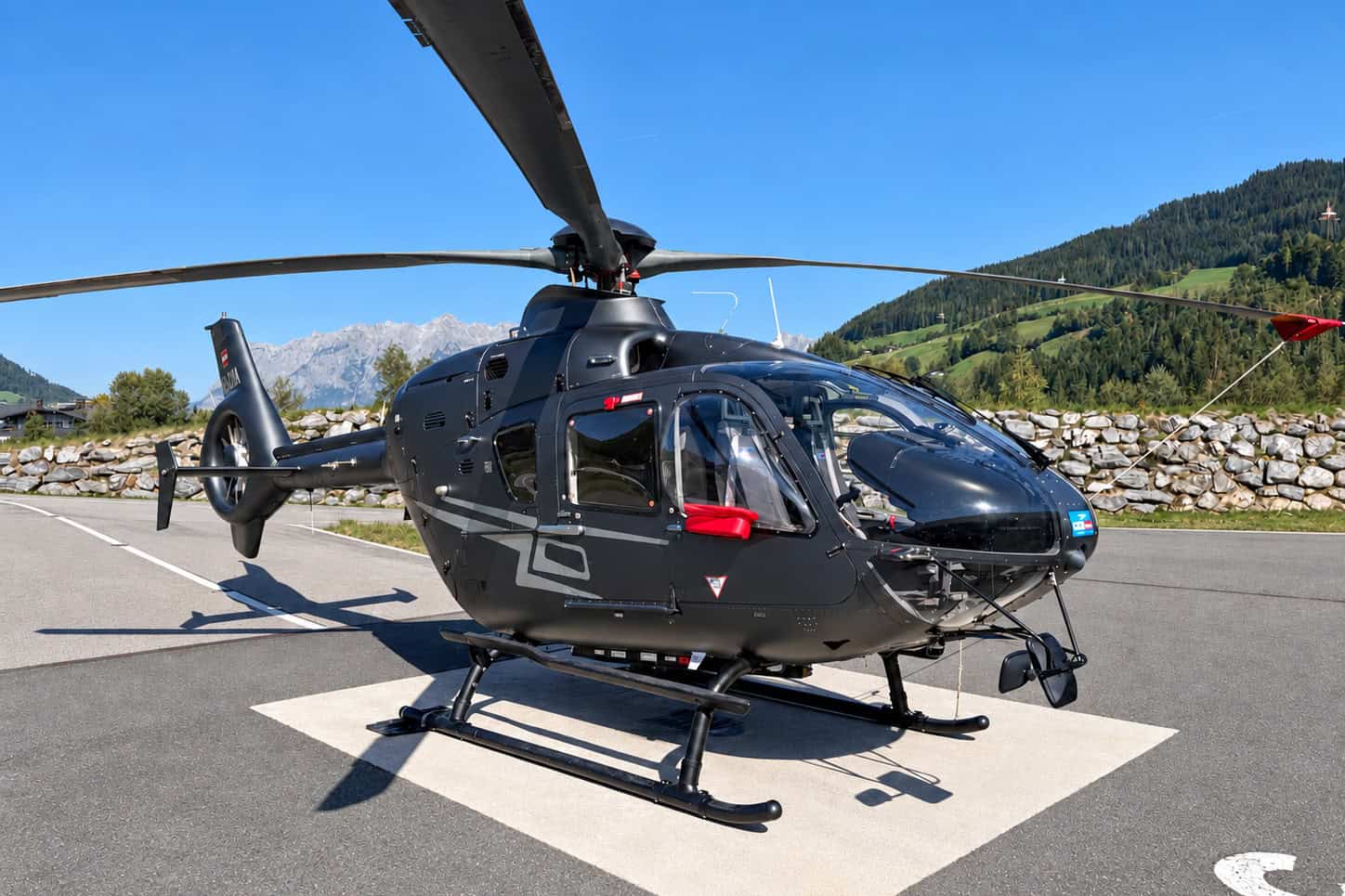
Introduction to the Lithium Battery Upgrade for EC135 Helicopters
The aviation industry constantly faces the challenge of leveraging technological advancements to enhance the efficiency, safety, and sustainability of aircraft. New developments in battery technology play a pivotal role in this regard. Modern battery solutions significantly impact the operational capabilities of helicopters, particularly the EC135 series. The newly introduced lithium battery upgrade – designed specifically for all variants of the EC135 family – offers a forward-looking alternative that replaces conventional nickel-cadmium batteries. Jointly developed by the Austrian specialists Heli Austria and the German manufacturer Heli Werk, this upgrade meets the rigorous standards required for EASA certification.
The improved battery technology offers not only significant advantages in terms of weight and capacity but also results in a substantial reduction in maintenance requirements. Operators thus benefit from optimized fleet availability and lower maintenance costs. The following chapters detail the battery system and the collaboration between the two companies, while also explaining the significance of this innovation for the helicopter industry.
Technological advances: Lithium-ion batteries versus NiCd
Conventionally, nickel-cadmium batteries have served as the power source for most EC135 helicopters. The switch to the TB30 and TB40 lithium-ion battery system represents a significant step forward in several respects. For one, lithium technology enables a substantial reduction in weight – depending on the helicopter’s previous configuration, the weight can be reduced by up to 19.8 kilograms. This contributes not only to increased payload capacity but also to more efficient fuel consumption, thereby reducing both costs and environmental impact.
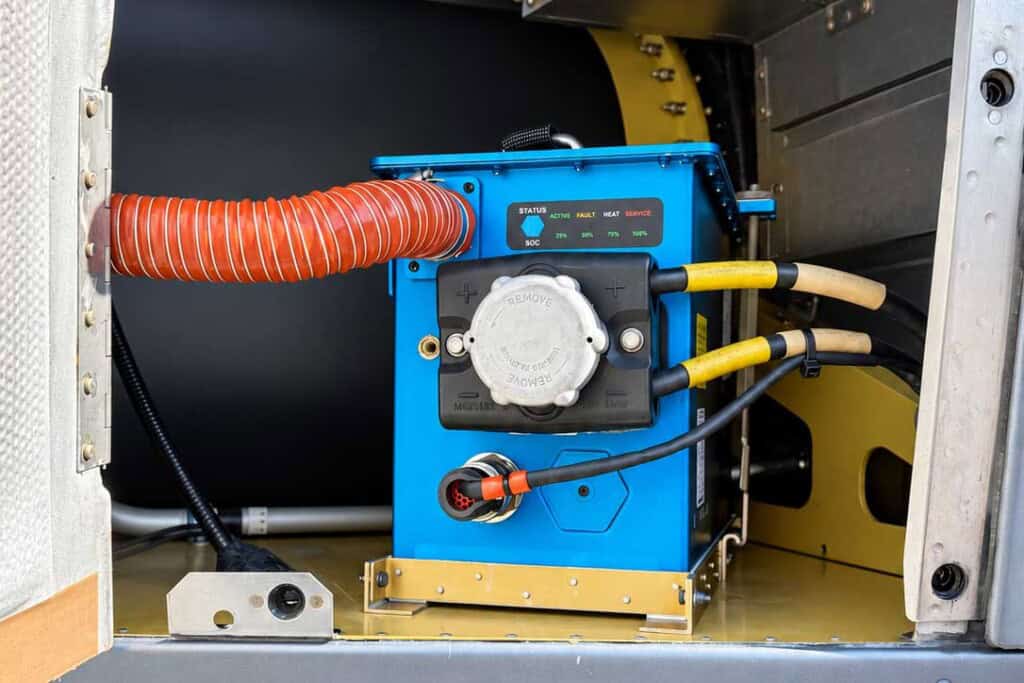
Furthermore, the new battery enables a capacity increase of up to 15 ampere-hours. Higher capacity ensures a longer operating time, thereby enhancing reliability in day-to-day flight operations. Particularly noteworthy is the advantage of “on-condition” maintenance, which eliminates the need for routine, costly overhauls. Maintenance is limited to monitoring the battery’s condition, significantly minimizing aircraft downtime and supporting continuous operational readiness.
These aspects significantly improve the economic efficiency and technical reliability of the EC135 fleet. Furthermore, EASA certification of the system ensures that the retrofit meets the highest European aviation safety standards.
Cooperation and Certification: Synergy between Heli Austria and Heli Werk
This innovation is the result of close cooperation between two highly connected companies, each possessing specialized expertise. Heli Austria, an established Austrian helicopter operator and developer, contributes valuable know-how regarding helicopter modifications and EASA Part 21J certification procedures. Heli Werk, based in Germany, specializes in the manufacture of aviation components and installation kits; as a manufacturer certified under Part 21G, it adheres to the highest standards of quality and documentation.
This combination covers the entire process—from development and certification to the production and delivery – of a battery upgrade ready for operational use. Heli Austria holds EASA STC (Supplemental Type Certificate) 10090942, which constitutes the formal approval for the modification of EC135 models. In parallel, Heli Werk manufactures the upgrade kits – including all installation components and necessary documentation – and supplies them with an official EASA Form 1, which serves as a certificate of conformity in the aviation industry.
Close coordination between the two companies reduced development times and enhanced the solution’s practical suitability and safety. This collaboration exemplifies efficient industry partnerships that align technical innovations with regulatory requirements.
Variants and installation – tailored solutions for various configurations
The upgrade offers a choice of two battery types: the TB30 lithium-ion system with a 30 Ah capacity and the TB40 system with a 40 Ah capacity. The choice of variant depends on the helicopter’s specific equipment and the operator’s requirements. The original battery system and the installation environment influence the achievable weight savings and efficiency gains.
Each upgrade kit includes not only the lithium battery itself but also all the components necessary for safe, compliant installation. These include mechanical adapters and electrical connections, as well as complete certification and installation documentation. This comprehensive package ensures seamless integration into the helicopter’s existing infrastructure and simplifies the retrofit process for aircraft manufacturers and maintenance organizations.
The flexibility to adapt to various helicopter configurations makes the upgrade particularly attractive for mixed-fleet operators. In addition to simplifying maintenance, flight safety is enhanced, as modern lithium systems feature advanced monitoring technologies. This enables proactive troubleshooting and increases overall aircraft availability.
Significance and Outlook for the Helicopter Industry
The lithium battery upgrade represents a significant milestone in modern aviation technology. Innovative energy storage solutions offer clear advantages in the drive for greater efficiency, sustainability, and operational safety. Switching to lithium not only expands the operating parameters of individual aircraft but also contributes to the optimization of entire fleets.
Integrating new battery technology enables not only weight savings but also significant improvements in energy efficiency and service life. Together, these factors make it possible to conduct future flight operations more cost-effectively, safely, and sustainably. The trend toward lithium-based systems in aviation is set to continue, as this technology is increasingly outperforming conventional NiCd batteries.
The successful collaboration between Heli Austria and Heli Werk serves as a prime example of the innovation process in the aviation industry, where development, certification, and manufacturing must go hand in hand. This provides EC135 helicopter operators with a practical way to upgrade their aircraft – a significant improvement, particularly for operational environments demanding high levels of availability and performance.
Conclusion
The introduction of an EASA-certified lithium battery upgrade for the EC135 series marks a significant advancement in helicopter technology. The modern TB30 and TB40 lithium-ion battery systems replace traditional nickel-cadmium batteries, offering advantages in terms of weight, capacity, and maintenance that optimize overall flight operations. The collaborative development and manufacturing by Heli Austria and Heli Werk ensure a comprehensive, standards-compliant solution that adapts flexibly to various helicopter configurations.
This innovation helps reduce downtime and enhance safety while simultaneously lowering operating costs. In an aviation industry increasingly defined by efficiency and sustainability, this upgrade represents a pioneering step. Operators of EC135 helicopters now gain access to a powerful, reliable upgrade that meets both current and future demands.
The project serves as an example of how technological developments and organizational collaboration can be leveraged for the benefit of the entire industry and helicopter operators. Consequently, the transition to lithium battery systems is likely to play an increasingly important role in future modifications and new equipment, opening up prospects for further technical advancements and the sustainable operation of aircraft.