Introduction to air rescue with Christoph München
Since April 1, 1991, Christoph Munich has become a fundamental element of air rescue in Germany. As the country’s first intensive care transport helicopter (ITH), its commissioning marked a new era for patient transport under critical medical conditions. This base has not only provided crucial impetus for airborne medical care but has also set innovative standards for flight operations, particularly through the world’s first deployment of the H145 helicopter type and the nationwide introduction of night vision equipment in civilian air rescue. Today, the base at the Großhadern University Hospital is indispensable for emergency medical care in Bavaria and far beyond.
Historical milestones and collaborations
Christoph Munich was developed in collaboration with various partners, including the Großhadern University Hospital and the Arbeiter-Samariter-Bund (ASB). This partnership combines medical expertise and emergency management with a professional airborne infrastructure. The integration of emergency physicians from the LMU University Hospital and paramedics from the ASB guarantees high-quality medical care directly at the scene of the incident, right in the emergency vehicle.
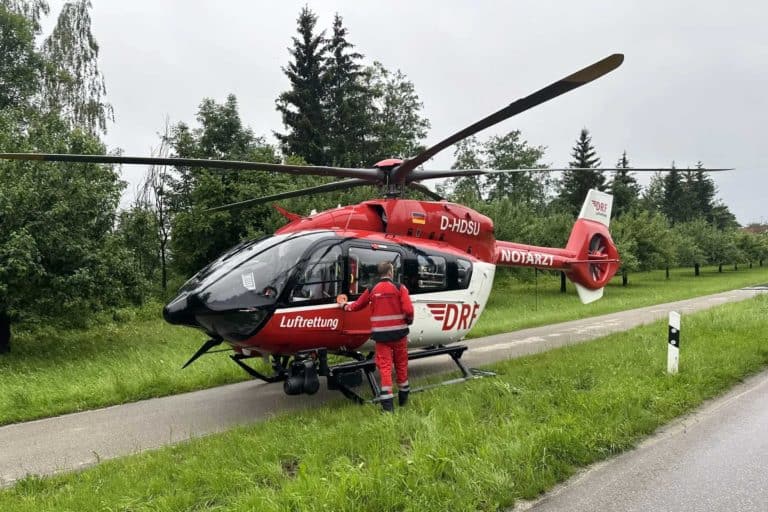
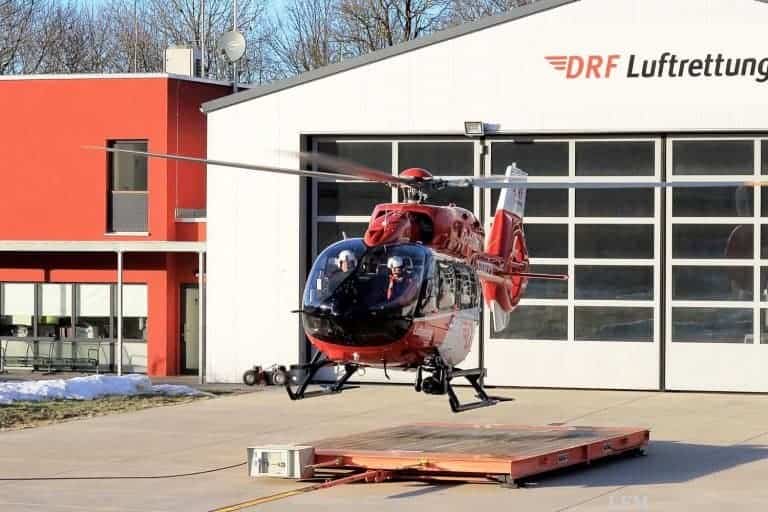
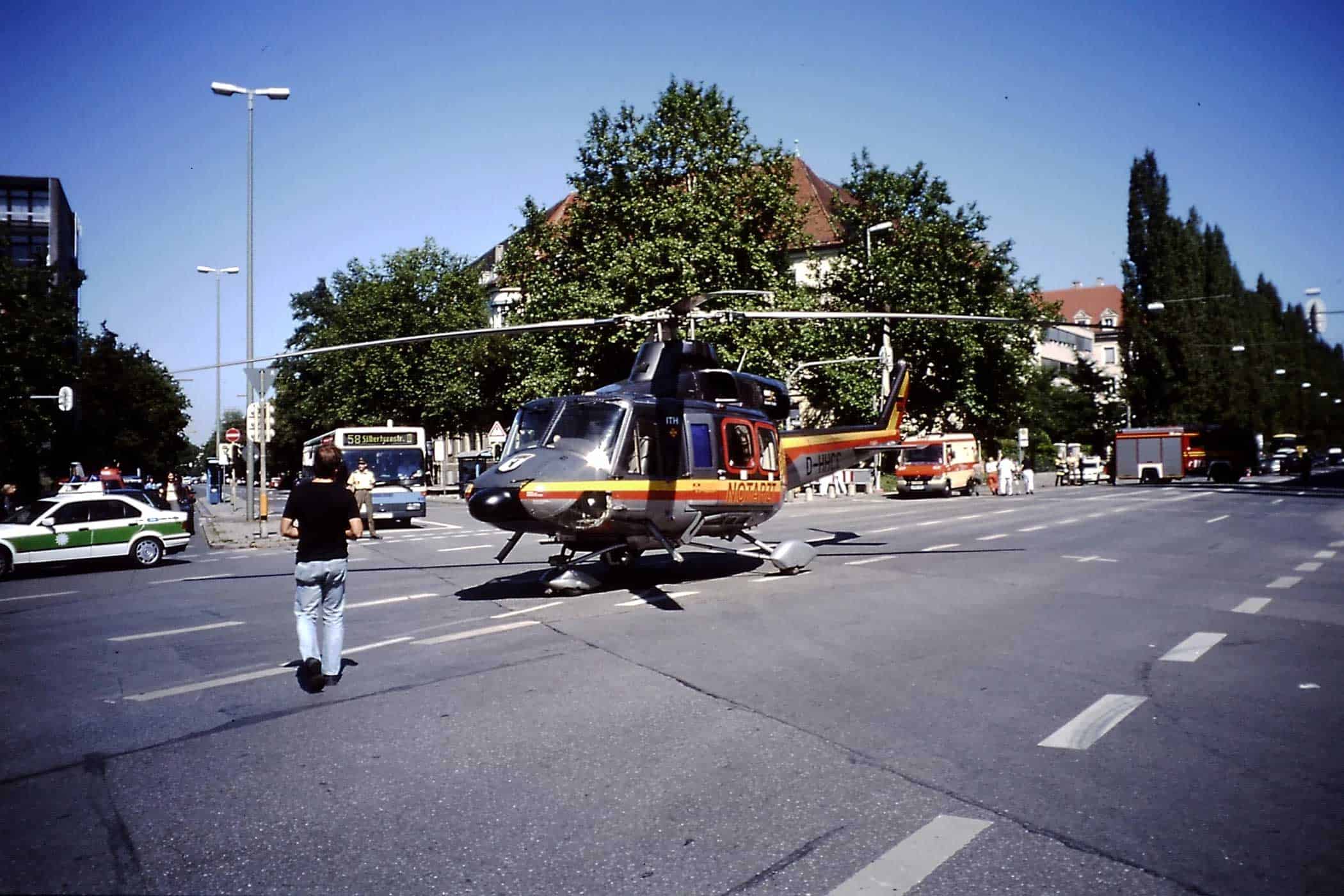
A significant change occurred in 2003 when the station became the first DRF Luftrettung (German Air Rescue) to take delivery of the EC145, a modernized helicopter, replacing the previously used Bell 412. Six years later, the station was the first civilian air rescue team in Germany to deploy night vision equipment. This enabled flights during the dark hours with increased safety and improved orientation. In 2015, Christoph Munich became the world’s first civilian air rescue station to introduce the H145, the further development of which with a five-blade rotor is now the standard.
Operational significance and range of applications
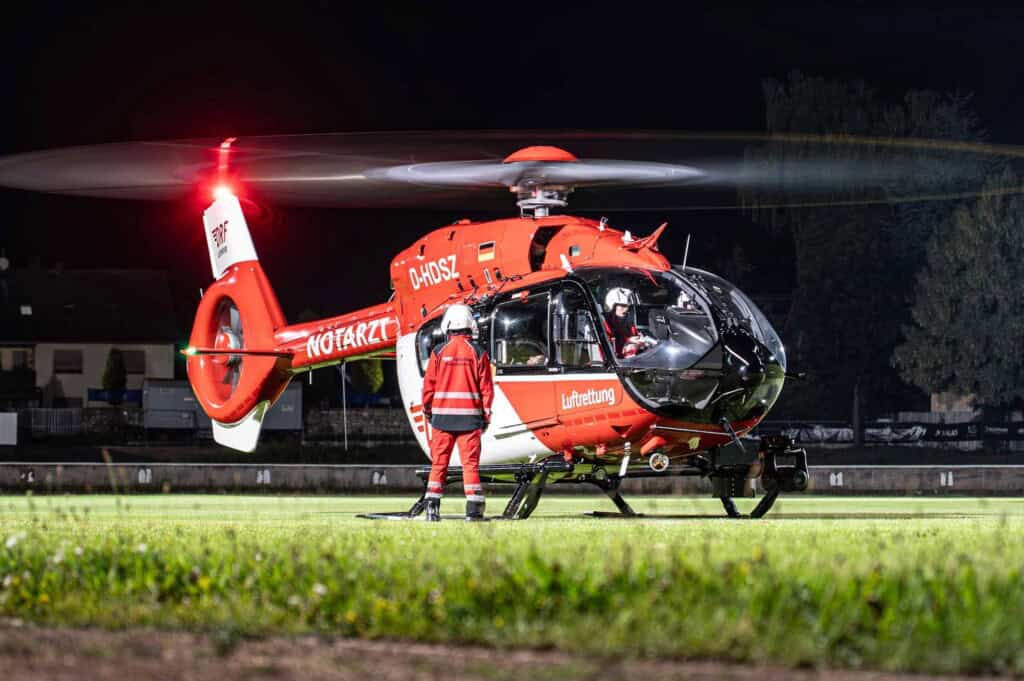
The helicopter base at the Großhadern Clinic ensures 24-hour readiness, encompassing approximately 1,200 missions annually. Particularly noteworthy is the proportion of night flights, which accounts for almost 40 percent of all missions. This underscores the high demand for rapid air rescue, even at times when conventional rescue methods are often slower or less effective.
In addition to emergency rescue, the service also handles intensive care transports across regions, often extending to neighboring countries such as Austria. Furthermore, complex therapies such as ECMO (extracorporeal membrane oxygenation), ECLS (extracorporeal life support), and intracardiac balloon pump (IABP) are administered during patient transport. A special incubator, the Space Pod, is available for premature and newborn infants, ensuring optimal conditions for these particularly vulnerable patients.
Importance of technology and medical equipment
The helicopter’s technological equipment is state-of-the-art, ensuring the highest safety standards and optimal conditions for the patient. The integration of night vision devices allows the pilots and crew to navigate reliably and manage critical situations even in darkness.
The continuous development of the helicopters used, from the Bell 412 to the EC145 and now the latest H145 with a five-blade rotor, reflects the commitment to modernizing and optimizing air rescue. These technical innovations are closely linked to medical advancements to ensure the best possible treatment and care during transport.
Future prospects and impact on the regional supply structure
Today, Christoph Munich represents one of the pillars of emergency medical care in Bavaria. Through the combination of a highly qualified crew, modern technology, and extensive operational capabilities, the station makes a significant contribution to improving the chances of saving critically ill patients.
The continuous training of emergency physicians and paramedics, coupled with the introduction of new technologies, creates a future-oriented healthcare system. Furthermore, cross-border collaborations are fostered to ensure optimal care for border regions. The expansion of procedures for nighttime operations and the integration of further medical innovations will further strengthen the role of this air ambulance station.
24/7 care
Since its opening, Christoph Munich has not only significantly shaped air rescue in Germany, but has also contributed greatly to improving emergency medicine and intensive care transports. The constant commitment to innovation, close collaboration with medical institutions, and the professional dedication of the crew enable comprehensive, round-the-clock care.
The diverse range of applications, from neonatal incubator transport and complex intensive care therapies to strategic emergency care, demonstrates its high standing. The Munich location thus makes a significant contribution to ensuring that patients have the best possible chances of recovery and survival – a successful concept that has proven itself over three decades and will continue to be expanded in the future.
More about Christoph Munich