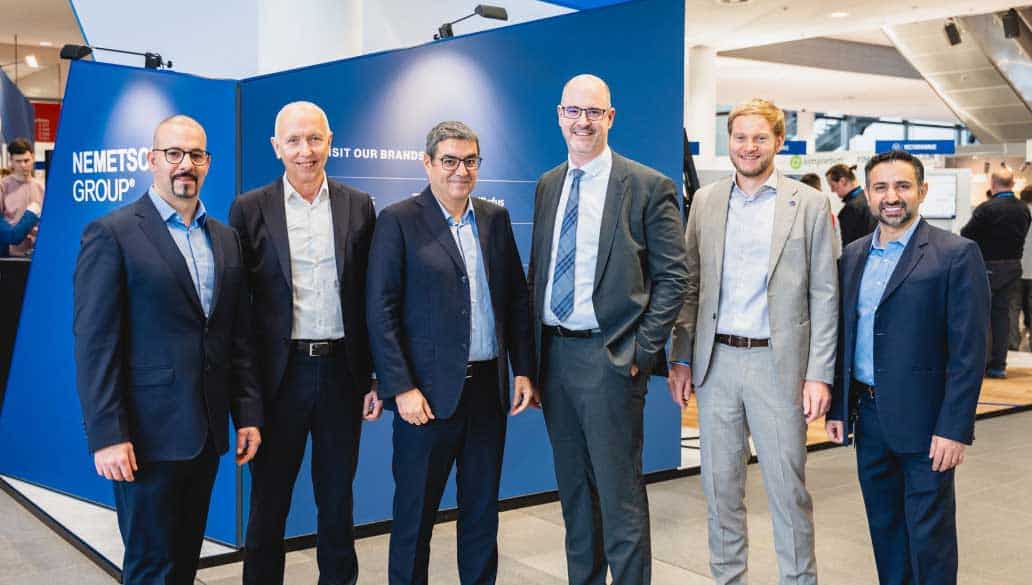
The continuous development and digitalization of infrastructure play a central role in the efficiency and sustainability of operations at major transportation hubs such as airports. Complex facilities, in particular, encompassing extensive buildings and diverse technical systems, benefit significantly from innovative software solutions that enable holistic management and control throughout their entire lifecycle. Against this backdrop, a pioneering collaboration has been established at Vienna Airport between the Nemetschek Group and the airport team. This collaboration aims to create a digital platform, through the integration of the dRofus dTwin solution, that simplifies all processes in asset and facility management, ensures a transparent data foundation, and enables sustainable operational optimization in the long term.
This document provides a practical overview, particularly for those responsible for or interested in the planning, construction, operation, or digitalization of large building complexes, of the opportunities and functions that can be realized through a digital twin – specifically within airport infrastructure. The combination of BIM (Building Information Modeling) and Digital Twin technology opens up entirely new dimensions in terms of efficiency, quality, sustainability, and decision support.
The importance of digital infrastructure for airport operations
At the heart of modern airport management lies the challenge of efficiently and transparently coordinating a multitude of diverse buildings, facilities, and areas with regard to construction projects, maintenance, and operations. Digital capture and continuous updating of all relevant information are crucial for this. This is precisely where the Nemetschek dTwin platform comes into play as a key solution. Through its digital representation of the entire airport area – the so-called digital twin – the platform offers comprehensive and constantly updated data harmonization. This means that all existing data from different departments and systems are consolidated, standardized, and unified on a central platform. Furthermore, it is open to existing interfaces, which facilitates integration into existing workflows and IT landscapes.
The BIM-based approach allows for the integration of not only static building data but also dynamic information, such as system status and maintenance schedules. For Vienna Airport, this means a holistic view of all assets – from buildings and technical systems to transport infrastructure. This digital ecosystem enables fast and informed decisions, as information is provided contextually and relationships are more easily identified. Especially for an airport that handles over 31 million passengers annually, such a tool is essential for ensuring smooth and sustainable operations.
The implementation of ABIGAIL as an airport BIM and facility integration platform
With the introduction of ABIGAIL, the airport’s BIM and facility integration platform, Vienna Airport is taking facility management to a whole new level. It combines dRofus modules with dTwin technology to create an integrated solution that enables true digitalization across all lifecycle phases of buildings and facilities. This holistic system is specifically designed to create synergies between planning, construction, and operations, thereby significantly increasing efficiency.
In practice, you can imagine how everyone involved – from architects and engineers to operations management – accesses the same dataset, which is continuously updated and expanded. This also means significantly fewer data losses and errors due to redundant or unsynchronized information. Another major strength becomes apparent in its interaction with ongoing construction projects. For example, the digital infrastructure is already being used in the run-up to the planned expansion of Terminal 3, scheduled for completion in 2027. There, on approximately 70,000 square meters, new gates, a central security control center, and spacious lounges are being built – all with the active use of digital twins.
This approach ensures not only transparent planning but also subsequent operational management, where all newly constructed areas and facilities are seamlessly recorded and managed. The digital twin thus acts as a continuous data source throughout the entire lifecycle, offering opportunities to optimize energy use, maintenance cycles, and overall resource efficiency.
Sustainability and life cycle orientation as the core of digitalization
A key objective of Vienna Airport’s new asset management strategy is the sustainable use and maintenance of existing infrastructure. Digitalization, supported by an open platform like dRofus dTwin, forms the basis for the resource-efficient management of complex, large-scale facilities. If you are considering how sustainable facility management can be implemented in practice, this project offers many useful insights.
Coordinated processes in lifecycle management enable, for example, the early identification of renovation needs, needs-based maintenance planning, or even the simulation of energy optimization scenarios. The result is not only financial savings through lower maintenance costs, but also a significantly reduced environmental profile of the entire infrastructure.
Furthermore, model-based operations management supports ongoing operations in practice by providing a clear overview of the structural and technical conditions. This allows those responsible not only to understand the current state at any time, but also to document and analyze changes over time. This creates a solid foundation for targeted, data-driven approaches to new construction projects or restructuring, enabling the sustainable development of the airport.
Integration of open standards and interfaces as part of the digital ecosystem
Another critical success factor in Vienna Airport’s digitalization strategy is the seamless integration of the digital twins into the existing IT and data ecosystem. The Nemetschek Group deliberately opted for open standards and interfaces to ensure maximum compatibility and flexibility. This openness means that all existing systems used in infrastructure management, building management, or other operational areas can be integrated seamlessly.
This capability not only facilitates implementation but also minimizes future risks arising from technological dependencies. By meaningfully linking diverse data sources, a holistic data picture emerges that extends beyond mere planning information and can also incorporate maintenance data, user feedback, and external environmental factors. This results in significantly improved decision-making foundations, enabling a better understanding of complex relationships and the proactive management of challenges.
For you as a user and decision-maker, this interoperability means that the digital twin does not form an isolated data island, but rather an active, living tool that makes the entire operation smarter and faster.
Conclusion and outlook
The strategic partnership between the Nemetschek Group and Vienna Airport impressively demonstrates how digital twins can make a significant contribution to sustainable optimization, increased efficiency, and process improvement in the area of large infrastructure. The introduction of the ABIGAIL platform lays the foundation for future-proof, life-cycle-oriented asset management, which has a broad impact on both construction projects and operational management.
This example demonstrates how the combination of BIM methodology and Digital Twin technology, via open, standardized interfaces, leads to an integrated solution that offers real potential for complex facilities. Especially in an era of increasing demands for sustainability, cost-efficiency, and user satisfaction, this innovative approach opens up new avenues for mastering the complex requirements of modern airports and similar infrastructure projects.
This example demonstrates how the combination of BIM methodology and Digital Twin technology, via open, standardized interfaces, leads to an integrated solution that offers real potential for complex facilities. Especially in an era of increasing demands for sustainability, cost-efficiency, and user satisfaction, this innovative approach opens up new avenues for mastering the complex requirements of modern airports and similar infrastructure projects.