Home Blog Page 12

Turkish Aerospace and Embraer strengthen aviation industry

Turkish Aerospace and Embraer have signed a memorandum of understanding to explore potential industrial collaborations. This collaboration aims to leverage the strategic capabilities of both companies to establish a comprehensive research and development partnership.

Turkish Aerospace and Embraer: Together for the future of aviation

Turkish Aerospace and Embraer have signed a Memorandum of Understanding (MoU) that aims to provide new impetus for potential collaborations in the aviation industry. This agreement will combine expertise in the manufacturing and assembly of metallic and composite structures, as well as in test and production flights.

Strengthening strategic capabilities

Both companies intend to leverage strategic capabilities in the manufacturing and final assembly of fuselage structures and components to meet the increased global demands on Embraer’s products. The collaboration could optimize production processes and develop innovative solutions.

Signing at LAAD Defence & Security 2025

The Memorandum of Understanding was signed by senior representatives of both companies at the LAAD Defence & Security 2025 in Rio de Janeiro. The ceremony was attended by high-ranking government officials from both countries and underscores the importance of the partnership for the industry.

Setting the course for innovation

The partnership between Turkish Aerospace and Embraer aims not only to meet current market requirements but also to initiate pioneering research and development projects. The goal is to sustainably strengthen the innovative power of the aviation sector through combined expertise and lay a solid foundation for future developments.

Turkish Aerospace is a leading company in the field of aviation and space technology. The cooperation with Embraer underscores its commitment to technological excellence and global collaboration. Embraer is an international leader in aerospace production and is constantly seeking innovative partnerships to expand its production capacities and market presence.

Spanish Riding School is the namesake of Austrian Airlines Dreamliner

Austrian Airlines and the Spanish Riding School announced a new brand collaboration. The name of the historic institution, famous worldwide for its Lipizzaner horse riding, will now be featured on the airline’s long-haul Boeing 787-9 Dreamliner aircraft, carrying Austria’s cultural heritage around the globe.

Innovative partnership between culture and aviation

Both institutions announce that the Spanish Riding School has been chosen as the namesake for the long-haul aircraft with the registration OE-LPL. The institution, known for its fascinating Lipizzaner horse performances, has existed since 1565 and remains a symbol of tradition and equestrian art. The cooperation aims to enhance Austria’s historical and cultural heritage by having the name “Spanish Riding School” travel the world on board Austrian Airlines.

Historical Lipizzaners as ambassadors

Part of the cooperation is Austrian Airlines’ sponsorship of one of its Lipizzaner stallions, Favory Wera. Under the experienced care of Christian Bachinger, the stallion will be presented at demonstrations. This combination of aviation and equestrian art emphasizes the high quality and precision of both brands, both on the ground and in the air.

International reach

The Spanish Riding School attracts over 360,000 visitors annually, 87% of whom come from abroad. Americans, in particular, represent a significant group, accounting for 16% of visitors. Austrian Airlines, which connects Vienna directly with six major airports in the USA, enables international spectators to experience the unique equestrian art and promotes the global presence of Austrian culture.

Meaning of the name concept

Austrian Airlines’ Boeing 787-9 Dreamliner flies around the world with the naming concept “Highlights of Vienna.” In addition to the “Spanish Riding School,” another Dreamliner already bears the name “Schönbrunn Palace.” This naming underscores the interplay between Austrian tourism and historical sights and showcases them worldwide.

Austrian Airlines connects more than 120 destinations worldwide and is known for its contributions to promoting tourism and Austrian culture. The airline is actively committed to making Austria’s historical and cultural riches accessible to international guests.

Magma Aviation launches partnership with Unilode

Magma Aviation announces its partnership with Unilode Aviation Solutions, which will provide effective support for Magma’s ULD needs worldwide starting in March 2025. The collaboration includes digital technologies, maintenance services, and comprehensive management to increase logistics efficiency.

Partnership to support growth

Magma Aviation has announced that Unilode Aviation Solutions will support its global ULD requirements starting in March. This strategic partnership not only provides access to the world’s largest ULD fleet, but also leverages innovative systems for enhanced visibility and efficiency. This is considered a critical step in Magma’s growing global strategy.

Comprehensive digital services

Unilode offers a range of digital services designed to streamline Magma’s operations. These include track and trace coverage and maintenance and repair capabilities. By leveraging cutting-edge technologies, Unilode provides seamless operational support, enabling Magma to further improve its services.

Improving operational efficiency

The agreement between Magma and Unilode includes not only resources but also support through digital management systems. Through the partnership, Magma aims to streamline its logistics processes, optimize logistics, and continue to offer customers flexible solutions. Magma’s CEO emphasizes that Unilode’s support is crucial for increasing operational efficiency.

Trust and technology

Unilode, with its extensive tag and reader network and in-house developments such as the eULD app, is delighted to welcome Magma as a partner. Unilode’s CEO emphasizes Magma’s trust and sees the partnership as a driver for future innovations. The introduction of these advanced technologies is intended to support Magma on its growth journey.

Magma Aviation is a leading air cargo solutions company and stands for innovative approaches to logistics. With a global network and a comprehensive fleet, Magma offers customized cargo solutions. The partnership with Unilode marks another milestone on Magma’s path to success.

ESA & DLR organize international conference on space debris

Space debris poses a growing threat to space infrastructure. More than 400 experts from over 30 countries will gather in Bonn from April 1 to 4, 2025, to participate in the 9th European Conference on Space Debris, organized by ESA and the German Space Agency at DLR.

A global problem

Space debris is continually growing, posing a threat to hardware both in space and on Earth. The conference will address the comprehensive research area of ​​space debris, including monitoring technologies, the growing number of active spacecraft, and the risks posed by re-entries into Earth’s atmosphere.

Sustainable space travel

Dr. Walther Pelzer emphasizes the need for a sustainable space program to protect space infrastructure. He points to the signing of the Zero Debris Charter, an agreement initiated by 40 European space stakeholders. The goal is to minimize the risks of further space debris.

Future challenges

Conference participants will discuss the challenges posed by increased activity in space and the limitations of using Earth’s orbit. New technologies for satellite tracking and orbit determination will also be addressed to avoid collisions and ensure safety in orbit.

Environmental impacts of space travel

The German Space Agency is concerned about the increasing environmental impacts of space travel. According to Dr. Manuel Metz, the complex and urgent nature of these issues is being intensively researched, including the impact of space travel on astronomy and lunar orbits.

The German Space Agency at DLR plays a key role in international space research. By coordinating and supporting projects to prevent space debris, it contributes significantly to the sustainable use of space. The goal is to ensure the safe and long-term viable use of space.

Background info: Space debris

Space debris encompasses all human-made objects in Earth’s orbit that are not serving a functional purpose. Typical examples include decommissioned rocket stages and deactivated satellites, but also astronauts’ lost tools. The largest contribution comes from debris created by explosions, the breakup of spacecraft, or collisions in orbit.

Currently, approximately 40,000 recorded and catalogued objects with a diameter of at least ten centimeters orbit the Earth. Scientists use models such as the ESA-MASTER (Meteoroid and Space Debris Terrestrial Environment Reference) model, developed in Germany, to estimate the total number of smaller particles. According to their calculations, there are approximately one million objects larger than one centimeter and around 130 million particles larger than one millimeter in Earth’s orbit.

In recent years, there has been an unprecedented growth in the number of objects in space, especially small and commercial satellites in low-Earth orbit. However, this has also led to an increase in the amount of space debris. Of the 40,000 orbiting objects that researchers are tracking, nearly 11,000 are functional spacecraft.

Even the smallest pieces of space debris, traveling in orbit at up to 28,000 kilometers per hour, can seriously damage or destroy a functional spacecraft. Pieces larger than ten centimeters cause massive damage in a collision. In the worst case, dangerous clouds of debris would be released, which could in turn trigger further catastrophic collisions in a chain reaction. In this case, parts of Earth’s orbit would no longer be usable. Such an incident, known as Kessler Syndrome, would severely restrict everyday life, as communications or navigation, for example, would be massively disrupted or even fail altogether.

With the German Experimental Surveillance and Tracking Radar (GESTRA), the Fraunhofer Institute for High Frequency Physics is developing a system for detecting and tracking space debris on behalf of the German Space Agency at DLR. The system’s data is processed at the German Space Situational Awareness Center in Uedem. In addition to research purposes, it also serves to protect satellites in orbit from impending collisions. To measure the trajectories of space objects even more precisely, the German Space Agency at DLR recently began procuring three new sensors for this purpose.

China Airlines orders ten Airbus A350-1000s

China Airlines has placed a firm order for ten A350-1000s with Airbus. This move symbolizes the airline’s expansion strategy and commitment to enhancing the travel experience. The new aircraft will primarily be used on long-haul routes to North America and Europe.

Strategic expansion of the fleet

China Airlines has confirmed the purchase of ten Airbus A350-1000 aircraft. These new aircraft will complement the existing A350-900 fleet and strengthen the airline’s long-haul capabilities. The move follows a previous announcement from December 2024 and is in line with the airline’s international growth strategy. The A350-1000 promises to ensure smooth integration into the airline’s existing operations and offer increased efficiency.

Technological superiority and environmental awareness of the A350-1000

The model chosen by China Airlines, the A350-1000, is recognized as the world’s most advanced long-haul aircraft. It not only offers superior range thanks to the latest generation of Rolls-Royce engines, but also a 25% fuel saving compared to previous models. In addition to its efficiency, the A350-1000 has the capability to use up to 50% sustainable aviation fuel, a figure Airbus aims to increase to 100% by 2030.

Joint development with Airbus

Airbus welcomed the expanded collaboration with China Airlines, one of the early adopters of the A350-900 models. Airbus praised the airline’s role as a pioneer in the adoption of new aircraft technology. The A350-1000 order underscores the shared focus on comfort and operational efficiency, further strengthening both companies’ leadership in the aviation industry.

Growing A350 fleet worldwide

The Airbus A350 family has more than 1,360 orders from 60 customers worldwide, demonstrating its popularity and reliability in long-haul services. Currently, over 640 aircraft are in service with 38 operators. China Airlines, which operates a fleet of 15 A350-900s, is further expanding its long-haul capacity to meet growing demand in Europe and the United States.

China Airlines, based in Taiwan, is considered a leading airline in Asia and has pursued the goal of maximizing travel comfort and utilizing environmentally friendly technologies since its founding. With a fleet covering both regional and long-haul routes, the airline sets standards in service quality and technological advancement.

BOC Aviation orders 70 additional A320neo family aircraft

BOC Aviation, a leading aircraft lessor, announces that it has placed a firm order with Airbus for 70 additional A320neo Family aircraft. This order marks the largest order in the company’s history with Airbus. The CEO of BOC Aviation emphasizes its strategic importance for the future.

Largest order backlog at Airbus

BOC Aviation has announced a significant milestone by placing a firm order for an additional 70 A320neo Family aircraft with Airbus. This purchase brings BOC Aviation’s order book to new heights, marking the largest inventory of outstanding Airbus aircraft in the company’s history. Steven Townend, Managing Director and CEO of BOC Aviation, expressed optimism, noting that this transaction brings the company’s remaining Airbus order book to approximately 200 aircraft, representing more than 700 Airbus deliveries to date, including lease-back agreements since 1996.

BOC Aviation: Strengthening market position

The significant order from Airbus underscores BOC Aviation’s strategy to consolidate its position among the top five global aircraft leasing companies. This provides a solid delivery pipeline for the coming decade. The company sees itself well-equipped to meet future challenges, as the A320neo family is recognized as a popular, fuel-efficient, and technologically advanced aircraft. BOC Aviation is expected within the aviation industry to provide innovative and sustainable solutions to its airline customers.

Confidence in the Airbus A320 family

Benoit de Saint-Exupéry, Executive Vice President of Sales for Airbus’ Commercial Aircraft Division, emphasized that BOC Aviation’s confidence in the A320 Family cements the company’s status as one of Airbus’ largest customers. This new, significant investment also demonstrates the continued market demand for Airbus’ fuel-efficient aircraft and their long-term value. The A320 Family is the world’s most successful narrow-body single-aisle aircraft type, generating over 19,000 orders internationally.

Sustainable future prospects

The A320 Family ensures that aircraft operators benefit from the exceptional advantages offered by modern aviation technology. All members of the Family, including the A321neo, are distinguished by their range and performance. These aircraft promise at least 20% fuel savings and CO₂ reduction compared to previous generations of single-aisle aircraft. With the ability to run on up to 50% sustainable aviation fuel today and the prospect of 100% sustainability by 2030, the A320 Family’s future prospects are particularly environmentally friendly.

BOC Aviation, headquartered in Singapore, is a leading global aircraft leasing company. Since its inception, the company has been a pioneer in providing innovative aircraft solutions to airline customers worldwide. It ranks among the top five providers in the industry and underscores its commitment through strategic partnerships and investments in advanced aviation technology.

New summer flight schedule: Air France and KLM expand network

Air France and KLM announce their plans to expand flight connections in the 2025 summer schedule. The plan includes increased intercontinental capacity and new routes to destinations worldwide. Both airlines have also increased the number of available seats to meet increased demand.

Air France and KLM: Expansion of flight offerings

Air France offers up to 900 daily connections to nearly 190 destinations in 74 countries this summer. KLM flies to 161 destinations, with a four percent increase in seat capacity compared to the previous year. Challenges such as long delivery times for aircraft parts and a pilot shortage have led KLM to continue operating at approximately 90 percent of its intercontinental capacity.

Long-haul flights and new destinations

Air France is expanding its long-haul network, flying from Paris-Charles de Gaulle to Riyadh and Orlando starting in May 2025. An additional daily connection between Paris and New York will be introduced. The number of flights from Paris to Phoenix will increase, while the connection to Papeete will be offered daily. KLM is putting three new Boeing 787-10s into operation and will offer nonstop flights to San Diego starting in May.

Expansions in America and Africa

In the Americas, Air France is launching new flights to Salvador de Bahia in Brazil and increasing flights to Peru, Chile, and Rio de Janeiro. The Caribbean destination of Saint Martin will be served with up to eight weekly flights. In Africa, the airline is continuing flights to Kilimanjaro and increasing frequency to Brazzaville. KLM will offer daily flights to Tanzania starting in June.

New Asian destinations

Air France will operate three-times-weekly flights to Manila, Philippines. KLM will launch a new service to Hyderabad, India, starting in September and will fly to Osaka, Japan, up to five times weekly. These expansions demonstrate the airline’s commitment to further expanding the Asian market and offering travelers more choice.

Air France and KLM operate as leading European airlines with a strong global network that offers travelers first-class service and extensive connections. With a focus on quality and sustainability, both airlines are working to consolidate and expand their market-leading positions through innovative solutions and strategic partnerships.

Air France-KLM expands European flight offering

Air France-KLM is strengthening its presence in Europe and France with a two percent capacity increase, offering new destinations, and increasing the number of flights to popular Mediterranean destinations. KLM is expanding its route network with new cities and adding more seats to Portugal and Croatia.

Increased capacity in short- and medium-haul routes

Air France-KLM has increased capacity within Europe and France by a total of two percent, marking a major step in the strategic expansion of its regional network. It has expanded its service to popular Mediterranean destinations, with an eight percent capacity increase to Italy and a three percent increase to Spain. These measures are intended to meet the increased demand for direct flights within Europe and offer travelers more flexibility and options.

New routes and seasonal offers

In addition to its year-round routes, Air France-KLM also plans to operate 29 seasonal routes to destinations across Europe, including popular holiday destinations such as Palma de Mallorca, Ibiza, Rhodes, Heraklion, and Dubrovnik. KLM has added Ljubljana and Exeter to its schedule, with daily flights starting March 30. Biarritz will also be served daily during peak season and twice weekly during off-season.

Optimization of flights to Milan

KLM has decided to concentrate its flights to Milan this summer at Linate Airport, closer to the city center, and temporarily suspend connections to Malpensa. This decision is intended to improve the comfort and travel experience for all passengers while offering more efficient travel options. The deployment of new Airbus A321neo aircraft will also be increased to double fleet capacity and thus enable even more flights during the summer season.

Transavia France expands flight program

Transavia France, the low-cost subsidiary of Air France-KLM, will serve 123 destinations in 38 countries this summer with a total of 233 routes, including 26 new connections. Flight frequencies to destinations such as Berlin, Munich, and Nantes will also be increased to meet the growing demand for affordable travel within Europe. This distinguishes the airline as a leading low-cost airline based in Paris.

Air France-KLM is a leading international air transport provider with a diversified route network. As a partnership between two of the world’s most respected airlines, Air France-KLM offers its customers innovative solutions and excellent customer service. The strategic realignment in Europe demonstrates the company’s ongoing commitment to meeting the evolving needs of travelers.

ExoMars landing platform: Airbus secures Mars rover landing in 2030

The European Space Agency (ESA) and Thales Alenia Space have selected Airbus to construct the ExoMars landing platform, which will safely land the Rosalind Franklin rover on Mars. Scheduled for completion in 2030, the mission marks a significant advance in international space exploration efforts to find evidence of life on the Red Planet.

Airbus and Thales Alenia Space: International collaboration for Mars exploration

Airbus has been commissioned by the European Space Agency and Thales Alenia Space, the lead contractor for the ExoMars mission, to develop the technical systems for the lander. These systems are essential to ensure a safe landing of the Rosalind Franklin rover after entering the Martian atmosphere. Airbus will design the mechanical, thermal, and propulsion systems necessary for a safe Mars landing at its state-of-the-art cleanroom facility in Stevenage.

Rosalind Franklin: Unique sample analysis technology

The Rosalind Franklin rover will be the first of its kind to be able to analyze soil samples from up to two meters deep to search for traces of past or present life on Mars. This technological innovation demonstrates the high level of British space engineering and contributes to the study of the solar system. The project highlights the importance of international collaboration in science.

Economic and scientific impacts

UK Technology Minister Peter Kyle emphasizes the importance of the mission for British science and industry. The initiative will not only bring scientific advances but also be a significant source of highly skilled jobs and investment. By deploying cutting-edge technology, Airbus is helping to ensure the UK plays a central role in European space exploration.

Preparation for launch in 2028

Following the pandemic-related postponement of the mission, Airbus is working with TAS, ESA, and NASA to prepare launch conditions for 2028. This includes the integration of NASA-provided radioisotope heater units to maintain the rover’s heat and an autonomous mode designed to enable a smooth landing on Mars in 2030. The mission aims to ensure a safe landing during the planetary dust period on Mars.

Over the decades, Airbus has become a leading player in space technology, having designed and built more than 120 propulsion systems for over 90 spacecraft. The collaboration with ESA and NASA underscores Airbus’s expertise and commitment to playing a leading role in space exploration.

Dortmund Airport switches everything to summer operations

With the time change on March 30, Dortmund Airport is not only adjusting its clocks but also its flight schedules for summer operations. Passengers can look forward to a total of 35 destinations in 19 countries, offering a wide range of options for enjoying the warmer season.

Pegasus Airlines expands route network from Dortmund Airport

On April 15, Pegasus Airlines will launch its first expansion of the season, adding Antalya to its flight schedule from Dortmund. With up to five weekly flights, it will be easier for vacationers to explore the Turkish Riviera. The metropolis of Istanbul, with its population of one million, will also remain a constant destination in the Pegasus route network.

Wizz Air with the largest offer

With 26 destinations, Wizz Air offers the largest selection of flights from Dortmund this season. Beach vacationers can look forward to destinations such as Gdansk on the Baltic Sea, Ohrid on Lake Ohrid, and Varna on the Black Sea coast. New to the schedule is Warsaw, which will be served five times a week starting June 8. Frequencies to Katowice will also be increased in June.

Increasing demand for sunny destinations

Starting in May, Condor will increase its frequency to Palma de Mallorca, so the island will appear daily in its flight schedule. At the same time, Eurowings is bringing back four popular destinations from its winter break: Thessaloniki, Kavala, Catania, and Split, which will be available again. Travelers will thus have a variety of sunny vacation destinations to choose from.

Late night check-in at Eurowings

With the start of the summer flight schedule, Eurowings is once again offering its late-night check-in service. For a fee, passengers can drop off their baggage the evening before between 6:00 PM and 8:00 PM, provided their flight departs by 12:00 PM the following morning. This significantly improves convenience for travelers.

Dortmund Airport positions itself as a central hub for travel throughout Europe. With a wide range of airlines and destinations, the airport offers a variety of connections to make leisure and business travel convenient and efficient. The airport strives to provide travelers with an excellent flight experience and meet the needs of a dynamic travel industry.

Embraer presents innovations at LAAD Defence & Security

Embraer, a leader in the aerospace industry, will showcase its advanced product portfolio at LAAD Defence & Security 2025. From April 1-4 in Rio de Janeiro, visitors will be able to experience the company’s latest defense solutions for air, land, sea, space, and cyber technology.

Presentation at LAAD

The company emphasizes that participating in the 15th LAAD Defense & Security in Rio de Janeiro would be a significant opportunity for Embraer to showcase its innovative aerospace solutions. Bosco da Costa Junior, President & CEO of Embraer Defense & Security, emphasized that the event is ideal for strengthening relationships with global customers and partners.

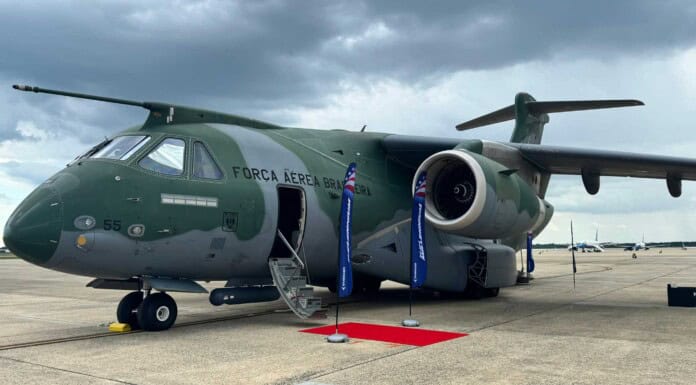
Successful implementation of the KC-390 Millennium

Since entering service with the Brazilian Air Force in 2019, the KC-390 Millennium has reliably met military requirements. Recently, this model was selected by the Swedish and Slovak Air Forces as their new tactical transport aircraft, underscoring its global recognition. The current fleet boasts impressive sortie rates of over 99%.

A-29 Super Tucano: A leading model

With over 290 orders from 20 air forces, the A-29 Super Tucano is unparalleled in its category. This multi-mission aircraft has logged more than 580,000 flight hours. In 2024, Embraer announced new sales of this model, including the NATO version for the Portuguese Air Force.

Strong partnerships within Embraer’s network

Atech, Visiona Tecnologia Espacial, and the Águas Azuis consortium, components of Embraer’s Defense & Security solutions, could also participate in the event. These partnerships would underscore Embraer’s ability to provide comprehensive defense solutions, contributing to the company’s global strength and recognition.

Embraer is a global leader in aircraft manufacturing and solutions for the aerospace sector. With operations on several continents, Embraer strives to foster technological innovation and meet the needs of its international customers.

Japan Airlines strengthens fleet with Boeing 737-8 order

Boeing and Japan Airlines (JAL) have signed an order for 17 737-8 jets to leverage the efficiency and flexibility of the 737 MAX. The goal is to deploy the new 737 MAX on the strong domestic network and capitalize on the ongoing surge in tourism. This brings JAL’s 737 MAX backlog to 38 firm orders.

Fleet modernization with the 737-8

Japan Airlines plans to introduce the new 737-8 aircraft on its robust domestic network to meet growing tourism demand. Mitsubishi Tottori, President of JAL, expressed excitement about the fleet expansion, which is intended to promote renewal and ensure the safety of its customers. By deploying the 737-8, the airline aims to reduce fuel consumption and CO2 emissions by 15% compared to the older 737-800 models. This order marks Japan’s commitment to environmentally friendly aviation.

Strengthen partnerships

JAL’s decision to double the 737 MAX underlines its long-standing partnership with Boeing, says Brad McMullen, Boeing’s senior vice president of commercial sales and marketing. The integration of the 737-8 is expected to achieve operational and economic efficiencies that position the airline for future success. The launch of the Boeing Sky Interior also promises an enhanced cabin experience for travelers.

Capacity expansion and technology

A long-time Boeing customer, JAL already operates 767s, 777s, and Next-Generation 737-800s. Zipair Tokyo, a subsidiary of JAL, plans to expand internationally by integrating 10 former JAL 787-9s into its fleet. JAL is known for innovation, having been among the first to operate the 787 Dreamliner and will soon be augmenting its international routes with the 787-9.

Sustainable travel experiences

By ordering aircraft with lower emissions and modern cabin amenities, JAL demonstrates its commitment to providing its customers with a safe yet environmentally friendly travel experience. Modernizing its fleet with the 737-8 is part of this strategy, which combines comfort and efficiency.

Boeing is a global leader in aircraft and aviation services, committed to bringing environmentally friendly and innovative products to market. With over 100 years of experience, Boeing stands for quality and technological excellence, backed by a strong commitment to customer satisfaction.

ESA satellite Gaia reaches its final mission

ESA’s Gaia satellite will enter final hibernation on March 27, 2025. After more than a decade of surveying the sky, its fuel is exhausted. The data collected by Gaia will continue to revolutionize astronomical research and will be fully analyzed and published by 2030.

Final rest state after successful mission

The European science satellite Gaia, operated by the European Space Agency (ESA), will enter final hibernation in March 2025, having exhausted its fuel following more than a decade of intensive celestial surveys. During this time, the mission has collected a wealth of data mapping our Galaxy with unprecedented depth and precision. Gaia has been able to record nearly two billion celestial bodies and their motions, equivalent to one percent of our Galaxy. These extensive observations are in keeping with the historical tradition of compiling star catalogs, dating back to the second century BC, when the Greek astronomer Hipparchus of Nicaea compiled the first catalog.

Data analysis and future applications

Although Gaia’s science operations officially ended in January 2025, this does not mark the end of the mission. The extensive data collected over the years are of exceptional value and will be fully analyzed and made available for research by 2030. The precise observations enabled by Gaia are expected to remain important in astrophysics for decades to come and could lead to significant discoveries about the structure and dynamics of our Milky Way. The detailed information includes not only the positions of stars, but also their surface temperatures and luminosities.

Gaia and the mission milestones

Gaia was launched into space on December 19, 2013, from the European Space Center in Kourou on a Soyuz/Fregat rocket. The first comprehensive data catalog was published in 2016, containing highly accurate information on the positions and brightnesses of over a billion celestial bodies. The accuracy of this data has been unprecedented and exceeded original expectations. Further catalogs were published in 2018, 2020, and 2022, providing not only the positions of celestial bodies, but also their motions and distances with unprecedented accuracy.

The Milky Way as seen by the Gaia space telescope
The Milky Way as seen by the Gaia space telescope: This comprehensive view of our home galaxy, the Milky Way, and neighboring galaxies was created from measurements taken by the Gaia satellite. Gaia observed nearly 1.7 billion stars between July 2014 and May 2016 – with unprecedented precision. (© ESA/Gaia/DPAC)

Significance for future research

The information collected by Gaia represents the most comprehensive existing star catalog available to the scientific community. This data will allow researchers to map and understand the Milky Way in unprecedented ways, which could help us answer fundamental questions about the evolution and dynamics of our galaxy. Gaia’s mission demonstrates how international cooperation and technological advances have the potential to fundamentally expand our understanding of the universe.

The Gaia satellite was developed in Germany under the leadership of the German Space Agency at the German Aerospace Center (DLR), coordinated on behalf of the Federal Ministry for Economic Affairs and Climate Protection (BMWK). This mission is a prime example of the excellence of German engineering and contributes significantly to Germany’s international reputation in space.

Gaia discovers dormant black hole

Researchers report that the Gaia mission has achieved a significant breakthrough by discovering an unusually massive, dormant black hole in the Milky Way. This discovery was made possible by the precise measurement of the orbit of a companion star around this black hole, opening up new perspectives for astronomy.

Precision as a milestone

Stefan Jordan, who leads public relations for the Gaia Evaluation Consortium, emphasizes that the precision of Gaia’s measurements represents a milestone in space exploration. He explains that many phenomena were already known before, but could be measured with far less precision. Gaïa’s precise measurements allow assumptions that were previously only roughly estimated to be concretely tested. The discovery of the dormant black hole in June 2024 is a particularly good example of Gaïa’s accuracy.

Unusual black hole discovered

Jordan explains that quiescent black holes differ from active ones in that they absorb very little matter and emit almost no radiation. This specific black hole was detected solely through precise observation of the orbit of a companion star. Such observations are important for more accurately determining the frequency of quiescent black holes in the Milky Way and better understanding their significance for galaxy evolution.

Important European mission

Gaia is a mission of the European Space Agency (ESA), in which Germany plays a key role. The projects are funded by the German Aerospace Center (DLR) on behalf of the Federal Ministry for Education, Research and Culture (BMK) and implemented by leading German research institutions such as the Center for Advanced Aerospace Research (ZAH) and the Max Planck Institute for Advanced Aerospace Research (MPIA). This collaboration encompasses a Europe-wide research network with over 380 experts, underscoring the mission’s international importance.

Technology and science combined

Airbus Defence and Space, formerly EADS Astrium, has been selected as prime contractor for the Gaia mission. The technology used will enable the study of the Milky Way in unprecedented detail. Collaboration between science and industry not only advances our understanding of the universe but also drives technological innovations that extend far beyond the boundaries of astronomy.

ESA’s Gaia mission sets standards in precision space research through collaboration between leading European research institutes and industrial partners. German participation in this project strengthens Germany’s international role in space research and opens up scientific and technological perspectives for future generations.

China Southern Airlines expands non-stop flights Europe – China

China Southern Airlines announces daily direct flights from several European cities to China, expanding options for long-haul travelers. In addition to convenient connections to Southeast Asia, Australia, and New Zealand, passengers benefit from the opportunity to choose between experiencing Chinese culture and earning miles worldwide.

Daily non-stop connections to major cities

China Southern Airlines has announced that it will now offer daily direct flights from Europe to China. These include major cities such as Guangzhou, Beijing, Shenyang, Wuhan, and Zhengzhou. Travelers from cities such as Amsterdam, London, Luxembourg, Paris, and Rome can now reach China’s fascinating cities directly. Such an expansion not only shortens travel times but also offers greater flexibility for international passengers.

Experience Chinese culture during stopovers

This new service offers passengers the opportunity to experience Chinese culture firsthand during longer layovers. China Southern Airlines offers stopovers in major cities like Guangzhou, where attractions such as the Canton Tower, the Chen Clan Temple Academy, and Yuexiu Municipal Park can be visited. These stopovers offer travelers the opportunity to sample local food and explore culture before continuing on to their final destination.

Skyline Guangzhou
Guangzhou Skyline (Source: China Southern Airlines)

Sky Pearl Club frequent flyer program

The airline’s frequent flyer program, the Sky Pearl Club, is highlighted. Regular travelers are encouraged to register and take advantage of the program’s benefits, which allow them to earn miles worldwide. These miles can be redeemed for flight upgrades or with partners such as hotel and car rental providers, allowing regular travelers to enjoy significant benefits.

Expansion of international air connections

In total, China Southern Airlines operates over 3,000 flights daily to 245 destinations in 40 countries. By expanding its direct connections, the airline is promoting international accessibility and contributing to closer connections between Europe and Asia. This is in line with the airline’s strategy to sustainably strengthen its global network and offer excellent connections.

China Southern Airlines, one of Asia’s largest airlines, is known for its comprehensive travel services and continuous innovation. Since its founding, the Guangzhou-based airline has pursued the goal of providing the best global service and connecting people across continents. China Southern Airlines enjoys the trust of millions of travelers and plays a key role in connecting cultures worldwide.

Hahn Airport summer flight schedule: 46 destinations on offer

TRIWO Hahn Airport announces an exciting new summer schedule, adding five new warm-water and holiday destinations, including Tenerife, Reggio Calabria, Bucharest, Sibiu, and Rijeka. A total of 46 destinations will be offered, each offering distinct cultural and scenic attractions to stimulate industry interest.

Extension of the summer flight schedule

TRIWO Hahn Airport announces that its 2025 summer flight schedule will begin on March 30 and will include 46 destinations. Notable additions include the return of Tenerife, which is set to win the hearts of nature lovers once again after a six-year hiatus. Ryanair will operate this route weekly, allowing travelers to explore the scenically stunning island, including Mount Teide.

New focus on Italy

Passengers can look forward to a new Italian favorite: Reggio Calabria. Ryanair will offer twice-weekly flights to this historic city in southern Italy, giving travelers access to cultural heritage, exquisite cuisine, and the picturesque Costa Viola. This represents a significant expansion of Italian destinations from Hahn Airport.

Expansion in Eastern Europe

Wizz Air will open its doors with three weekly flights to Bucharest starting August 1, and launch the twice-weekly route to Sibiu on August 2. These new connections present exciting opportunities to explore Romanian cities with their rich culture and history, particularly Bucharest’s historic Old Town and Sibiu’s reputation as a cultural city.

Return to the Adriatic

With Ryanair’s double weekly flights to Rijeka starting June 1, travelers will experience the return of a popular destination. The Croatian port city offers picturesque beach promenades and bike paths that promise an active holiday experience. Rijeka was last featured in Ryanair’s summer schedule five years ago, making the return all the more remarkable.

TRIWO Hahn Airport is known for its excellent connections to a wide range of international destinations. The company focuses on quality and diversity to offer passengers first-class travel experiences. As a hub for leisure and business travelers, the airport brings people from different cultures and regions together.

BARIG welcomes Marabu Airlines as a new member

The airline association BARIG has welcomed the tourism airline Marabu Airlines into its ranks. Founded only in 2022, Marabu Airlines has quickly established itself in the German market and offers a comprehensive range of flights. Its inclusion in BARIG is seen as a positive step in supporting the tourism industry.

New dynamics for the BARIG community

Michael Hoppe, Chairman and Executive Director of BARIG, commented that the addition of Marabu Airlines enriches the BARIG community in the tourism airline segment with a young, dynamic component. The same dynamic can be observed in the forecast for 2025 recently discussed at the ITB and the BARIG Networking & Conference Day. These trends demonstrate a positive development in the German tourism market, and the presence of Marabu Airlines makes it possible to actively shape this development.

Marabu Airlines as an established player

Marabu Airlines CEO Axel Schefe emphasized that the company has established itself as a major player in the German leisure airline market since its first flight in April 2023. This underscores the urgency of the industry’s need to proactively address key issues now to remain successful in the long term. Schefe highlighted the excellent work of BARIG through its various working groups and its intensive collaboration with politicians, business leaders, and other stakeholders.

Strategic locations in Germany

Marabu Airlines, based in Estonia, has established several strategic airbases in Germany, including Hamburg, Leipzig, and Nuremberg. Since its first flight, the airline has carried more than two million passengers. Marabu Airlines currently serves around 30 holiday destinations, primarily in the Mediterranean, with a fleet of eight Airbus 320neo aircraft and two additional aircraft under wet lease.

Future prospects in the tourism market

Trends in the German tourism market are expected to remain positive until 2025. BARIG, supported by new members such as Marabu Airlines, plays a significant role in the development and promotion of the tourism market. The inclusion of Marabu in BARIG is seen as a strategic step to further promote growth and stability in this important segment.

Founded in 2022, Marabu Airlines has quickly established itself as a major player in the German leisure aviation market. Its focus on innovative and dynamic offerings has quickly secured the airline a firm foothold in the industry. Membership in BARIG is considered crucial for expanding its market presence and contributing to market development.

SAF distribution: Airbus promotes sustainable aviation fuel

Airbus is taking an important step toward promoting the use of Sustainable Aviation Fuel (SAF) by testing a “book and claim” approach. This initiative aims to increase both supply and demand for SAF worldwide and offers a flexible and scalable solution to accelerate SAF adoption.

SAF: Introduction to the Book and Claim Model

Airbus has introduced a process that allows buyers to “book” a specific amount of SAF and “claim” the corresponding emission reductions, even if the fuel is used for other purposes. This innovative model is intended to increase the accessibility of SAF, particularly for customers with limited quantities and distant delivery points.

Collaboration and support from the industry

The first Memorandum of Understanding (MoU) was signed by SMBC Aviation Capital, followed by other companies such as AerCap and Comlux. These partners have expressed interest in collaborating, underscoring the broad industrial ambition to increase the adoption of SAF. Airbus acts as a facilitator by acquiring SAF certificates and managing the associated sustainability attributes.

Objectives of the pilot program

The pilot program, which runs until 2025, is intended to provide crucial insights into the capacity and reliability of this mechanism. Airbus expects these tests to explore and foster market demand for third-party support of integrated SAF solutions. The company plans to use the results to further advance the adoption of this model in voluntary and regulated markets.

Access to SAF: Benefits for smaller operators and the markets

Many smaller operators face challenges accessing SAF, depending on the quantity required. Through this initiative, Airbus aims to simplify the process for operators and mitigate risk for SAF suppliers by securing financing for the certificates upfront. This allows for greater flexibility and supports short-term demand for SAF.

Airbus is a global leader in the aerospace industry, committed to progress and innovation. With this initiative, Airbus reaffirms its commitment to promoting sustainable solutions and addressing the global challenges of climate change by facilitating access to cleaner aviation fuels.

Airbus Foundation and Solar Impulse Foundation: Partnership for Sustainability

0

The Airbus Foundation and the Solar Impulse Foundation have established a three-year partnership to advance global progress in sustainability. The aim is to promote and accelerate the implementation of innovative and scalable nature-based projects. Successful applicants will gain access to resources, including the use of Airbus’ aerospace capabilities.

Goals of the partnership

The partnership aims to achieve global progress in sustainability by fostering innovation and collaboration. The focus is on identifying and accelerating the adoption of scalable, nature-based projects that address pressing global challenges. Selected projects will benefit from Airbus’ extensive capabilities, both in satellite data for Earth observation and in the use of helicopters for effective aerial reconnaissance and verification.

Technology as the key to solving global challenges

Bertrand Piccard, initiator and chairman of the Solar Impulse Foundation, explains that combining aerospace technology with nature-based solutions can help transform innovations into tangible impacts. Advanced capabilities such as satellite imagery could restore ecosystems, support economic development, and strengthen climate resilience where it’s needed most.

Competencies of the Solar Impulse Foundation

The Solar Impulse Foundation brings its expertise in identifying, evaluating, and promoting nature-based solutions to the partnership to achieve the greatest possible impact. It also provides access to a wide-ranging network of cleantech organizations and plays an advocacy role to encourage decision-makers to make sustainable policy changes.

Support from the Airbus Foundation

Julie Kitcher, Airbus’ Chief Sustainability Officer, emphasizes how aerospace technologies can unlock unknown information about our planet. Airbus is committed to using its satellite and helicopter expertise to help innovators and researchers develop solutions to pressing environmental and social challenges. The partnership aims to create new ways to foster innovative projects and empower local communities.

The Airbus Foundation is committed to developing sustainable solutions by harnessing the unique capabilities of aerospace. Its goal is to foster environmental innovation in collaboration with key stakeholders. With critical data, cutting-edge tools, and specialized resources, Airbus helps communities better anticipate and mitigate the impacts of climate change.

R-Mode: Satellite-independent navigation on the Baltic Sea

With the expansion of its R-Mode terrestrial navigation system, the German Aerospace Center (DLR) is offering a reliable alternative to satellite-based systems. This new technology improves safety in maritime freight transport and contributes to stable economic development.

Challenges in maritime freight transport

Maritime freight transport is a vital component of the German economy. However, shipping disruptions occur repeatedly due to failures of global satellite navigation systems such as Galileo or GPS. These failures increase the risk of grounding or collisions, as positioning errors can occur.

Introduction and standardization of R-Mode

In response to these challenges, DLR and its partners developed the R-Mode system, which serves as a cost-effective terrestrial backup. This system utilizes existing maritime medium- and ultrashort-wave infrastructure and is on the path to standardization. Starting in 2025, it will be tested in an expanded test field around Finland and Estonia.

Safe shipping through the use of the alternative maritime radio navigation technology Ranging Mode (R-Mode)
Safe navigation through the use of the alternative maritime radio navigation technology Ranging Mode (R-Mode): The R-Mode system is a ground-based replacement system that uses existing radio stations in the medium and ultrashort wave range. It measures a ship’s distance to the various R-stations and thus calculates its geographical position. (© DLR)

Expansion of the R-Mode test field

As part of the ORMOBASS project, the test field in the Baltic Sea region is currently being expanded. A region frequently affected by navigation system interference is being covered. Scientists developed a concept for the expansion in 2024, which is scheduled for implementation by 2026. The goal is to develop all essential R-mode functions in the medium and ultrashort wave bands.

Technical support and future prospects

In addition to project management, DLR is also working on the development and standardization of R-mode receiver technology. These innovations will improve safety in the maritime transport sector and make a valuable contribution to economic stability. The availability of reliable navigation systems is crucial to minimize the risks and costs of misplacement.

The German Aerospace Center (DLR) stands for excellence in research and technology development. With innovative projects such as the R-Mode system, the DLR sets standards in improving the safety and efficiency of maritime navigation systems, which have a decisive impact on the German economy.

R-Mode standardization in ship navigation

The standardization of the R-mode system for shipping has reached a crucial milestone. Thanks to IALA Guideline 1187, companies and organizations can now use medium wave R-mode signals developed through years of research in the ORMOBASS project. These signals will be available in the Baltic Sea region starting in 2026.

The path to standardization

It is stated that the use of the R-Mode system on ships requires standardization, including acceptance at both the transmitter and receiver sides. This requires cooperation between various organizations to ensure consistent use. The medium wave range of the system has been addressed through the ORMOBASS project, as well as past projects in the Baltic Sea region and programs of the German Aerospace Center (DLR) focused on transport and safety.

R-Mode Baltic test field
R-Mode Baltic Test Area: The ORMOBASS project, launched in 2023, is currently expanding the test area to include the Baltic Sea region between Sweden, Finland, and Estonia. This will cover a region from which navigation system disruptions are currently frequently reported. (© DLR)

Global contribution

The development of the IALA Guideline on R-Mode Signal Characteristics incorporated not only European experience but also international insights, particularly from Canada and South Korea. This global perspective ensured that the guideline would be widely accepted and serve as an international standard. The result of these efforts is now IALA Guideline 1187, which has been available for use since the beginning of 2025.

Implementation in the Baltic Sea region

Researchers report that the practical implementation of the new directive has begun in the Baltic Sea region. Standardized medium wave R-mode signals will be available between Germany, Finland, and Estonia starting in 2026. This development will significantly support shipping in the region by improving navigation-relevant services.

Outlook and meaning

It is specified that the introduction of standardized R-mode signals represents a significant advance in navigation technology. The availability of these signals is intended to increase the reliability and safety of maritime traffic. This development not only contributes to increased efficiency but also sets the tone for the future of marine navigation worldwide.

The ORMOBASS project, coordinated by a consortium of European research institutes, has been dedicated to the further development of innovative navigation solutions for years. The combined efforts of several nations and institutions demonstrate that international research exchange can be a driving force for technological advances in the marine sector.

Washington Dulles Airport records record numbers

Washington Dulles International Airport is expecting a record year of 27.25 million passengers in 2024. The Metropolitan Washington Airports Authority reports an 8.4 percent increase over the previous year, exceeding previous highs and reaching new heights in international traffic.

Significant increase in passengers

The Metropolitan Washington Airports Authority stated that 2024 was a remarkable year for the airport, as 27.25 million travelers used Washington Dulles International Airport. This represents an 8.4 percent increase compared to 2023, surpassing the previous peak in 2005. This increase highlights the airport’s growing importance as a hub in the U.S. Capital Region.

New airlines and routes at Washington Dulles Airport

Six new airlines began operations at Washington Dulles Airport last year, including Swiss International Air Lines, which announced it had launched flights between Zurich and IAD in spring 2024. Other newcomers, such as Aeromexico, Avelo, Breeze, Frontier, and Sun Country, expanded flight connections. Established airlines such as United Airlines also increased their route and frequency offerings.

Dulles Silver Line Metro
Dulles Silver Line Metro (© Metropolitan Washington Airports Authority)

Strong growth in international traffic

According to the Airports Authority, international traffic reached new record highs with 10.38 million passengers, representing an 11 percent increase over the previous year. In addition, 17 new routes were added, with United Airlines operating ten of them. A total of 43 airlines offered connections to 137 destinations worldwide, including direct flights from Germany, Switzerland, and Austria.

Accessibility and location advantages

Washington Dulles International Airport is strategically located in Virginia, approximately 30 minutes from downtown Washington, D.C. It is connected to the city center by the Metro Silver Line, considered an efficient and cost-effective transportation option. This connection enhances the airport’s attractiveness as an entry and exit point for travelers to the U.S. capital region.

The Capital Region USA encompasses Washington, DC, Maryland, and Virginia. This region is considered the historic heart of the United States and offers a variety of cultural and natural attractions. The Capital Region combines impressive monuments in Washington with the natural beauty of Virginia and picturesque cities of Maryland.

Cheap airfares: Trendy travel destinations for Easter

Travelers are showing growing interest in new travel destinations for Easter 2025. Searches for flights to Tirana and Heraklion have increased significantly, with flight costs also rising moderately. Surprisingly, some destinations have also become more affordable, offering potential savings.

Strong increase in search queries at Easter

Tirana is a hot spot this year, with inquiries up an impressive 66 percent year-on-year. This city on the Adriatic coast continues to attract more travelers, even though airfares have also risen by 10 percent to an average of €203 for a round-trip flight. A similar trend can be observed on Crete. Heraklion saw a 47 percent increase in flight inquiries compared to 2023. Round-trip flights there currently cost an average of €520, a 19 percent increase over last year.

10 destinations with the biggest price drop during the Easter holidays
10 destinations with the biggest price drops during the Easter holidays (© KAYAK)

Hurghada among the favorites

Demand for flights to Hurghada, Egypt, has also increased significantly, with searches increasing by 37 percent. Despite this increase, airfares remain stable. The average price for a round-trip flight is €529, which remains at the same level as last year. This stability could make Hurghada an attractive destination for budget-conscious travelers who appreciate Egypt’s warm climate and cultural attractions.

Airfares: Bargain hunters benefit from price drops

Milan is one of the pleasing destinations for budget travelers, as airfares have been reduced by 12 percent, now averaging €165. This price reduction makes Milan accessible for under €200. The Italian capital, Rome, is also cheaper to reach than last year. With a price drop of 9 percent, travelers can experience the Easter celebrations in St. Peter’s Square for an average of €240 for round-trip flights.

Overseas destinations in sight

Las Vegas is also among the destinations with significant price reductions. Flights to the sparkling desert city are eight percent cheaper, averaging €740 round-trip. This price trend makes visiting the USA during the Easter season particularly tempting. Las Vegas not only offers adventure and entertainment, but now also improved affordability, making it particularly attractive for travelers.

The study demonstrates growing consumer interest in diverse and new travel destinations. This trend reflects the desire for exploratory and culturally rich Easter summer holidays. Affordable flights are helping to make these destinations accessible to a younger generation.

MOST SEARCHED DESTINATIONS FOR FLIGHTS
Rank by search queriesDestinationCountry% Change in flight search compared to the previous year (2025 vs. 2024)Average price for a round-trip economy flight in 2025Average price for a round-trip economy flight in 2024Change in average airfares compared to the previous year in % (2025 vs. 2024)
1Palma de MallorcaSpain13%€293€295-1%
2LondonGreat Britain-7%€228€20014%
3IstanbulTürkei5%€357€28924%
4BarcelonaSpain-12%€264€2563%
5LisbonPortugal-9%€425€3909%
6New YorkUSA-10%€760€67712%
7RomeItaly0%€240€264-9%
8DubaiUnited Arab Emirates-12%€822€7677%
9ParisFrance6%€266€22717%
10MalagaSpain-6%€373€3584%
11AntalyaTürkei20%€372€24850%
12AthensGreece-10%€390€29731%
13MadridSpain-6%€296€2825%
14MilanItaly32%€165€188-12%
15DublinIreland6%€204€2011%
16PortoPortugal2%€335€30610%
17HurghadaEgypt37%€529€5182%
18ViennaAustria-5%€218€2028%
19HeraklionGreece47%€520€43719%
20Las Palmas de Gran CanariaSpain-33%€512€4768%
21FaroPortugal-3%€427€441-3%
22BudapestHungary13%€198€202-2%
23CataniaItaly3%€373€30522%
24MarrakeshMorocco9%€598€38655%
25NaplesItaly32%€328€3144%
26LuqaMalta-29%€347€25138%
27FunchalPortugal-25%€621€644-4%
28ValenciaSpain-15%€343€3198%
29StockholmSweden4%€234€2244%
30AmsterdamNetherlands-9%€230€20114%
31Palermo, Sicily, ItalyItaly28%€370€3516%
32CopenhagenDenmark-18%€218€18816%
33NiceFrance20%€254€274-7%
34ThessalonikiGreece-2%€395€25356%
35SevilleSpain-6%€348€368-5%
36AlicanteSpain-14%€337€29016%
37TiranaAlbania66%€203€18510%
38EdinburghGreat Britain-9%€293€24918%
39VeniceItaly5%€232€2196%
40Puerto del RosarioSpain-33%€543€46517%
41MunichGermany14%€174€15412%
42LarnacaCyprus17%€538€42227%
43Santa Cruz de TenerifeSpain-40%€493€44212%
44IzmirTürkei3%€328€26823%
45CairoEgypt9%€667€54921%
46MiamiUSA-24%€1.010€80026%
47GranadillaSpain-19%€529€44419%
48HamburgGermany2%€187€1813%
49BelgradeSerbia6%€241€19226%
50FlorenceItaly13%€313€328-5%
51OsloNorway-7%€219€2066%
52ReykjavikIceland-33%€458€32740%
53ZurichSwitzerland-9%€186€16513%
54ManchesterGreat Britain9%€219€19413%
55Las VegasUSA-7%€740€808-8%
56BerlinGermany-16%€161€1601%
57MarseillesFrance-19%€281€25411%
58BucharestRomania-15%€224€19018%
59WarsawPoland0%€249€20422%
60PragueCzech Republic-17%€215€222-3%
Methodology
Data is based on flight searches on KAYAK.de and associated brands between December 1, 2024, and March 9, 2025, for travel from airports in Germany between April 11, 2025, and April 21, 2025, compared to the Easter period in 2024 (travel between March 22, 2024, and April 1, 2024, search period: November 12, 2023, to February 18, 2024). All prices and savings are averages for economy, round-trip flights. Prices may vary, and savings cannot be guaranteed.

Sustainability in aviation: SAF research on climate reduction

0

The European Union Aviation Safety Agency emphasizes the importance of sustainable fuels for reducing the climate impact of aviation. Airbus is leading the EU project PACIFIC, which is examining various SAF variants with regard to their soot emissions and climate impact. Funding of five million euros is supporting the three-and-a-half-year project.

Importance of SAF for aviation

Sustainable aviation fuels (SAF) will play a key role in mitigating the climate impacts of aviation in the coming years. The European Union Aviation Safety Agency (EASA) has identified six measures to achieve rapid reductions through SAF. One important approach is targeted SAF design to reduce soot formation. The PACIFIC project is investigating which fuel chemical compositions are optimal for minimizing non-CO2 effects.

The EU project PACIFIC

Airbus is leading the EU PACIFIC project, which is supported by the German Aerospace Center (DLR), Rolls-Royce, and biofuel producer Neste, among others. Ten carefully selected SAF variants are being tested to evaluate their soot formation and reduction potential. Funded by the EU with approximately five million euros, the project will run for three and a half years. The project aims to use scientifically sound approaches to reduce non-CO2 emissions and improve operational efficiency.

Comprehensive testing and analysis

In the PACIFIC project, the SAF variants are being investigated in detail under realistic conditions and compared with each other. Single-nozzle sector tests are being conducted at the DLR Institute of Propulsion Technology in Cologne, followed by high-pressure tests on the HBK1 test bench. Special measurement technology analyzes soot particles and their concentration. The tests include the evaluation of particle size distribution and the investigation of climate-relevant contrails caused by different fuel compositions.

Expectations and contribution to climate reduction

As part of the strategy to reduce climate emissions, the PACIFIC project investigates the interaction of emissions with the ambient air. Scientists analyze the chemical composition of fuels and their combustion processes in aircraft engines. The research effort in the PACIFIC project aims to significantly reduce the climate-warming effect of contrails by selecting and testing optimized fuel variants.

Airbus is a leading aerospace company and is deeply committed to developing sustainable solutions in air transport. The company works closely with international partners and research institutions to promote innovative technologies that contribute to reducing environmental impacts. The PACIFIC project is a further step toward sustainable aviation.

Data strengthens fuel design

The DLR Institute of Combustion Technology has announced that it is working intensively on predicting the soot propensity of fuels based on their composition. Researchers are using the Simfuel® platform, a comprehensive database containing over 15,000 conventional and 450 novel fuels. The goal is to develop sustainable fuels that have both minimal climate impact and could improve air quality at airports.

Innovative database use

The Yield Sooting Indices (YSI) project uses the comprehensive Simfuel® platform to analyze the propensity of fuels to form soot. Researchers are expanding this platform, which already contains data from thousands of fuels, to include real-world fuel data. This is complemented by precise laser-based laboratory measurements that help better understand the effects of different fuel compositions. This information should enable more precise prediction of fuel behavior in technically relevant processes.

Deepening understanding

Dr. Georg Eckel, DLR project manager for the EU PACIFIC project, emphasizes that the new tool aims to close existing gaps in understanding from previous flight tests. The investigation encompasses everything from basic experiments and bench tests to real-life behavior in aircraft. This contributes to the improvement and further development of the existing DLR Simfuel® platform tool, leading to more efficient and sustainable fuels.

Climate reduction: Focus on sustainability

Another goal of the project is to develop fuels that not only reduce climate impact but also improve air quality in and around airports. This represents a significant step in sustainability policy and climate change mitigation. The combination of machine learning and the accumulated database promises a new era of fuel optimization, contributing to reducing the ecological footprint of aircraft.

Contribution to the EU initiative

The PACIFIC project, funded by the EU, significantly supports the European Union’s climate goals. The development of efficient and more sustainable fuels is a key component in the fight against climate change. By providing an intelligent platform for analyzing and optimizing fuel compositions, DLR is making a significant contribution to achieving these goals.

The German Aerospace Center (DLR) is one of the leading research centers in Europe. By strengthening the Simfuel® platform for predicting soot propensity, DLR is making a significant contribution to the development of more environmentally friendly aviation technologies. Through innovative research, DLR contributes to optimization and increased efficiency in the aviation industry, thus supporting sustainable technologies that benefit the environment.

Airbus plans future of aviation

At the Airbus Summit 2025, Airbus outlined its plans for the future of commercial aviation. The company unveiled technologies that will enable a new generation of narrow-body aircraft. These aircraft could enter service in the 2030s and be up to 30% more efficient.

Aircraft: Technology goals and roadmap

Airbus is formulating an ambitious roadmap for the introduction of a new generation of narrow-body aircraft. These aircraft are scheduled to enter service in the mid-2030s. Technology development focuses on significantly increasing fuel efficiency and the ability to fly with up to 100% sustainable aviation fuel. The new concept designs illustrate various configurations to achieve efficiency leaps and support the aviation industry on its path to net-zero emissions by 2050.

Aviation: Focus on innovative technologies

Airbus highlights technological building blocks that could be critical for improved aircraft performance. Innovations include more efficient engines, including open fan designs, and foldable wings for aerodynamic advantages. Future battery technologies are expected to support hybrid architectures, where electricity is increasingly used for propulsion and non-propulsion functions, alongside lightweight materials and integrated systems for connected aircraft.

Strategic decisions in sight

According to Airbus, the teams are making critical pre-selections for engine types and wing designs for the new aircraft generation. These decisions are subject to technological maturity. Gradual advances in these technologies are intended to serve as a catalyst for significant efficiency improvements and the decarbonization of air transport. These topics were central to the discussions at the 2025 Airbus Summit.

Bruno Fichefeux and Karim Mokaddem on visions of the future

During the dialogue, Airbus representatives emphasized the company’s continuity and drive for innovation. Bruno Fichefeux, Head of Future Programs, and Karim Mokaddem, Head of R&T, expressed their determination to continue pioneering the A321XLR. These aircraft pave the way for the next generation, with integrated advances designed to deliver maximum efficiency and productivity.

Airbus is a global leader in aerospace systems. The company is committed to innovation and sustainability, pursuing the goal of drastically reducing the industry’s emissions. Airbus’s exemplary developments and partnerships are driving the aviation industry’s transformation toward a more sustainable future.

Airbus presents new hydrogen strategy

0

At the Airbus 2025 Summit, Airbus announces the progress of its strategy to shape the commercial aviation of the future. The focus is on the development of a new commercial aircraft powered by hydrogen, which could be available from the 2030s.

New aircraft development by the end of the 2030s

Airbus has stated that it intends to have a new, single-seat commercial aircraft ready for service by the second half of the 2030s. This plan is part of its long-term roadmap to reimagine aviation through innovation. The focus is on developing technologies necessary for hydrogen propulsion to enable long-term, emission-free air travel.

Progress in the ZEROe project

Through the ZEROe project, Airbus reaffirms its commitment to bringing a commercially viable hydrogen aircraft to market. It showcases technology building blocks that pave the way for electric aircraft powered by fuel cells. This development builds on years of research in hydrogen-powered aviation.

Technological milestones

Airbus highlights the successful test of a 1.2-megawatt hydrogen propulsion system in 2023 and announces further tests. End-to-end tests of a fully integrated fuel cell stack were conducted in 2024. These initiatives are intended to address the challenges of handling and distributing liquid hydrogen in the air.

Building a hydrogen aviation industry

In addition to technological developments, Airbus aims to establish a hydrogen aviation industry. It aims to create a regulatory framework that enables commercial hydrogen flights. To this end, close collaboration with partners such as Air Liquide Advanced Technologies is planned. Together, they are developing the so-called Liquid Hydrogen BreadBoard for comprehensive testing starting in 2027.

Airbus is a leading aerospace company committed to developing sustainable solutions for the future. With a strong focus on innovation and environmental sustainability, Airbus is driving the development of alternative propulsion technologies to make aviation emission-free in the long term.

Fraport fiscal year 2024: Group result increases by 16.6 percent

The Fraport Group concluded the 2024 fiscal year with growth in its key financial indicators. The international airport operator increased traffic volume- and price-related revenues at Frankfurt Airport and in its international investment portfolio. This also benefited the Group’s net income, which increased by 16.6 percent to €501.9 million.

“Despite headwinds, we achieved solid business performance,” said Dr. Stefan Schulte, Chairman of the Executive Board of Fraport AG. “While we still had growth rates of around ten percent in Frankfurt at the beginning of 2024, passenger volume declined gradually over the course of the year. In addition to bottlenecks in the availability of new aircraft, the still far too high government site costs are a key reason. If no political countermeasures are taken, regulated site costs will continue to rise in 2025, imposing an additional burden on airlines of EUR 1.2 billion. Encouragingly, many of our international airport holdings presented a more positive picture with dynamic growth rates. Our holdings in Lima, Ljubljana, Antalya, and Greece performed particularly strongly.”

Fraport records record highs in key financial indicators

Price effects and growing passenger volumes increased full-year revenue by 10.7 percent to a new record high of €4.43 billion (2023: €4.00 billion). Adjusted for revenue related to expansion investments in the international Group companies (IFRIC 12), revenue grew by 11.7 percent to €3.89 billion. Group EBITDA also climbed to a new record high of €1.30 billion, representing an increase of 8.1 percent (2023: €1.20 billion). Group profit increased by 16.6 percent to €501.9 million (2023: €430.5 million).

The ratio of net financial debt to EBITDA remained at the previous year’s level at 6.4 (2023: 6.4). The increase in operating cash flow by €315.9 million to €1,179.1 million was more than offset by high cash outflows, particularly investments in the completion of the major expansion projects in Lima and Frankfurt. Free cash flow declined slightly by 2.8 percent to €674.7 million (2023: €656.4 million).

Increases in passenger and cargo volumes

Passenger numbers increased across the Group in 2024. Leisure travel continued to dominate in Frankfurt. Demand for business travel also increased, albeit at a somewhat slower pace. At its home hub, Fraport welcomed a total of around 61.6 million passengers. This represented an increase of 3.7 percent compared to 2023. Domestic traffic rose by two percent, still well below pre-crisis levels. European traffic increased by 4.2 percent, with warm-water destinations and city breaks particularly in demand. Intercontinental traffic grew by 3.4 percent overall. The growth driver was Far East traffic, which increased by 13.3 percent. Traffic to China was a key driver here, recording the highest absolute increase. Higher traffic to Indian destinations also supported this development.

Cargo volume in Frankfurt increased by 6.2 percent year-on-year to approximately 2.1 million tons. Frankfurt, as Europe’s leading cargo hub, benefited from increased air freight demand driven by e-commerce. Capacity constraints in maritime transport as a result of the geopolitical crises were further drivers.

The majority of Fraport’s international airport portfolios also achieved growth. The strongest year-on-year growth was achieved by Lima (+15.2 percent), Ljubljana (+13.3 percent), Antalya (+6.5 percent), and the 14 Greek airports in Fraport’s portfolio (+6.4 percent). Overall, international passenger traffic exceeded the record level of the pre-crisis year of 2019 (+1.3 percent).

Major progress on important future projects

Fraport is entering the home stretch with major expansion projects: The opening of a new terminal in Lima is imminent. This will gradually nearly double the capacity of Fraport Airport in the Peruvian capital to 40 million passengers in the coming months. A comprehensive expansion program will also be launched at Antalya Airport before the start of the upcoming travel season. The warm-water destination on the Turkish Riviera will then be able to welcome up to 65 million travelers per year. Construction of Terminal 3 is progressing in Frankfurt. It is scheduled to open after Easter 2026.

At the same time, the airport operator is demonstrating that the two strategic goals of growth and sustainability are not mutually exclusive: Fraport reduced its greenhouse gas emissions group-wide by around 14 percent in 2024. The Group plans to achieve further major milestones in this area in the coming years – particularly in the procurement of green electricity. These include the completion of a photovoltaic system comprising 37,000 solar panels along Runway West at Frankfurt Airport and the large-scale procurement of green electricity from an offshore wind farm in the North Sea starting in 2026.

Fraport has also expanded its sustainability goals. Previously, the measures focused on reducing CO2 emissions. The new approach goes much further and takes into account all climate-relevant greenhouse gases (=CO2 equivalents). By 2045, the Fraport Group is committed to achieving Net Zero status at all fully consolidated locations within Scopes 1 and 2. Net Zero means greenhouse gas neutrality. Furthermore, by 2030, Fraport will reduce CO2 emissions in Frankfurt to 50,000 metric tons and Group-wide to 95,000 metric tons.

Outlook

For the current financial year, the airport operator in Frankfurt expects passenger volume of up to 64 million. A moderate increase is forecast for Group EBITDA. The Group’s net income is expected to range from stable to slightly declining. This is due to the absence of a special effect from the sale of the minority stake in Pulkovo Airport, which contributed over €40 million to the Group’s net income in 2024. Due to the Group’s continued high level of debt, the Supervisory Board and Management Board have decided not to propose a dividend at this year’s Annual General Meeting. Instead, the retained profit will be allocated to retained earnings and strengthen the equity base.

Munich Airport GmbH sells handling to AXS Group

As part of its search for a strategic partner for the passenger services of its wholly-owned subsidiary, aerogate München Gesellschaft für Luftverkehrsabfertigungen mbH (aerogate), Munich Airport (FMG) has decided to sell the handling company to the AXS Group. A share transfer agreement was signed on Thursday. aerogate has been responsible for passenger and baggage handling processes at Munich Airport since 1992. This means that airlines commission aerogate for services such as check-in and passenger assistance.

Effective April 1, the AXS Group, through its subsidiary AHS Aviation Handling Services GmbH, will acquire 100 percent of aerogate’s shares. FMG and the AXS Group are very confident that the sale will create a long-term partnership between the two companies at Munich Airport. This will ensure aerogate’s premium passenger services continue to be offered to airlines as usual.

The sale of aerogate will have no impact on aerogate’s contracts; both customer and employment contracts will remain unchanged, with all rights and obligations.

The AXS Group is a Swiss corporate group consisting of AAS Airline Assistance Switzerland (ground handling), AHS Aviation Handling Services GmbH (passenger handling), aastechnics (cleaning, catering, and technical services), didit (IT services), shair (human resources management), and aero point (aviation consulting). The AXS Group has already proven itself to be a reliable partner, operating at the highest levels of quality and cost-effectiveness, in the context of the sale of Aeroground Berlin and Hamburg.

Easter Trend: The most popular & cheapest travel destinations

Ahead of the Easter holidays, the global travel app Skyscanner analyzed the most popular travel destinations over Easter, which places are trending, and where to find the cheapest flights. The company also shares tips for travelers to snag cheap flights during the popular holiday season.

German travelers head to the sun over Easter

The most popular travel destinations for the Easter holidays include classic holiday destinations with guaranteed sunshine, such as Palma de Mallorca, Istanbul, and Barcelona. A city trip to London is also popular with German travelers over the holidays. The most popular travel destination, however, is the “All Destinations” search on Skyscanner.de. This allows travelers to search for flights without specifying a specific destination. All flights within the search period are then listed, sorted by price. This inspires spontaneous vacationers to discover new places. Alongside nine short-haul destinations within Europe, Bangkok in Thailand is the only long-haul destination in the ranking, ranking ninth. The most popular travel destinations include Spain, Italy, and Turkey.

The 10 most popular travel destinations for Easter*

1. “All places” (Flexible search without a specific destination)

2. Palma de Mallorca, Spain

3. Istanbul, Türkiye

4. Barcelona, ​​Spain

5. London, England

6. Malaga, Spain

7. Lisbon, Portugal

8. Antalya, Türkiye

9. Bangkok, Thailand

10. Athens, Greece

Ziele mit dem größten Zuwachs an Suchen**

1. Katowice, Poland

2. “All places” (Flexible search without a specific destination)

3. Pristina, Kosovo

4. Tel Aviv, Israel

5. Geneva, Switzerland

Katowice, Poland, saw the largest increase in flight searches last month, with a 568 percent increase. The flexible “All Places” search, Pristina, Tel Aviv, and Geneva also saw a significant increase in searches, making them a popular choice among German travelers.

Skyscanner recorded the highest number of searches for Easter flights on March 10, 2025. The data analysis confirms that travelers search for their destination for a one- to two-week vacation an average of 73 days in advance, which is around one and a half months before departure.

Cheapest travel destinations over the Easter holidays***

1. Milan, Italy – from 113 euros on average

2. Budapest, Hungary – from 140 euros

3. Tirana, Albania – from 165 euros

4. Copenhagen, Denmark – from 177 euros

5. London, England – from 178 euros

Currently cheap flights over Easter****

– Düsseldorf – Szczytno, Poland, from 40 euros

– Frankfurt – Dublin, Ireland, from 42 euros

– Düsseldorf – Edinburgh, Scotland, from 49 euros

– Frankfurt – Milan, Italy, from 64 euros

– Frankfurt – Zagreb, Croatia, from 72 euros

– Frankfurt – Venice, Italy, from 72 euros

– Berlin – Copenhagen, Denmark, from 83 euros

Tips from travel experts on how travelers can find cheap flights for the Easter holidays

Friederike Burge, travel expert at Skyscanner, explains: “If you’re flexible about your destination or the exact travel date and aren’t tied to the Easter weekend from Friday to Monday, for example, you can still find cheap flights for the Easter holidays.”

Consider “All Places”: The “All Places” search on Skyscanner.de is a good starting point for your Easter holiday. Those open to new travel destinations can use the tool to find all possible destinations for their desired dates, sorted by price. It inspires travelers to fly to a place they’ve never been before, and at a lower price than many traditional holiday destinations.

Be flexible with your time: Searching without a specific travel date offers the best chance of finding a bargain. Flight prices are based on supply and demand. Since some dates are more popular than others, prices vary. Using Skyscanner’s “whole month” search function, travelers can see the cheapest flights at a glance and easily select the deal that suits them best. Considering flying a day before or after your original departure date can save you a lot of money, as flights on less popular days of the week are often cheaper.

Consider nearby airports: It’s often worth considering other nearby departure airports. Skyscanner, for example, offers the option to search for “nearby departure airports” to see all options at a glance. Especially around Easter, holiday periods vary in many German states. Flights are often cheaper in a neighboring state that doesn’t have a holiday, for example. Depending on where you want to go—and how expensive the prices are—a (small) detour to another airport may be worthwhile.

Find cheap flights spontaneously: If you’re flexible with your time and open to new travel destinations, the new Drops feature in the Skyscanner app gives you daily access to new flight connections with prices that have dropped by at least 20 percent compared to the previous week. This makes it easy to find cheap deals even on the spur of the moment.

  • * Data analysis based on flight searches on Skyscanner.de for flights between 11.04.2025 and 27.04.2025, as of 17.03.2025

** Destinations with the most searches for flights in April 2025 in March 2025 compared to the previous month

*** Lowest average prices for flight bookings from January to March 2025 for flights departing from Germany between April 11, 2025, and April 27, 2025. Average prices for return flights in Economy Class

*** As of March 19, 2025, prices are subject to change at any time

Aviation and tourism associations: Appeal for strong aviation reform

German aviation and tourism associations, including BARIG, are calling on the new federal government to reduce state-owned business location costs and increase future investments. Without these measures, Germany could lose its grip on international markets and weaken its competitiveness in the aviation sector.

Joint appeal from the associations

In a joint appeal, 16 associations and unions are urging the German government to implement decisive reforms in the areas of state-sponsored location costs and the promotion of future technologies. These measures are intended to strengthen Germany’s position as an aviation location and ensure its attractiveness for airlines. The air transport tax is a key obstacle, and they call for its abolition or at least its return to its 2011 level. This should restore the competitiveness of the German aviation industry and prevent airlines from moving abroad.

Promoting sustainable technologies

The associations emphasize the need to actively support the transformation to sustainable propulsion and alternative fuels. Long-term government funding and intensive research efforts are considered essential to establishing Germany as a globally leading high-tech location for the aviation industry. Such initiatives could also contribute to securing jobs and creating new growth opportunities, which are crucial for future integration into international markets.

Aftermath of the pandemic

BARIG emphasizes that Germany has lost considerable economic strength following the pandemic, while air traffic capacity has shrunk significantly. Reconnecting Germany to global economic flows and commodity markets is becoming increasingly urgent to avoid being left behind. Currently, the industry has only recovered by 87%, leaving Germany far behind in international rankings. Eliminating the air traffic tax could be crucial to regaining growth and momentum and increasing connectivity and passenger flows.

BARIG: Forward-looking measures required

Urgency characterizes the appeal, which calls for clear political support for the aviation industry. The measures presented are intended not only to revitalize competitiveness but also to contribute to Germany’s stronger connection to important international business locations and trade flows. This could lead to a major boost for the aviation industry beyond far-reaching economic and infrastructural strengthening.

The airline association BARIG, a major representative of over 100 international airlines in Germany, is continuously committed to improving the framework conditions in German air transport. Through strategic partnerships and targeted programs, BARIG supports the competitiveness and sustainability of the industry in a changing global environment.

Embraer successfully completes wing stress tests

0

Embraer announced the successful completion of initial wing structural fatigue testing on its Platform for New Technologies (PDNT). This project, funded by Brazil’s Ministry of Science, Technology and Innovation, aims to conduct low- and medium-technology readiness level research and development.

Project progress and supporters

The innovation project, led by Embraer, is developing processes and methods to support analysis on ground test benches. The project is supported by the national science and technology funding agency. Companies such as Alltec, Equatorial, Motora, and TecCer are participating. The goal is to promote advanced research and development in the field of sustainable aviation.

Carrying out the wing test

The static load test was conducted at ACS Aviation, an Embraer partner in São José dos Campos, Brazil. These tests confirmed innovative processes and the effectiveness of new materials. The wing tested was subjected to loads twice the expected limits. Despite the high loads, the structure withstood the test and delivered positive results.

Involvement of academic institutions

The project involves the collaboration of several Brazilian research institutes, including the Technological Institute of Aeronautics (ITA), the Institute of Technological Research (IPT), the Mauá Technology Institute, and the São Carlos Engineering School, part of the University of São Paulo. These institutes are contributing significantly to the project’s further development through their scientific input.

Future project steps

The next steps of the project include the production of the airframe and the tail assembly of the flying laboratory. Embraer plans to secure the future of sustainable aviation through progressive innovations. The implementation of these steps is intended to further strengthen Brazil’s position in the global aviation sector and improve its competitiveness.

Embraer is a global aerospace company headquartered in Brazil, operating in commercial and executive aviation, as well as defense and security. Since its founding in 1969, Embraer has delivered over 9,000 aircraft. On average, an Embraer aircraft takes off every ten seconds worldwide, carrying 150 million passengers annually.

ESA’s Euclid mission reveals new secrets of the universe

The ESA Euclid mission has delivered an impressive amount of new scientific data. Supported by the German Space Agency at DLR and funded by the BMWK, the mission investigates the distribution of dark matter in the universe through gravitational lensing.

The spectacular mosaic images

The mission covered an enormous area of ​​the sky in three so-called mosaics. Each mosaic contains over 100 observations that, when combined, create a complete picture. These images show numerous galaxy clusters and more than 380,000 individual galaxies, as well as 500 candidates for gravitational lensing, through which Euclid studies dark matter.

Insight into the early phase of the universe

With just one scan, Euclid has detected more than 26 million galaxies located nearly 11 billion light-years away. Future Deep Fields scans are expected to discover even more distant galaxies, allowing scientists to peer back into the early days of the universe. Such observations could help answer fundamental questions about the origin and evolution of the universe.

Gravitational lensing captured by Euclid: This image shows examples of gravitational lensing captured by Euclid during observations of the depths of the universe. Light from distant galaxies is bent and distorted by normal and dark matter in the foreground. Studying these lenses can help explore the distribution of dark matter in the universe.
Gravitational lensing captured by Euclid: This image shows examples of gravitational lensing captured by Euclid during observations of the depths of the universe. Light from distant galaxies is bent and distorted by normal and dark matter in the foreground. Studying these lenses can help explore the distribution of dark matter in the universe. (© ESA)

Euclid studies over ten billion galaxies: Understanding dark matter

Euclid studies over ten billion galaxies and their evolution over the past ten billion years. Understanding the role of dark matter and dark energy is crucial, as dark matter slows the expansion of the universe, while dark energy accelerates it. Little is currently known about the exact nature of these phenomena, but Euclid could help clarify them.

Significant European cooperation

The mission is an example of international scientific collaboration with significant German participation. Key components such as the NISP instrument and the Visible Instrument (VIS) were developed in collaboration with renowned German institutes such as the Max Planck Institutes and universities. These institutions contribute significantly to data analysis and software development.

The European Space Agency (ESA) is coordinating the Euclid mission as part of its long-term research program. Together with the German Space Agency (DLR) and major scientific partners, ESA aims to answer fundamental questions about the structure and evolution of the universe. Its commitment to such research projects demonstrates Europe’s role in exploring and understanding the cosmos.

New partnership: Unilode & American Airlines

Unilode Aviation Solutions and American Airlines announce a long-term partnership for the management of unit loads (ULDs). Effective October 1, Unilode will provide comprehensive ULD management services to American Airlines, supported by state-of-the-art digital technology and a broad repair network.

Innovations in ULD management

As part of the collaboration, Unilode will equip American Airlines’ ULD fleet with Bluetooth® and Lora-enabled tracking technology. This technology is designed to provide unprecedented asset visibility, location tracking, and condition monitoring. Unilode’s digital solutions, including its proprietary eULD app and customer portal, will ensure improved access and increased transparency in ULD management.

Optimizing operations through digital innovations

Unilode’s digital network, consisting of the world’s largest network of ULD tags and readers, enables American Airlines and its partners to monitor the status of ULDs, seamlessly track assets, and maximize ULD utilization. This ongoing digital transformation is designed to improve the ability to efficiently manage ULD movements, reduce losses, and minimize operational disruptions.

Unilode: Network presence and operational excellence

Unilode will provide comprehensive maintenance, repair, and overhaul (MRO) services through its extensive repair network in the U.S. and worldwide. Planning and positioning of ULD resources will be managed from Unilode’s state-of-the-art Operations Control Center (OCC) in Bangkok, ensuring optimized resource allocation and real-time decision support.

Leadership commentary

Ross Marino, CEO of Unilode Aviation Solutions, is pleased about the partnership with American Airlines, as the company’s digital tracking capabilities and ULD management expertise will provide significant benefits for American Airlines’ cargo and passenger operations. Mohammed Akhlaq, Chief Commercial Officer at Unilode, emphasized that the collaboration underscores the strength of Unilode’s ULD management solutions and ensures consistent service delivery.

Unilode Aviation Solutions is a global leader in ULD management, offering innovative solutions for managing air cargo equipment. With extensive experience and an impressive fleet of nearly 200,000 ULDs worldwide, Unilode sets the standard in the industry. Unilode’s partnerships with leading airlines underscore its commitment to excellence in transportation.

About American Airlines Group:

American Airlines announces it will continue to offer thousands of daily flights to over 350 destinations in more than 60 countries worldwide. The airline is a founding member of the oneworld® alliance, which serves more than 900 destinations around the globe. American Airlines Group Inc. shares trade on Nasdaq under the ticker symbol AAL.

Expansion of the global network

American Airlines announces that the expansion of its global flight offerings will allow travelers to choose from a variety of international destinations. The expansion underscores the airline’s ongoing commitment to optimizing travel options for passengers worldwide and improving access to exciting new markets.

Benefits of the oneworld® alliance

The airline explains that as a founding member of the oneworld® alliance, passengers will enjoy expanded travel freedoms and benefits. Alliance members can benefit from a seamless travel experience, including access to over 900 global destinations and exclusive lounges.

Commitment to sustainability

American Airlines claims to be strongly committed to sustainable aviation practices. By investing in fuel-efficient aircraft and environmentally friendly technologies, the airline aims to continuously reduce its environmental footprint and contribute to promoting more environmentally friendly travel solutions.

Customer service and commitment

The company says that the optimized customer experience is at the heart of its corporate strategy. It relies on outstanding service and technological innovations to provide travelers with a comfortable and seamless flight experience both on board and on the ground. New developments in customer care are designed to ensure this.

American Airlines is one of the leading global airlines with a deep-rooted commitment to continuously improving the customer experience. Known for its robust network and value-oriented service, American Airlines remains a reliable choice for passengers worldwide.

About Unilode:

Unilode Aviation Solutions manages the world’s largest fleet of ULDs, with nearly 200,000 units of cargo and continuously growing. The company operates the largest global network for the maintenance and repair of ULDs and galley equipment, serving over 90 airlines worldwide.

Unilode’s leading role in aviation

Unilode Aviation Solutions claims to own and manage the largest outsourced fleet in the aviation industry, with nearly 200,000 ULDs. The company highlights its significant investments in fleet expansion and the strategic expansion of its maintenance and repair network, which is said to be the largest global network of its kind. Unilode emphasizes the importance of such services, as they ensure the efficient and safe handling of cargo and catering on board.

Growing service and partner network

Unilode describes itself as supporting over 90 airlines worldwide by providing innovative, fully outsourced solutions for container and pallet administration, as well as for aircraft interior equipment management. It explains that its network consists of over 480 airports, supported by 18 regional offices and 50 certified repair stations. This global reach enables the company to offer fast and reliable services tailored to the specific needs of its partners.

Competence and innovation through globally deployed teams

With a dedicated team of over 800 employees worldwide, Unilode emphasizes its commitment to continuously staying at the forefront of market developments and technological advancements. The company’s strategy includes a strong focus on innovation, driven by its multinational team. Each of these innovations is designed to increase efficiency and improve environmental friendliness in management and maintenance practices, an aspect that is becoming increasingly important in modern aviation.

Comprehensive services and excellent standards

Unilode reportedly places great emphasis on maintaining excellent standards in its services. This includes the maintenance and repair of ULDs and galley carts, adhering to high quality and safety standards. The company highlights how they retain the trust of their partners through their services and comprehensive approach to equipment maintenance. This focus on quality and reliability is considered core to their business strategies.

Unilode Aviation Solutions, based in Switzerland, is a leader in the management and maintenance of ULDs and galley equipment. With a significant industry presence and continuous innovation, the company promises to increase efficiency and safety in aviation logistics.