The Electronics division of Airbus Defence and Space has completed the delivery of the world’s first air traffic control network compliant with the latest Eurocontrol “Mode S” standard to the Air Traffic Control Office of the German Armed Forces.
The Mode-S-based network ensures the automated guidance of civil and military aircraft within an airspace spanning 1,700 by 1,500 kilometers. As a result, both air traffic safety and the efficiency of airspace utilization can be significantly enhanced. Following a five-year operational observation phase, the system has now been handed over to operational support, thereby concluding the original procurement project. Two additional Mode-S clusters are already operational and are currently undergoing operational observation.
Efficient Surveillance Radars plus Secondary Radar
“Air traffic control authorities worldwide are facing continuously increasing air traffic density,” explains Thomas Müller, Head of Airbus Defence and Space Electronics. “Against the backdrop of this situation in both civil and military air traffic, a high-performance command and control system is required – one that ensures safety while also enabling comprehensive data exchange and efficient airspace allocation.”
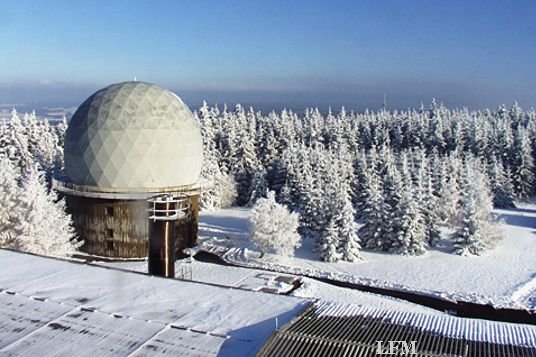
As part of the “Ramos” project, Airbus Defence and Space Electronics has equipped six long-range surveillance radars with the MSSR 2000 I secondary radar (MSSR = Monopulse Secondary Surveillance Radar). These secondary radars provide an overview of the air situation based on interrogations and automatic responses from individual aircraft. The MSSR 2000 I is the only secondary radar certified according to the latest civil and military air traffic control standards.
Flight track automatically handed over from radar to radar within the cluster.
The MSSR-2000-I systems form a Mode S cluster that enables the safe guidance of all aircraft within an airspace sector. In this sector, every single aircraft equipped with a Mode S transponder can be automatically identified and tracked, without the need for individual acquisition or the handover of specific data from one radar to the next.
This eliminates the risk of losing individual flight tracks during the handover between different radar sectors. Furthermore, the assignment of control tasks is handled automatically by the cluster, ensuring that other radars within the cluster immediately step in should a secondary radar fail.
In the military domain, the MSSR 2000 I is utilized for automatic Identification Friend or Foe (IFF) to prevent the accidental engagement of friendly or allied units. It supports the new military standard, Mode 5, which is scheduled for implementation across all NATO countries. The MSSR 2000 I is deployed aboard German naval vessels and is also utilized by the armed forces and navies of numerous nations worldwide. In the context of civil air traffic control, the MSSR 2000 I is deployed in countries such as Austria, Portugal, Bulgaria, and the Philippines.