Home Blog Page 9

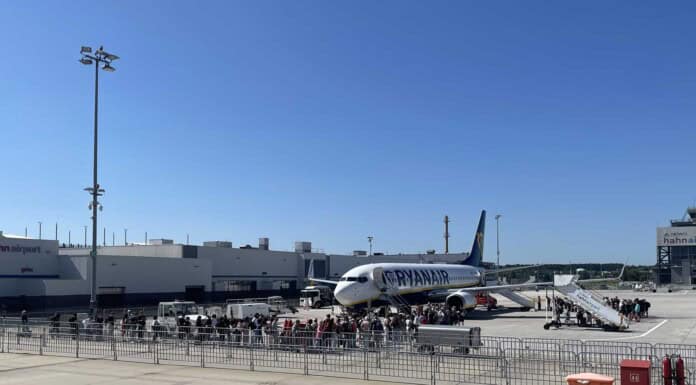
Memmingen Airport: Ryanair flies to Bucharest (Romania)

0

Memmingen Airport recently announced a new flight connection to an already established destination, which will be available from October 30th.

Irish airline Ryanair will fly several times a week from Memmingen to Bucharest, a welcome addition to Wizz Air’s existing flights. This new connection offers passengers more choice and an expanded range of services.

Memmingen Airport, located in southern Germany, has established itself as a major hub for international travel in recent years. With the launch of this new route, Ryanair demonstrates its commitment to promoting connections to major European cities. The flight connection to Bucharest opens another gateway to one of Europe’s most dynamic and culturally rich countries.

Bucharest: Destination for business travelers, exchange students and tourists

Bucharest, the capital of Romania, has experienced steady development in recent years and is known for its vibrant culture, impressive architecture, and thriving economy. The city is a popular destination for business travelers, exchange students, and tourists who want to explore the historic Old Town, the impressive Parliament building, and the numerous museums and art galleries.

Ryanair’s new connection will allow passengers to use Bucharest Baneasa Aurel Vlaicu Airport. This is the Romanian capital’s second airport, located approximately 12 kilometers from the city center. The airport will connect to Memmingen on Mondays, Thursdays, Fridays, and Saturdays, providing excellent frequency for travelers traveling for business or pleasure.

Wizz Air flies to Henri Coandă International Airport in Otopeni

Wizz Air, which has been offering flights to Bucharest for some time, now serves Henri Coandă International Airport in Otopeni, Romania’s largest and most important airport. This means passengers now have a choice of two airports in Bucharest, making travel planning much easier and offering additional flexibility.

Marcel Schütz, the authorized representative of Memmingen Airport, emphasized the importance of this new connection: “With this new connection, we have an unbeatable and diverse offering for Bucharest and Romania. Business travelers, in particular, will have attractive options for quick business trips with up to eleven departures per week.” This demonstrates that Memmingen Airport is striving to meet the needs of different travelers, be they business travelers, vacationers, or commuters.

The additional connection to Bucharest is not only beneficial for travelers wishing to travel to the Romanian capital, but it also strengthens ties between Germany and Romania as a whole. More than 1.7 million people live in Bucharest, and the city attracts many German citizens for various reasons. This new flight connection will make it easier to maintain existing relationships, whether business or personal.

Booking tickets

Booking tickets for Ryanair’s new flights to Bucharest is now available, making it easier for travelers to plan their trips. Prices are competitive, offering both savings for travelers and an exciting opportunity to experience Romanian culture and nature.

Increasing flight frequencies to popular destinations is an important step in the development of Memmingen Airport. These measures will further cement the location as an attractive choice for travelers. At a time when demand for air travel is rising again after the pandemic, it is crucial to offer an extensive network of flight connections to meet travelers’ needs.

Overall, the introduction of the new flight connection from Memmingen to Bucharest is a significant step in strengthening travel options in southern Germany. The relevance of this connection will certainly become apparent in the coming months as passengers experience the benefits of this new route and explore the cultural and business opportunities Romania has to offer.

Emirates resumes flight operations after disruptions

0

Emirates, one of the world’s leading airlines, resumed regular flight operations with minimal disruption following the regional events on June 23.

Despite the challenges in the region, flight operations were stabilized within a few hours and continued largely without interruption.

In times of geographical and political challenges, an airline’s ability to respond quickly and efficiently to disruptions is critical. Emirates once again demonstrated why it is one of the leading global airlines by maintaining operations with virtually no disruption following the regional events on June 23. For frequent flyers and travelers who value safety and reliability, this flexibility is a sign of professionalism and commitment.

Rapid response and emergency management

Following the events of the night of June 23, emergency and operational disruption plans were immediately activated. Emirates responded promptly, suspending only flights to areas directly affected by the conflict, while continuing to operate all other flights as scheduled. This immediate adjustment demonstrates the airline’s preparedness to respond to unexpected events and minimize disruption to flight operations. The successful implementation of such measures is based on flexible management that prioritizes safety and customer satisfaction.

Flight operations: Minimal disruption to the flight schedule

Despite the regional challenges, no flight diversions were necessary, which is unusual in situations involving regional conflicts. Only a few flights had to travel longer distances due to airspace congestion, and some even had to be canceled. These minimal disruptions demonstrate Emirates’ efficiency and network management, which enables it to maintain coordinated operations. Furthermore, the airline demonstrated flexibility by suspending flights to Amman and Beirut at short notice and then resuming them promptly to ensure the safety of all involved.

Focus on safety as top priority

The safety of its passengers and crew is always Emirates’ top priority. The airline never flies unless safety conditions are fully met. Continuous monitoring, cooperation with aviation authorities, and careful risk assessment around the clock ensure that all flights are conducted safely and avoid conflict zones. This priority inspires confidence among frequent flyers and travelers who rely on reliable and safe air connections.

Communication and customer service

Over the past few weeks, Emirates has continuously kept its customers informed through updates on its website and social media channels. The reservations team has actively assisted affected customers with rebooking. This transparent communication builds traveler confidence and helps minimize uncertainty. Frequent flyers in particular appreciate this service, which promotes planning and travel flexibility.

Long-term strength and adaptability

These events demonstrate how deeply rooted Emirates’ commitment to safe, efficient, and comfortable flight operations is. For decades, the airline has successfully overcome challenges while maintaining quality of service. Robust contingency planning and close cooperation with the UAE enable Emirates to ensure uninterrupted operations even in times of crisis. The ability to respond quickly to changes and adapt flexibly makes Emirates a preferred choice, especially for frequent flyers and travelers who value reliability.

Preparing for the summer travel season

As we look ahead to the busy summer travel season, Emirates will continue to monitor the situation and remain in close consultation with the authorities. The airline is committed to ensuring safe and smooth operations through swift and appropriate adjustments. Customers can rest assured that their travel plans will be minimally disrupted, even if unforeseen events arise.

NATO expands MRTT fleet: Two new Airbus A330 MRTTs for Europe

NATO is taking an important step towards strengthening European defence capabilities by expanding its multinational Multi Role Tanker Transport (MRTT) fleet.

The NATO Support and Procurement Agency (NSPA) has ordered two additional Airbus A330 MRTT aircraft, bringing the Multinational MRTT Fleet (MMF) to a total of twelve aircraft. These two additional aircraft are scheduled for delivery by 2028 and 2029, respectively, complementing the already strategically important fleet that serves as the backbone of the Alliance’s air refueling and airlift capabilities.

This growth also coincides with the official inclusion of Sweden and Denmark in the MMF program. These Nordic countries are thus expanding their role in European defense cooperation and, together with existing partners, contributing to greater European strategic autonomy. This expansion not only demonstrates cooperation within Europe but also establishes new standards in terms of efficiency and interoperability in the defense field.

The ability to conduct air refueling missions, combined with strategic airlift capability and medical evacuation capabilities, makes the Airbus A330 MRTT an indispensable asset. The following article provides a comprehensive analysis of this expansion, highlighting technical details, political implications, and future application potential within and outside the NATO alliance.

Background and significance of the MMF program

The Multinational MRTT Fleet Program is a remarkable example of transnational defense cooperation. Initiated and co-financed by the Netherlands and Luxembourg, with the progressive involvement of Norway, Germany, Belgium, and the Czech Republic, the program provides for the shared use of NATO-owned Airbus A330 MRTT aircraft. This ‘pooling and sharing’ strategy promotes cost savings, ensures technological standardization, and increases military interoperability among participating states.

The addition of two additional aircraft takes place against the backdrop of a changing security situation in Europe and a growing need to optimize the mobility and operational readiness of air forces. Sweden and Denmark are thereby increasing the number of participating states and simultaneously creating a broader basis for joint defense initiatives. This approach underscores the growing political willingness to shape defense issues in a cooperative manner beyond national borders.

Technical features and advantages of the Airbus A330 MRTT

The Airbus A330 MRTT is one of the most advanced multi-role aircraft in its class. With a fuel capacity of up to 111 tons, the aircraft not only enables long-range aerial refueling but also strategic airlift of large groups of troops or heavy equipment. Its wide-body configuration supports the transport of up to 300 troops or up to 45 tons of payload, making it a versatile workhorse in military operations.

Additionally, the A330 MRTT can be configured with medical evacuation equipment (MEDEVAC). This includes the ability to accommodate intensive care units and stretchers, which can be life-saving during humanitarian or war-related evacuations. The integration of the latest technologies—including the world’s first certified automatic aerial refueling system with a boom (A3R)—increases safety and efficiency during complex flight operations.

This technical versatility enables the Airbus A330 MRTT to participate in a wide range of missions, from air policing and surveillance flights to support of international alliance operations.

Political and strategic significance of enlargement

The inclusion of Sweden and Denmark significantly expands the political dimension of the MMF program. Both countries contribute not only additional resources but also strategic expertise and new operational perspectives. This strengthens the European defense community in a global context and provides the Alliance with greater flexibility in multinational operations.

Furthermore, this integration sends a clear signal of European unity and a willingness to share responsibility for security and defense. In times of geopolitical uncertainty—particularly in light of the increasing tensions in Eastern Europe and global challenges—such cooperation is an essential step toward maintaining the stability and sovereignty of European states.

The A330 MRTT fleet, produced and converted by Airbus in Toulouse and Getafe, exemplifies the ability of European industry to make decisive contributions to the safety architecture by combining advanced technology and joint action.

Looking to the future: NATO operations and European cooperation

The expansion of the MRTT fleet is not only a response to current needs, but also an investment in the future of NATO and European defense capabilities. With 84 orders from 17 customers worldwide, the A330 MRTT accounts for approximately 90% of the market for new tanker aircraft outside the United States, underscoring its global importance and reliability.

The MRTT fleet is expected to be used even more extensively in multinational missions in the future – not only for tactical air refueling, but also as a platform for logistics and medical evacuation in crisis areas. The integration of additional partner nations could further increase its effectiveness and operational flexibility.

At the same time, the programme will play an important role in the implementation of the European Security and Defence Union by setting common standards and promoting operational synergies.

Developments for European and NATO defense cooperation

The order for two additional Airbus A330 MRTT aircraft and the integration of Sweden and Denmark into the MMF program are groundbreaking developments for European and NATO defense cooperation. These measures not only strengthen Europe’s strategic autonomy but also improve the technical and operational capabilities for future missions.

Thanks to state-of-the-art technology, versatile capabilities, and shared use, the Airbus A330 MRTT aircraft are essential components of a modern defense strategy. The cooperation between NATO member states and Airbus demonstrates how innovation and collaboration go hand in hand to effectively address security challenges.

This fleet expansion lays the foundation for a more robust, interoperable and efficient air refueling and transport capacity, which will serve in the long term to ensure territorial integrity and support humanitarian and military missions.

LOT flies to Thessaloniki: Market analysis and benefits for travelers

0

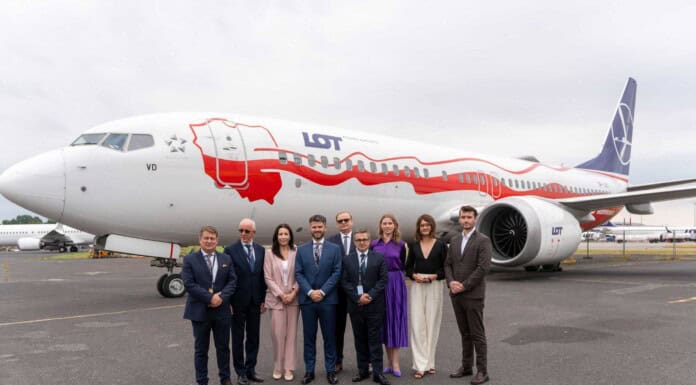
LOT Polish Airlines, a member of the renowned Star Alliance, continues its expansion in Europe. Just in time for the 2025 summer season, the airline has launched new flights from Warsaw to Thessaloniki – a significant expansion for travelers visiting this vibrant northern Greek metropolis for both business and pleasure.

LOT Polish Airlines and the route expansion

LOT Polish Airlines is continuously expanding its European route network, responding to the growing demand for attractive connections between Poland and southern European destinations. The integration of the Warsaw-Thessaloniki route underscores the airline’s strategic focus on providing direct connections to important business and tourism destinations. “The route to Thessaloniki perfectly complements our offering and creates new opportunities for travelers,” explains Amit Ray, Head of DACH Markets at LOT.

Market analysis: Importance of the Warsaw-Thessaloniki route

From a market perspective, Thessaloniki, as Greece’s second-largest city, is an important center for trade, business, and tourism. The resumption of flights by LOT reflects the need for direct accessibility and greatly facilitates exchange between Poland and Greece. An analysis shows that both business travelers and leisure guests benefit from the increased frequency and convenient connections at Warsaw Chopin Airport.

LOT offers daily flights during the summer season and a reduced frequency in the winter, providing flexibility for different travel needs. The flight time of approximately 2 hours, 20 seconds is competitive and attractive for short trips. LOT’s Business Class offers a comfortable option for business travelers, while Economy Class caters to budget-conscious vacationers.

Benefits for travelers

  • Flexibility in flight times: Departures from Warsaw take place at two different times, allowing travelers to better integrate their flights into their daily schedule.
  • Comfortable classes: The choice between Business and Economy Class allows for tailor-made travel concepts.
  • Short total travel time: Connecting flights from German cities such as Berlin or Hamburg ensure a quick journey time of around five hours to Thessaloniki.
  • Year-round connection: The availability of flights both in summer with daily frequency and in winter with four flights weekly creates year-round travel opportunities.

Flight times to Thessaloniki

  • Wednesday, Friday and Sunday
  • Departure with LO 605 from Warsaw at 9:40 a.m., arrival in Thessaloniki at 12:55 p.m. local time
  • Departure with LO 606 from Thessaloniki at 13:55, arrival in Warsaw at 15:15 local time
  • Monday, Tuesday, Thursday and Saturday
  • Departure with LO 607 from Warsaw at 14:10, arrival in Thessaloniki at 17:25 local time
  • Departure with LO 608 from Thessaloniki at 18:25, arrival in Warsaw at 19:45 local time
  • From Berlin
  • Departure at 11:20, arrival in Thessaloniki at 17:25 local time after 5 hours and 5 minutes total travel time
  • From Düsseldorf
  • Departure at 10:25, arrival in Thessaloniki at 17:25 local time after 6 hours total travel time
  • From Hamburg
  • Departure at 6:55 a.m., arrival in Thessaloniki at 12:55 p.m. local time after 5 hours of total travel time

Tourist insight: Thessaloniki and surroundings

Thessaloniki is considered the gateway to the popular Chalkidiki peninsula, a region known for its picturesque beaches, crystal-clear waters, and cultural diversity. Northern Greece also boasts impressive mountain landscapes and historical sites. For business travelers, Thessaloniki offers an important seaport and a dynamic business environment.

Visitors can look forward to an exciting mix of history, modern lifestyle, and a relaxed atmosphere. The city itself is rich in Byzantine architecture, lively markets, and excellent cuisine.

Travel safety and current developments

With regard to travel safety, the new flight connections meet the highest standards. LOT Polish Airlines ensures comprehensive hygiene concepts on board and on the ground to ensure the health of passengers. This makes the new route not only an attractive option but also a safe choice for travelers.

Conclusion

LOT Polish Airlines’ new flight connection to Thessaloniki offers significant added value for both business and leisure travelers. By combining frequency, flexibility, and convenience, LOT strengthens its position in the European aviation market and creates new access to a central destination in Greece. Travelers will have enhanced opportunities to discover Thessaloniki’s cultural and economic highlights.

Air Transat new at BER: direct flight Berlin – Toronto (Canada)

0

Berlin Brandenburg Airport (BER) has taken a significant step in its development as an international hub with Air Transat’s first non-stop flight to Toronto. This new long-haul connection opens up entirely new travel options for the capital region to North America, especially to Canada’s largest city, Toronto.

With two weekly flights on Mondays and Fridays, Air Transat now offers direct, convenient access to one of Canada’s most important economic centers and tourist destinations. In this blog post, readers will learn everything they need to know about the new flight connection, from flight times and the aircraft used to the business opportunities, technological innovations at the airport, and the diverse connecting options.

This non-stop route is a milestone for BER and underscores the strategic importance of this airport for connecting Europe with North America. Air Transat, a Canadian airline specialist for leisure flights, plays a key role by not only enabling flights from Berlin to Toronto, but also offering connections to numerous other Canadian and US cities thanks to a partnership with Porter Airlines. This opens up a wide range of destinations for German travelers without having to transfer.

Air Transat: Overview of the flight connection

Air Transat operates the new direct flight with modern Airbus A321LRs, fuel-efficient aircraft specifically designed for long-haul flights. They offer a high level of comfort with 199 seats, including 12 in Club Class. Passengers can look forward to a personal entertainment system with a wide range of films, series, and music, as well as the ability to stream content to their own devices via Wi-Fi.

The flight from Berlin to Toronto takes approximately 8 hours and 50 minutes, while the return flight is usually a good hour shorter. The flight schedule departs Berlin Brandenburg Airport (BER) at 12:25 p.m. on Mondays and Fridays and arrives in Toronto in the afternoon. Return flights depart from Toronto at 9:05 p.m. on Thursdays and Sundays. This provides convenient times for connecting flights and travel planning.

Economic and tourist importance for the Berlin-Brandenburg region

With this new route, Berlin Brandenburg Airport is significantly strengthening its intercontinental route network, which will benefit not only passengers but also the regional economy and tourism. Easy access to Canada promises new opportunities for business between the two countries. Furthermore, Canada’s diverse landscapes, vibrant cities, and culture will become more accessible for visitors from Germany, which should boost tourism in both directions.

Airport CEO Aletta von Massenbach emphasizes the relevance of this connection as an important milestone that creates new travel opportunities while simultaneously tapping into the economic potential of the Berlin-Brandenburg region. The Destination Ontario marketing department also emphasizes how Toronto, as an attractive destination with culinary diversity and urban flair, combined with the nearby natural regions, promises a fascinating experience for German guests.

Special features on board: comfort, entertainment and service

On board Air Transat flights, passengers can expect comfortable amenities with modern technology. Club Class offers a more premium seating configuration for more legroom and personalized service. The entertainment system with its own touchscreen supports a wide selection of entertainment options, supplemented by USB ports and Wi-Fi—making the long flight fly by.

The airline also relies on a sustainable fleet with fuel-efficient aircraft, which reduces the route’s ecological footprint. Good service and friendly crew members contribute to travelers feeling comfortable during the flight and allowing them to begin their journey in a relaxed manner.

Technological innovations: Using ApronAI for digital turnarounds

Another exciting aspect of the new flight route is the innovative use of technology for process optimization. Both Berlin Brandenburg Airport and Toronto Pearson Airport are using Assaia’s ApronAI technology for the first time. This AI-based software monitors the check-in process in real time using strategically positioned cameras. It detects delays or deviations and immediately sends recommendations to those responsible at the Airport Control Center.

This allows all partners involved to react quickly, avoid problems, and optimize turnaround—the rapid reversal of the aircraft for the next takeoff. This digital approach represents a milestone for more efficient and smoother air traffic and underscores the commitment of all partners to innovation and customer satisfaction.

Partnerships and connection opportunities in Canada

Toronto serves as a central gateway to other destinations in Canada and the USA. Through a codeshare with Porter Airlines, travelers can conveniently connect to other major cities such as Montreal, Vancouver, Calgary, Edmonton, or Halifax – as well as to attractive US cities such as Las Vegas. These seamless connections offer tremendous flexibility for customers who want to see more of their North American trip.

The joint venture guarantees short transfer times and convenient travel planning, so the direct flight from BER to Toronto Pearson Airport is just the first step towards a broader North American adventure.

Conclusion

Air Transat’s new nonstop service from Berlin to Toronto is a significant advance for air connectivity in the capital region. It not only offers German travelers a direct, comfortable, and modern way to explore Canada, but also strengthens economic and tourism ties between the two countries.

The use of modern aircraft, innovative technologies such as ApronAI, and strategic partnerships with regional airlines make this connection groundbreaking. A new chapter in intercontinental air travel is now opening for entrepreneurs, vacationers, and explorers alike.

With the 2025 summer flight schedule in mind, travelers can look forward to uncomplicated connections and first-class service. Those who want to experience the diversity of Canada can now take a direct flight from BER to Toronto – one more reason to embark on a grand exploration.

About the author: This article was written by an aviation expert with a focus on current trends and innovations in air traffic in order to provide readers with comprehensive and practical information.

Aviation in Africa: Airlink relies on Embraer E195-E2

0

Historical overview of Southern Africa’s air transport infrastructure

Since its founding, Airlink has played a central role in Southern Africa’s air transport infrastructure. The airline operates a network of 45 destinations in 15 countries, including far-flung destinations such as St. Helena Island in the South Atlantic and Madagascar. Since 2001, Airlink has successfully operated Embraer aircraft, demonstrating the long-standing partnership and mutual trust between the airline and the Brazilian aircraft manufacturer.

Over the past two decades, Embraer has been a trusted partner for Airlink, providing aircraft optimally tailored to the unique market conditions in Africa. The introduction of the new E195-E2 generation signals the next technological leap, combining efficiency, capacity, and customer comfort under one roof.

Azorra: Details on the fleet expansion

The order includes the lease of 10 Embraer E195-E2 jets through Azorra, a Fort Lauderdale-based leasing, financing, and asset management company. These aircraft feature modern Pratt & Whitney GTF engine technology and offer 124 to 136 seats, depending on the configuration—an average capacity increase of 33% over the E190 models currently in operation.

The rollout is planned for 2024 to 2027, with the aircraft being delivered directly from Embraer’s production facility in Brazil. The high level of operational, maintenance, and training consistency between the existing E-Jets and the new E2 models will allow for efficient integration and minimize transition costs for Airlink.

With this investment, Airlink is strengthening both the capacity and flexibility of its fleet to meet increasing passenger demand on main routes and the development of new routes in sub-Saharan Africa.

Environmental Impact

The Embraer E195-E2 jets offer significant environmental advantages over the previous generation. The aircraft promise up to 29% fuel savings, which not only lowers operating costs but also significantly contributes to reducing CO2 emissions. This is a critical factor given the global challenges posed by climate change and increasing regulation of the aviation industry.

This improvement results from a combination of modern turbine technology, aerodynamic design, and lighter materials. For Airlink, this means more sustainable flight while simultaneously increasing operational safety and punctuality. The airline is also positioning itself as a pioneer in the region in terms of environmental awareness and technological innovation.

Economic advantages of the new Embraer E195-E2 aircraft

In addition to the environmental benefits, the new Embraer E195-E2 aircraft offer significant economic benefits. The increased passenger capacity leads to lower unit costs, making Airlink more competitive, especially on busy routes.

Furthermore, synergies resulting from similar aircraft operation and maintenance will be leveraged to reduce training, spare parts, and operating costs. The partnership with Azorra ensures flexible and low-risk financing, allowing Airlink to optimize its capital commitment.

By expanding and modernizing its fleet, Airlink will also become more attractive to investors and partners, as the company demonstrates its future viability in an increasingly competitive market.

The decision to add the Embraer E195-E2 to its fleet is a strategic move that prepares Airlink for the challenges of the coming decades. With improved range and capacity, the airline is well positioned to expand its network in sub-Saharan Africa.

The investment supports the effort to make aviation in Africa more sustainable, efficient, and customer-centric—combined with the opportunity to open up new markets and routes. Technological modernization will help promote sustainable growth, secure jobs, and strengthen the regional economy.

Conclusion

Airlink’s fleet expansion with the Embraer E195-E2 represents a significant milestone in the development of the African aviation industry. It combines environmental responsibility, economic efficiency, and sustainable growth in an innovative way. Industry professionals can see this as a model project that demonstrates how modern technologies and strategic partnerships can positively shape the future of air transport. With this investment, Airlink secures a leading position and paves the way for new standards in mobility and environmental sustainability in the region.

Caribbean vacation: Air France flies nonstop to Punta Cana

0

Air France is expanding its Caribbean offerings in the 2025/2026 winter schedule, launching new flights to Punta Cana in the Dominican Republic from January 13 to March 28, 2026. These flights will operate three times a week, on Tuesdays, Thursdays, and Saturdays, and the airline will use a Boeing 777-300ER for the route.

The exact flight times are as follows: Flight AF968 departs from Paris-Charles de Gaulle at 2:25 PM and arrives in Punta Cana at 6:45 PM. The return flight is AF969, which departs from Punta Cana at 9:05 PM and arrives in Paris-Charles de Gaulle the following day at 10:30 AM.

Air France’s Caribbean destinations

Punta Cana thus represents Air France’s sixth destination in the Caribbean, along with other popular destinations such as Cayenne in French Guiana, Pointe-à-Pitre in Guadeloupe, Fort-de-France in Martinique, Saint Martin and Havana in Cuba.

Punta Cana is a tropical paradise located on the Coconut Coast, off the southeastern tip of the Dominican Republic. The region is known for its pristine beaches, crystal-clear waters, and stunning natural beauty. It offers a wealth of options for travelers seeking both relaxation and adventure. From a wide range of water activities to hikes through the nearby tropical forests, Punta Cana has something for everyone.

Punta Cana: Place of relaxation and cultural center

The city is not only a place of relaxation but also a cultural center where local traditions blend with colonial heritage. Travelers can explore the rich culture and heritage of the Dominican Republic, which comes alive in the region’s art, music, and gastronomy.

The most popular activity in Punta Cana is undoubtedly visiting the beach. The beaches are not only inviting but also safe, with clear waters perfect for swimming. The beachfront promenades are lined with bars and restaurants offering delicious local food and treating travelers to fresh seafood specialties.

In addition to relaxing on the beach, visitors can participate in a variety of activities. Diving and snorkeling are especially popular, as the crystal-clear waters are rich in marine life and offer the delightful opportunity to explore the colorful coral reefs. Boat trips and catamaran excursions are also often part of the itinerary, which not only showcase the beauty of the Caribbean Sea but often include stops at secluded beaches.

Destination for adventure seekers

For adventure seekers, Punta Cana offers numerous opportunities for water sports such as windsurfing, kitesurfing, and jet skiing. These activities are ideal for those seeking a bit of adrenaline and wanting to conquer the Caribbean waves.

Another highlight is the Indigenous Eyes Ecological Park, a nature reserve located near Punta Cana. This protected area is home to several freshwater lagoons where visitors can swim and discover the region’s flora and fauna. The park’s hiking trails lead through beautiful landscapes and offer an opportunity to experience the natural beauty of the Dominican Republic up close.

Culture enthusiasts will find numerous opportunities in Punta Cana to learn more about Dominican history and the local way of life. Traditional dances and musical performances are common at resorts and during local festivals and celebrations. Dominican cuisine, characterized by its flavors and variety, should also be on any traveler’s list. Travelers should definitely try local specialties such as mangu, sancocho, and fresh seafood.

Popular destination for honeymooners

Punta Cana is also a popular honeymoon destination, offering numerous romantic resorts and services for couples. Many hotels offer special wedding and honeymoon packages, creating an unforgettable setting for the beginning of a life together.

In summary, Punta Cana is not only a place for travel and relaxation, but also a destination with much to offer. Its perfect climate, stunning beaches, and variety of activities make it an ideal destination for families, couples, and solo travelers. Air France’s new connection from Paris to Punta Cana brings travelers directly to this paradise, allowing them to discover the beauty and culture of the Dominican Republic.

The expansion of flights also contributes to promoting tourism in the region and provides an easy way to connect with one of the Caribbean’s most impressive destinations. The combination of direct access, convenient flight, and the diverse offerings that Punta Cana has to offer makes it a prime destination for future travel.

Punta Cana: Increasing popularity

All of this suggests that Punta Cana will only grow in popularity in the coming years, not only as a vacation destination, but also as a place where travelers can experience the unique heritage and hospitality of the Dominicans. Air France’s new connection opens up a whole new dimension of travel to this dreamy part of the world, inviting travelers to enjoy the experiences that only Punta Cana can offer.

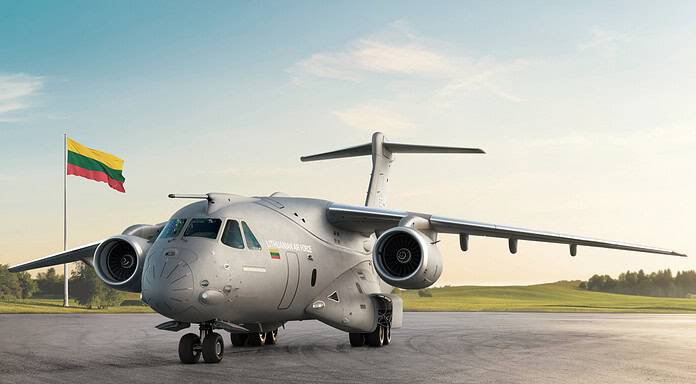
Strategic rearmament: Lithuania relies on Embraer C-390 Millennium

Lithuania has taken a decisive step toward modernizing its military aviation capabilities. By selecting the Embraer C-390 Millennium as its next-generation military transport aircraft, the country is strengthening its operational readiness and underscoring its strategic position within NATO. This decision follows in-depth market analyses and evaluations of various transport aircraft and is the expression of a long-term modernization program.

The C-390 Millennium is a versatile, capable, and fast-flying aircraft specifically designed for demanding military missions. Its ability to carry a payload of up to 26 tons, combined with the operational flexibility to operate even on unpaved runways, makes the aircraft a vital asset for Lithuania’s defense strategy.

This comprehensive report will shed light on the background of the decision, explain the technical features of the C-390 Millennium and demonstrate its strategic importance for Lithuania’s security architecture and NATO interoperability.

Lithuania’s path to modernizing military aviation

Since joining NATO, Lithuania has taken continuous steps to strengthen its defense capabilities. The selection of the Embraer C-390 Millennium represents another milestone in this process. The country aims to expand its ability to transport troops, equipment, and relief supplies quickly and reliably.

The C-390 offers significant advantages over previous transport solutions due to its higher payload and speed. Its flexibility in terms of different operational scenarios is also a significant factor. Lithuania’s decision is based on comprehensive analyses that take qualitative and quantitative criteria into account and fit the Ministry of Defense’s target system.

Loreta Maskaliovienė, Deputy Minister of National Defense, emphasized the careful consideration of all market options and confirmed that the choice of Embraer’s aircraft is the most suitable one for national military requirements. This signals the Lithuanian government’s clear commitment to modern defense technology and a future-oriented security strategy.

Technical features and advantages of the C-390 Millennium

The Embraer C-390 Millennium is a medium-sized military transport aircraft that has been in service since 2019 and has proven itself in several European and Brazilian air forces. With a payload of up to 26 tons, the aircraft can carry heavier loads than many comparable models.

In addition, the C-390 achieves a cruise speed of approximately 470 knots, making it faster than many competing models. Its ability to operate on temporary and unpaved runways enables missions in a wide range of conditions—a decisive advantage in military crisis zones or humanitarian missions.

Additional features such as in-flight refueling capability increase the aircraft’s range and operational flexibility. The aircraft can function as both a tanker and a receiver during in-flight refueling operations, opening up additional tactical options.

Strategic importance for Lithuania and NATO interoperability

By acquiring the C-390 Millennium, Lithuania is not only enhancing its national defense capabilities but also its ability to cooperate within NATO. This aircraft is already part of the fleets of several member states, including Portugal, Hungary, and the Netherlands, strengthening logistical and operational interoperability.

In a constantly changing security landscape, it is essential for Lithuania to be able to respond quickly and flexibly to threats. The increased transport capacity and versatility of the C-390 will help it efficiently support its own armed forces and facilitate international cooperation.

Furthermore, the choice of this aircraft also signals a contribution to European defense cooperation. Embraer’s C-390 is used in a variety of demanding missions, allowing Lithuania to benefit from a proven and flexible system.

Strengthening national defense capabilities and NATO interoperability

Lithuania’s choice of the Embraer C-390 Millennium as its future military transport aircraft is a significant step toward strengthening its national defense capabilities and NATO interoperability. The aircraft combines modern technology, reliability, and versatility, thus addressing the complex requirements of modern military operations.

This strategic upgrade will increase the effectiveness of the Lithuanian armed forces in a variety of scenarios while intensifying cooperation with NATO partners. Thus, the selection of the C-390 represents a forward-looking investment in the security of the country and its allies.

It remains to be seen how the implementation of the C-390 will specifically affect Lithuania’s operational capabilities, but it is already clear that the choice represents an important impetus for the further development and modernization of the air force.

Embraer A-29 Super Tucano: Success Story & Milestone

The Embraer A-29 Super Tucano has earned a global reputation as an outstanding aircraft in the light attack and training aircraft category. With over 600,000 flight hours accumulated across its diverse user base from 22 air forces, the A-29 represents reliability, versatility, and technical excellence.

Milestone: 600,000 flight hours of the A-29 Super Tucano

The 600,000 flight hour milestone marks a significant achievement in the history of the A-29 Super Tucano. This aircraft was designed not only as a light attack system and advanced trainer, but also demonstrated its adaptability to diverse mission profiles. Achieving this milestone demonstrates its proven ability to operate in diverse geographical and operational environments worldwide.

The A-29’s ability to operate in interchangeable mission scenarios such as close air support, border surveillance, air patrol, and reconnaissance missions underscores this performance. The accumulated flight hours are a clear testament to the robustness and readiness the aircraft has demonstrated over its operational lifetime.

Technical details and performance characteristics of the Embraer A-29 Super Tucano

The Embraer A-29 Super Tucano is equipped with state-of-the-art technology, making it one of the most effective light, turboprop-powered multi-role aircraft available. Its robust design allows for operations from unpaved runways, enabling operations even in adverse conditions.

The technical highlights include:

  • Propulsion system: A reliable Pratt & Whitney PT6A-68C turboprop engine provides robust and efficient performance.
  • Avionics: The cockpit is equipped with sophisticated avionics, including a human-machine interface (HMI) that optimally connects the pilot and the on-board computer.
  • Armament: The aircraft can carry a wide range of weapons, including air-to-air and air-to-surface missiles, as well as precision bombs.
  • Communication and sensor technology: Advanced communication systems and sensors enable precise target acquisition and secure networking with other units.
  • Maintenance and operating costs: Low life cycle costs, simplified maintenance processes and high availability characterize the aircraft.

These technical features make the A-29 a cost-effective and tactically versatile aircraft for a variety of military requirements.

International users and their requirements

The A-29 Super Tucano is operated by a total of 22 air forces around the world, confirming its international acceptance. A wide range of users in diverse geographical and operational contexts underscores the versatility of this aircraft.

For example, Portugal has acquired the A-29N version, which is specifically designed for NATO interoperability. This variant is equipped with advanced avionics and communications systems to meet stringent NATO standards.

Other countries such as Brazil, Colombia, the Philippines and the USA use the Super Tucano in a variety of roles, from close air support to border surveillance and reconnaissance.

This widespread use demonstrates the trust in the platform and its ability to adapt to diverse tactical scenarios and environments. Users value the combination of high performance, reliability, and comparatively low operating costs.

Outlook: Significance and future developments

Given the increasing demands for flexible and cost-effective aviation systems, the role of the Embraer A-29 Super Tucano will continue to grow in importance. The combination of proven technology, versatility, and an international user base offers growth potential for new markets and applications.

Embraer also continuously invests in the further development of the platform to adapt it to modern threat and mission profiles. This includes improvements in sensor technology, expanded networking options for integration into network-guided combat systems, and further optimization of operating costs.

The coming years could also bring the integration of more sustainable technologies and alternative propulsion systems, which could make the A-29 even more attractive to future operators.

Conclusion

With over 600,000 flight hours, the Embraer A-29 Super Tucano represents an outstanding milestone in aviation history. Technically sophisticated, versatile, and internationally proven, it remains an indispensable tool for numerous air forces worldwide. Looking ahead, a platform that, thanks to continuous innovation and broad user acceptance, will remain in service for many years to come.

Norwegian Air Ambulance modernizes fleet with Airbus H145

In the demanding world of air rescue, Norwegian Air Ambulance continues to focus on progress and innovation. With the recently signed framework agreement for up to eight Airbus H145 helicopters, two of which are on a permanent basis, the organization marks another important step in the modernization of its fleet. This decision not only underscores its confidence in the proven performance of the H145, but also demonstrates its commitment to providing efficient, modern, and sustainable rescue services in Norway.

The H145 has established itself as one of the world’s leading platforms in the field of helicopter tactical rescue. It combines state-of-the-art technology with outstanding reliability and operational efficiency, qualities that are essential to Norwegian Air Ambulance’s requirements. In this comprehensive blog post, we analyze the technical innovations, the economic benefits, and the strategic importance of this contract for air rescue in Norway.

Background: The role of the H145 in air rescue

The Airbus H145 is a lightweight, twin-engine multi-role helicopter model that has earned an excellent reputation, particularly in the field of helicopter emergency medical services (HEMS). Featuring the latest generation of the helicopter, equipped with an innovative five-blade rotor, the H145 offers significantly improved payload capacity and improved operating efficiency.

Norwegian Air Ambulance is one of the world’s first operators of this model with the five-blade main rotor configuration. This technology not only increases payload by 150 kg, but also significantly reduces maintenance requirements thanks to the bearingless rotor design. Furthermore, the H145 offers an outstanding combination of low noise and emissions, which is particularly advantageous for rescue flights in densely populated or sensitive natural areas.

Norwegian Air Ambulance currently operates a fleet of 20 H135 and H145 helicopters, which are deployed at all HEMS bases in the country. The expansion and modernization of the fleet with additional H145 helicopters will increase operational capacity and ensure the maintenance of high performance standards.

Detailed analysis of the advantages and innovations of the H145

The H145 stands out due to numerous technical and operational advantages:

Quiet operation

The H145’s five-blade main rotor configuration significantly reduces its acoustic signature compared to previous models. This not only improves patient and crew comfort, but also mitigates noise pollution in the surrounding area and contributes to the responsible integration of air ambulance services in populated areas.

Low CO2 emissions and operating costs

The H145 is known as one of the most environmentally friendly models in its class. Featuring state-of-the-art engine technology and digital control systems (FADEC), it achieves greater efficiency and lower fuel consumption. This results in reduced operating costs and underscores Norwegian Air Ambulance’s commitment to sustainable air ambulance.

Ease of maintenance and reliability

The design-oriented concept of the bearingless rotor simplifies maintenance processes and thus reduces downtime. The high availability of the helicopters is a crucial factor for the reliability of emergency medical care.

Modern avionics and pilot support

The H145 is equipped with the Helionix digital flight control system, which includes a 4-axis autopilot and state-of-the-art navigation features. These systems reduce pilot workload, increase flight safety, and enable more precise operations under demanding conditions.

Economic and operational impacts for Norwegian Air Ambulance

For Norwegian Air Ambulance, the framework agreement with Airbus represents not only an investment in equipment, but also in the effectiveness and future viability of the rescue services. The expansion with up to eight H145 helicopters ensures continuous improvement of operational capacity and efficiency.

Lower operating costs and reduced maintenance requirements allow resources to be used more efficiently, optimizing the reach and availability of emergency services. The fleet modernization also supports long-term planning security and strengthens Norwegian Air Ambulance’s position as a leading provider in the Nordic region.

Significance for air rescue in Norway and future prospects

Norway is characterized by numerous geographical challenges that require rapid and flexible medical care. The H145, with its versatile capabilities and robust performance, is optimally tailored to these conditions.

The investment in the latest generation of the H145 fleet not only ensures the high standards of medical air rescue, but also sets a clear direction for future innovations. Potential fleet expansions and technologies such as improved sensor and communication technologies could further increase operational effectiveness and safety.

Conclusion

The continuation of Norwegian Air Ambulance’s fleet modernization with the Airbus H145 is a significant step for air ambulance in Norway. The combination of technical innovation, economic efficiency, and operational reliability makes the H145 the ideal platform for life-saving missions.

With this framework agreement, Norwegian Air Ambulance is not only strengthening its current capabilities but also investing in the sustainable future of emergency medical care in Norway. The H145 is thus a quiet, efficient, and reliable partner in the service of life – an investment that has an impact far beyond the ground.

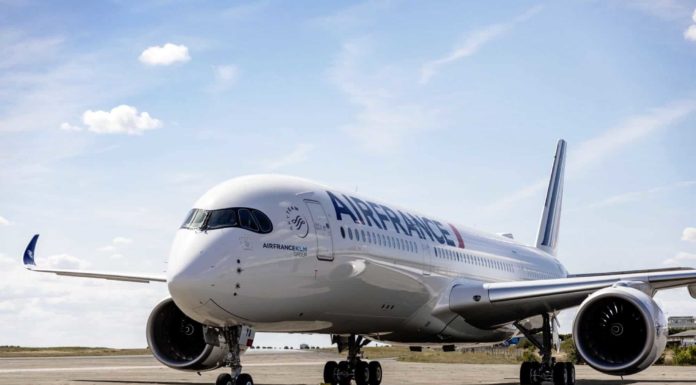
Air France wins multiple awards at Skytrax World Airline Awards

Air France has once again proven itself a leader in the aviation industry by winning multiple awards at the prestigious Skytrax World Airline Awards 2025, held during the Paris International Air Show at Le Bourget. For the fifth consecutive year, the French airline was named “Best Airline in Western Europe”—a testament to its consistent quality and commitment to the region. In addition, Air France’s exclusive La Première first-class experience secured first place in two categories: “Best First Class Lounge Dining” and “Best First Class Amenities.” These special recognitions highlight the exceptional level of service Air France offers its customers.

Skytrax Awards: Awarded “Best Airline in Western Europe”

The award as “Best Airline in Western Europe” underscores the strong performance and outstanding service quality that Air France consistently delivers. Even more impressive is the improvement in the global ranking: the airline climbed to eighth place, surpassing its previous year’s result. This not only underscores the company’s competitiveness on the international stage, but also its focus on continuously optimizing the customer experience.

Behind this success lie extensive investments and efforts, particularly in improving service across all travel classes. Fabien Pelous, Senior Vice President of Customer Experience at Air France, emphasized the importance of this commitment: The awards are a recognition of the tireless efforts of all teams, both on the ground and on board, and an inspiration to further spread the French art of travel globally. He also thanked customers for their trust and loyalty, which contribute significantly to this success.

Redesigned La Première experience

One of the defining pillars of Air France’s recent success is the completely redesigned La Première experience. This exclusive offering embodies the highest levels of luxury and comfort, offering a unique charter experience for discerning travelers. From the moment they arrive at Paris-Charles de Gaulle Airport, La Première guests enjoy absolute privacy and unparalleled service. The redesigned La Première Lounge, with its individual suites, sets new standards in exclusivity and comfort.

At the heart of the lounge experience is the high-quality cuisine, created in collaboration with acclaimed chef Alain Ducasse. The menu, accompanied by carefully selected wines and champagnes, delights with refined specialties such as the famous pasta with black truffle and ham or the rum and Armagnac baba, a culinary homage to Monte Carlo. Appreciated by gourmets and foodies alike, this culinary experience distinguishes Air France as an airline committed to quality and aesthetics.

New suite on board selected Boeing 777-300 aircraft

Another highlight for La Première passengers is the new suite on board, which is being gradually introduced on select Boeing 777-300 aircraft. The suite spans five windows, offering views and a sense of spaciousness not typically found in first class. The innovative use of space creates an unparalleled sense of spaciousness and privacy. Storage compartments have been reduced, with more storage space at floor level, contributing to an open, harmonious atmosphere.

The suite features an ergonomically designed seat that adapts to the passengers’ needs depending on the flight phase—whether during takeoff, landing, dining, or relaxation mode. The upholstery is soft and provides optimal body support, significantly enhancing seating comfort. Opposite is a chaise longue that converts into a flat bed—at two meters long and 75 centimeters wide, it offers ample space for a restful night’s sleep. The suite is also enclosed by a thick floor-length curtain, ensuring absolute privacy and a tranquil atmosphere.

During the flight, guests in La Première receive an elegant amenity kit in the signature colors of pearl gray and red. The luxurious leather case features Air France’s historic winged seahorse emblem and contains four premium skincare products from the French brand Sisley. This carefully selected range of care products elegantly complements the first-class travel experience.

The new La Première experience combines a spacious and private airport lounge, an exclusive onboard suite, first-class three-star dining, a fine selection of wines and champagnes, and comfortable sleeping accommodations at high altitude. This combination makes every leg of the journey an unforgettable experience and showcases French travel craftsmanship at an international level.

With these innovations, Air France demonstrates that it not only meets the needs of its discerning customers, but also continually strives to redefine the standard for luxury travel. The multiple awards at the Skytrax World Airline Awards 2025 are a validation of these efforts and a significant milestone for the airline, cementing its position as a leading airline in Europe and worldwide.

Key areas of Air France’s success

  • Consistency in quality: Being named the best airline in Western Europe for five consecutive years is a testament to the sustained quality of the services offered.
  • Exclusivity and innovation: The redesigned La Première experience sets new standards in the first-class travel segment.
  • Customer centricity: Investments in comfort, hospitality and service ensure an outstanding customer experience.
  • Global competitiveness: The improved position in the world ranking underlines the airline’s international appeal.

Conclusion

Air France proves that tradition and innovation can go hand in hand. Through excellent service, outstanding culinary experiences, and innovative comfort solutions, the airline creates an unparalleled travel experience. The awards at the Skytrax World Airline Awards 2025 are not only recognition of past achievements but also a catalyst for future innovations that continue to offer customers first-class travel experiences.

Riyadh Air and the Airbus A350-1000: A new era for Saudi Arabia’s aviation

0

Riyadh Air’s order for 25 Airbus A350-1000s marks a significant step in the development of the aviation industry in Saudi Arabia and is closely aligned with the goals of Vision 2030. Riyadh Air is the first airline in the Kingdom to add the state-of-the-art A350-1000 to its fleet, an aircraft recognized worldwide for its efficient performance, range, and passenger comfort.

Sustainability and premium service

Riyadh Air’s choice of the Airbus A350-1000 underscores its strategic focus on sustainability and premium service. As one of the most efficient long-range aircraft in its class, the A350-1000 offers groundbreaking fuel efficiency and the ability to operate on up to 50% Sustainable Aviation Fuel (SAF), significantly reducing its environmental footprint. Airbus aims to make all its aircraft fully SAF-compatible by 2030 – a focus that aligns perfectly with Riyadh Air’s sustainability goals.

With planned expansion to up to 50 aircraft, the contract offers enormous growth potential and reflects the Kingdom’s ambition to increase air traffic to 300 million passengers per year by the end of the decade. This milestone is expected to establish Saudi Arabia as a global aviation and tourism hub, bringing with it significant economic and infrastructural developments.

The signature at the Paris Air Show was signed by renowned personalities such as H.E Yasir Al-Rumayyan, Governor of the Public Investment Fund (PIF) of Saudi Arabia, Christian Scherer, CEO of Commercial Aircraft at Airbus, and Tony Douglas, CEO of Riyadh Air – a clear signal of the importance of this project at national and international level.

Advantages of the Airbus A350-1000

The Airbus A350-1000 brings a number of advantages specifically tailored to Riyadh Air’s needs. In addition to its range of over 15,000 kilometers, the aircraft offers capacity for approximately 350 passengers, who travel in a spacious and modern cabin environment. The combination of advanced aerodynamics, lightweight materials, and cutting-edge engine technology ensures lower fuel consumption and reduced emissions.

In addition, the A350-1000 offers an exceptional passenger experience, ranging from quieter cabins to improved air quality and increased space. These factors are crucial to remaining competitive in the premium segment of international aviation and simultaneously meeting customer needs for comfort and sustainability.

With this acquisition, Riyadh Air positions itself as a pioneer in modern aviation in the Middle East and benefits from its strategic partnership with Airbus, which is based on many years of experience and technological advances. The airline thus makes a significant contribution to Saudi Arabia’s economic diversification, a core objective of Vision 2030.

Global A350 Family is a model of success

With more than 1,390 orders and over 650 aircraft delivered worldwide, the global A350 family is already a success story, synonymous with reliability, efficiency, and innovation. Riyadh Air will be the first operator in the Kingdom to operate this innovative aircraft family, thus opening a new chapter in the aviation region.

With its modern fleet and focus on sustainable growth, Riyadh Air underlines its claim to play a leading role in international aviation, while simultaneously assuming environmental responsibility and making Saudi Arabia even more attractive to travelers from all over the world.

Investment in the Airbus A350-1000

The investment in the Airbus A350-1000 is not only a step toward technological progress, but also a clear statement about the future direction of aviation in the Middle East. It demonstrates how innovation, sustainability, and economic development can go hand in hand to shape the next generation of flight experiences.

Finally, Riyadh Air’s collaboration with Airbus underscores the strategic importance of aviation for Saudi Arabia’s economic transformation, while simultaneously pushing the boundaries of what is technically feasible in air travel. This development is being eagerly followed by industry professionals worldwide and represents a significant boost for the global aviation market.

ANA Holdings orders 27 A321neo and A321XLR aircraft

ANA Holdings (ANAHD) has finalized an agreement with Airbus by signing a firm order for 24 single-digit A321neo and three A321XLR aircraft. The order was announced during a signing ceremony at the 2025 Paris Air Show, presided over by Koji Shibata, Representative of the Board of Directors, President and CEO of ANAHD, and Benoît de Saint-Exupéry, EVP Sales of Airbus’ Commercial Aircraft Division.

Airbus aircraft for All Nippon Airways (ANA) and Peach Aviation

The order includes 14 additional A321neos for All Nippon Airways (ANA), as well as 10 A321neos and three A321XLRs for the group’s subsidiary Peach Aviation, to upgrade the group’s current fleet. Peach Aviation will be the first Japanese airline to operate the A321XLR, which has one of the longest ranges among single-engine aircraft. It can fly up to 4,700 nautical miles (8,700 km) nonstop.

“We are pleased to have signed the firm order to introduce additional A321neos and the first A321XLR into our Group companies. We believe this additional introduction of Airbus aircraft will further deepen our relationship,” said Koji Shibata. “We will accelerate the introduction of modern and fuel-efficient aircraft to provide excellent service to our passengers and reduce CO2 emissions.”

“From its first order in 1987 to an order backlog of nearly 100 aircraft, ANA has been a long-standing customer of the A320 Family. The exciting addition of the A321XLR for Peach Aviation further underscores ANA’s innovative spirit and confidence in the unparalleled capabilities of the A320 Family,” said Benoît de Saint-Exupéry. “We are committed to offering ANA and Peach Aviation our full support as their growing fleet operates on more and more routes across their networks.”

ANA operates 33 aircraft of the A320 family, Peach Aviation 36 aircraft of this family

The A321neo is part of the A320neo family, which integrates the latest technologies such as modern engines, Sharklets and cabin efficiency improvements, which together deliver more than 20% fuel savings and CO2 reduction compared to previous generations of single-engine aircraft.

The A321XLR sits alongside the medium-haul aircraft in an airline’s fleet. It offers the flexibility to increase capacity, open new routes, or even operate existing routes when demand fluctuates. It does this while consuming 30% less fuel per seat compared to competing previous-generation aircraft. The A321XLR’s new Airspace cabin will provide passengers with comfort in all classes on long-haul flights.

To date, more than 7,000 A321neo aircraft have been ordered by over 90 customers worldwide.

LOT Polish Airlines relies on Airbus A220 – advantages and market positioning

The aviation industry is constantly changing, and airlines must regularly modernize their fleets to remain competitive. A recent example of this is LOT Polish Airlines, which has placed its first Airbus aircraft order. With a firm order for 40 Airbus A220 models – 20 each of the A220-100 and A220-300 – LOT is setting an important milestone in its fleet modernization and market expansion strategy.

This decision was announced at the 2025 Paris Air Show and marks a significant step for the Polish national airline. The introduction of the modern, efficient A220 is not only a technical upgrade for LOT, but also opens up new opportunities for growth in Europe and beyond.

Technical advantages of the Airbus A220

The Airbus A220 is considered the most modern commercial aircraft in its size category, with a capacity of 100 to 160 passengers, depending on the model and cabin configuration. These aircraft are characterized by the longest range and lowest fuel consumption in their class. With a range of up to 3,600 nautical miles (approximately 6,700 km), the A220 enables flexible operational capabilities.

A key factor is the latest Pratt & Whitney PW1500G geared turbofan engines, which contribute to a significant reduction in fuel consumption and emissions. Furthermore, the A220 delivers 50% lower noise levels compared to older aircraft generations—an important consideration in densely populated European regions.

In addition to its economic and ecological advantages, the A220 is also focused on passenger needs. Its modern cabin comfort, with wider seats and larger windows, represents an enhanced flight experience, which LOT is using to position itself as the airline of choice.

Market positioning and strategy of LOT Polish Airlines

With the A220 fleet, LOT Polish Airlines plans to gradually replace its existing regional fleet. This represents not only a modernization of the fleet but also a strategic expansion. The new aircraft will enable longer distances and new routes, enabling LOT to consolidate its role as a leading airline in Central and Eastern Europe.

Michał Fijoł, Executive Officer at LOT, describes the order as “a decision for the future.” He sees the new A220 fleet as important pillars for growth and competitiveness in European air transport. By combining efficiency, modernity, and customer focus, LOT is strengthening its position in the increasingly demanding market.

This strategic direction is supported by the close collaboration with Airbus. Airbus has already announced that it will provide LOT with global expertise during the renewal process to ensure the smooth integration of the A220 fleet.

Future prospects and sustainability

Another advantage of the Airbus A220 is its sustainability credentials. The aircraft can already run on up to 50% Sustainable Aviation Fuel (SAF), significantly improving its environmental performance. Airbus aims to have its aircraft fully certified for the use of SAF by 2030.

At a time when the industry’s focus on sustainable solutions is stronger than ever, LOT’s A220 fleet positions it as a responsible and future-oriented airline. This pioneering combination of modernity, efficiency, and sustainability gives the company a competitive edge.

Conclusion

LOT Polish Airlines’ order for Airbus A220 aircraft is far more than just a fleet upgrade. It represents a strategic step that will significantly strengthen the airline’s market position in Europe. With the technical advantages of the A220, its economic efficiency, and its focus on sustainable aviation, LOT is setting a standard for the future.

Combining innovation, customer focus, and environmental awareness opens up a wide range of growth opportunities for LOT. The introduction of the A220 fleet thus marks the beginning of a new era for the Polish national airline.

If you would like to learn more about developments at LOT or the advantages of the Airbus A220, stay tuned and follow the exciting changes in the European aviation market.

Eve Air Mobility: Vertical Take-Off (eVTOL) contract with Revo

0

Eve Air Mobility (NYSE: EVEX; EVEXW) has signed a binding framework agreement with Revo. The contract covers the purchase of up to 50 electric vertical takeoff and landing (eVTOL) aircraft, as well as services for their deployment and aftercare. This agreement marks Eve’s transition from development to implementation as a leading provider in urban air mobility.

Important milestone for Eve Air Mobility

Eve Air Mobility announced that the contract with Revo is final and represents a significant step in its growth strategy. Eve CEO Johann Bordais stated that this agreement confirms the company’s confidence in Eve’s technology and operating model, while also announcing a significant milestone in its conceptual implementation. By moving from concept to implementation, Eve is contributing to building a stable and sustainable ecosystem for urban air mobility.

Launch of Revo and the São Paulo market

The agreement also means that Revo will serve as the launch operator for Eve’s eVTOLs in São Paulo starting in the fourth quarter of 2027. São Paulo, one of the most dynamic markets for air mobility, boasts over 400 registered helicopters and nearly 2,000 daily takeoffs and landings. Revo CEO Joao Welsh emphasized Eve’s mature technology and the company’s extensive support as key factors in the partnership decision.

Revolutionary mobility solutions

Revo plans to implement significant improvements in its mobility concept with Eve’s eVTOLs. Sustainability is a key focus, as the electric aircraft would offer a clean transportation alternative. Revo already integrates car rides with its helicopter service, enabling a reduction in travel time between key locations in southern Brazil.

Partnership for a green future

The collaboration with Eve marks a step toward diversification and leadership in the low-altitude economy, said Jeremy Akel, Group CEO of Omni Helicopters International. Partial previous collaborations, including successful urban air traffic management simulations using Eve’s Vector software, paved the way for this definitive agreement. The use of TechCare, a comprehensive service package from Eve, underscores the commitment to maximizing fleet performance.

Eve Air Mobility, a pioneer in urban air mobility, is characterized by advanced technology and a strong industry position. Together with strategic partners, the company offers sustainable and groundbreaking air mobility solutions that are transforming the way people move within urban centers.

DLR presents research projects at the Paris Air Show 2025 in Le Bourget

The German Aerospace Center (DLR) will be presenting its current research projects at the Paris Air Show in Le Bourget. In Hall 2C, Stand C357, the DLR will provide insights into developments in the fields of aeronautics, space, energy, transport, security, and defense. Models, demonstrators, and technologies will be on display that demonstrate how sustainable air traffic, advanced mobility concepts, and innovative space solutions can be designed. The focus will include technologies for reusable rocket stages, an innovative ultralight aircraft, a research facility for the production of electricity-based fuels, a platform for the holistic assessment of aviation scenarios, a mission and new technological approaches for Earth observation, and work on concepts for next-generation military aircraft.

“Security and defense, pioneering applications in space, and competitive, climate-friendly air transport are key issues for Germany’s and Europe’s global sovereignty,” says DLR Executive Board Chair Prof. Dr.-Ing. Anke Kaysser-Pyzalla. “At DLR, we make crucial contributions to all of these topics in research and development, technology transfer with industry, and knowledge exchange with stakeholders and authorities. At the Paris Air Show, we will be demonstrating DLR’s capabilities on the ground, in the air, and in space.”

Dr. Walther Pelzer, DLR Executive Board member and Director General of the German Space Agency at DLR, added: “Here at the Paris Air Show, we are not only demonstrating the industrial capabilities of the European aerospace sector, but also what the Franco-German friendship can achieve for Europe and the world. Our two nations form a strong axis within ESA and are central to a successful ESA Ministerial Conference in Germany in November. We are also working closely together bilaterally. For example, the joint Merlin mission, which will be launched in 2028, will make a significant contribution to a better understanding of climate change by measuring methane concentrations in the atmosphere for the first time. Our engagement with our French partner CNES also makes it clear that only through European and international cooperation in space can we meet the challenges of the future.”

UpLift: A flying laboratory for environmentally friendly aviation technologies

With the DLR research aircraft D328® UpLift, DLR is presenting its versatile, flying test bench. It is used, for example, for testing alternative propulsion systems and fuels such as fully synthetic fuels or hydrogen – for a more climate-friendly aviation of the future. The D328® UpLift complements Europe’s largest civil research fleet with a flexibly usable test aircraft. In addition to DLR aeronautics research, it can also be used by national industry, small and medium-sized enterprises, start-ups, and other research institutions to test new, environmentally friendly fuels, as well as system and propulsion technologies under realistic flight conditions. A model of the research aircraft is on display at the DLR booth.

ALICIA: Platform for digital aircraft development

For climate-friendly and competitive aviation, DLR is developing a digital platform in the ALICIA project for the holistic assessment of future scenarios to provide a sound basis for decision-making for policymakers and industry. The platform will enable data-driven analyses of the climatic, ecological, economic, and social impacts of innovative aircraft technologies at multiple levels (aircraft, airports, and the global air transport system) and across their entire life cycle.

Muuv: The next-generation ultralight aircraft

Muuv, a DLR spin-off, is currently developing an electric ultralight aircraft with hybrid propulsion technology that flies significantly quieter, more efficiently, and is more climate-friendly than current models. At its core is a combination of battery power and a range extender, enabling up to five hours of flight time – at half the operating costs of other ultralight aircraft. The aircraft is geared towards the real needs of general aviation: around 90 minutes of purely electric flight is standard, and if necessary, the additional propulsion provides greater range and flexibility. The electric demonstrator HyBird, the technological basis of Muuv, will be presented at the 2025 Paris Air Show. The idea and original aircraft concept for HyBird were developed by a student team from the University of Stuttgart, including the Muuv founders, as part of the German-American DLR/NASA Design Challenge, which they won with their design. The ultralight aircraft represents an intermediate step in the development of an unmanned aerial vehicle (UAV) for transporting critical goods to poorly connected areas.

CALLISTO landing leg: For the reusable rocket of tomorrow

The CALLISTO space project – a collaboration between DLR, CNES, and JAXA – is demonstrating a reusable rocket first stage. A model of the landing leg, which is crucial for the demonstrator’s autonomous, vertical landing, is on display at Le Bourget. The development incorporates lightweight construction, shock absorption, and aims to ensure the reusability of its components. CALLISTO serves as a test bed for future vertical-landing launch systems.

MERLIN: Tracking methane in the atmosphere with laser technology

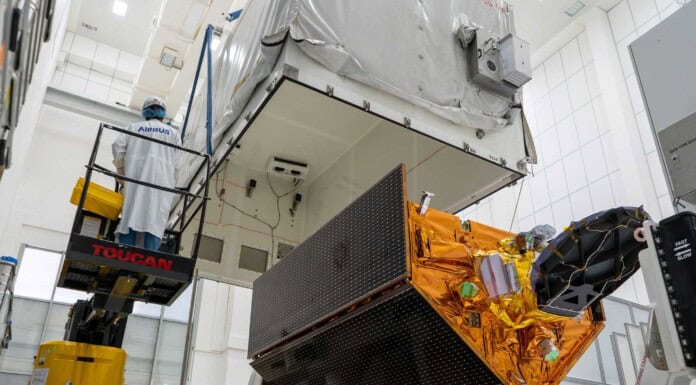
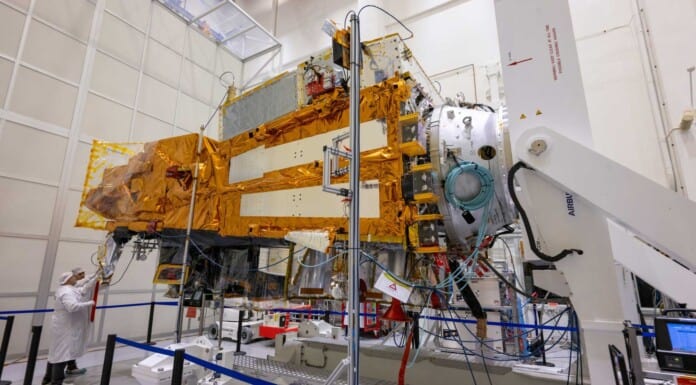
MERLIN is a German-French Earth observation satellite for measuring methane in the Earth’s atmosphere. Methane is considered a particularly climate-damaging greenhouse gas. A 1:2 scale model of the satellite and a 1:1 scale model of the laser payload will be on display at the DLR booth. The IPDA LIDAR laser, developed by DLR, is the heart of the satellite mission and was developed in collaboration with the Fraunhofer Institute for Laser Technology ILT. MERLIN is intended to provide precise data on global methane emissions in the future, thus making a significant contribution to climate protection.

CMOS TDI detector: New standards for Earth observation

With the CMOS TDI Detector 8,000, DLR is showcasing a miniaturized sensor system for next-generation satellite missions. This technology enables high-resolution, multispectral Earth observations with an elevenfold improvement in signal-to-noise ratio. The model exhibited at the Paris Air Show is based on CMOS (Complementary Metal-Oxide Semiconductor) technology with 8,000 pixels. The detector was developed with partners from industry and research – with the shared goal of integrating it into sensor systems for space-based instruments in the future.

Power-to-liquid fuels: produced sustainably and electricity-based

With its Power-to-Liquid Fuels (TPP) technology platform, the DLR is presenting the largest research facility to date for the production of electricity-based fuels. These fuels, known as Sustainable Aviation Fuels (SAFs for short), are intended to be suitable for use in existing engines. The DLR stand at the Paris Air Show 2025 will introduce visitors to the topic of fuel design, among other things: They can simulate how the formulation of a fuel can be modified and what impact this has on combustion and emissions during flight. The purpose of the TPP research facility is to further develop and test technologies and processes for the production of electricity-based fuels. The fuels will also be comprehensively evaluated, and their properties will be optimized for future applications in aviation, at sea, or in heavy-duty road transport.

Intermodal travel: Aviation in the transport network of the future

With the exhibit “Air Travel in an Intermodal Context,” the DLR illustrates the role of aviation in the interconnected transport system. Models and case studies from Germany and its surroundings demonstrate how airports can be efficiently linked to rail and road as so-called “multimodal hubs.” The goal is sustainable, resilient mobility with optimized transfer processes. The DLR booth will demonstrate the functionality and possibilities of multimodal modeling, providing interested parties with concrete insights into the opportunities and challenges of intermodality in air transport.

Mobility Lab: Simulating traffic before it occurs

The DLR Mobility Laboratory enables the virtual planning and evaluation of new mobility concepts – such as the use of autonomous vehicles or the redesign of transport networks. Simulations demonstrate the effects of drive technologies and traffic control on emissions, noise, and accessibility, for example. At the booth, visitors can understand how data-based models can be used to develop measures and thus implement road traffic more efficiently and effectively.

WingMates: Teamwork in the air – manned meets unmanned

With the WingMates project, the DLR is developing pioneering concepts for next-generation military aircraft. The focus is on a manned “Future Fighter Demonstrator” with high agility and a new type of engine, as well as the Muldicon concept for an unmanned flying wing aircraft (Uncrewed Combat Air Vehicle, or UCAV) with particularly efficient aerodynamics and reduced radar visibility. The idea behind the project is that such systems should operate in a networked and cooperative manner in formations in the future. The goal is to create the basis for a modern, digitally networked air defense system that intelligently combines manned and unmanned platforms. The research provides valuable input for future European defense programs and demonstrates how high-tech combat aircraft could operate together as a team in the future.

INTENTAS: Quantum technology for space

With the INTENTAS project, the DLR is driving forward the development of high-precision quantum sensors for use in space. The goal is a novel atomic interferometer that uses ultra-cold, entangled atoms to respond particularly sensitively to changes in gravity and inertial forces. The technology is currently being tested under space conditions in the Einstein Elevator in Hanover. Thanks to an innovative, all-optical cooling method and spin-based entanglement, INTENTAS promises significantly improved measurement accuracy. This opens up new potential applications in navigation, Earth observation, and basic research – for example, for measuring the Earth’s gravitational field or for the further development of satellite-based systems. INTENTAS is a decisive step towards quantum sensor technology in orbit.

General Atomics & AEE: Propulsion for Do228 NXT multi-role platform

Technical innovations of the Engine Interface Unit (EIU) and the Central Warning System (CAWS) on board the Do228 NXT

General Atomics AeroTec Systems GmbH (GA-ATS) is working closely with AEE Aircraft Electronic Engineering GmbH (AEE) to completely redevelop the Engine Interface Unit (EIU) and the Central Warning System (CAWS) for the Do228 NXT special purpose aircraft. This project marks a significant technological advancement and is a prime example of successful partnership in the German aviation industry.

The EIU forms a vital interface between the aircraft engines and the aircraft management system. It collects and processes data such as engine parameters, fuel level indicators, and flap positions, and transmits them in real time to the cockpit displays. At the same time, the CAWS ensures that critical warning messages are reliably and immediately transmitted to the cockpit. In addition, the Do228 NXT utilizes other innovative AEE components, including thermal controllers, various relay boards, and voltage and current indicators, which contribute to comprehensive monitoring and control.

The new development includes significant technical enhancements, such as an additional A429 data input, which enables the integration of the new fuel system and facilitates the management of the pressure refueling logic. Of particular note is the emulation of the speed switches responsible for automatic engine start and ignition. This innovation reduces complexity in the aircraft by eliminating the need for separate mechanical switches. Furthermore, the EIU now offers the capability to calibrate analog sensors, which minimizes mismatches and increases system reliability.

These technical innovations not only make the Do228 NXT more reliable, but also increase operational and maintenance efficiency. The components are developed and produced in compliance with the strict Design Assurance Level (DAL) B, with manufacturing and maintenance carried out under EASA Part 21G and Part 145 certifications, ensuring the highest quality and safety standards.

Economic importance of the partnership between GA-ATS and AEE

The cooperation between General Atomics AeroTec Systems GmbH and AEE Aircraft Electronic Engineering GmbH builds on over three decades of successful collaboration. AEE already developed the Engine Interface Unit for the previous version of the Do 228 NG, thus contributing a wealth of experience to the new project. Due to the discontinuation of certain key components, a comprehensive redesign was necessary – an opportunity to bring the technologies up to date and add new, valuable features.

For GA-ATS, this partnership with an experienced and reliable local manufacturer is crucial. It ensures a stable supply chain and effective delivery to customers worldwide. The decision to partner with AEE is based not only on their technical expertise, but also on their shared high quality standards and local roots, which are particularly critical in the aviation sector.

A further economic advantage is the backward compatibility of the new EIU, which can be used as a direct replacement without any changes to cabling and configuration. This avoids expensive and time-consuming adaptations for operators. Furthermore, the elimination of mechanical speed switches significantly reduces component costs and maintenance requirements. The positive cost effect of innovative technology and sustainable product development strengthens the competitiveness of both companies and ensures the long-term market success of the Do228 NXT.

Versatility of the Do228 NXT: Impact on the aviation industry

The development of the Do228 NXT, with its state-of-the-art avionics, demonstrates how innovative partnerships can revolutionize the aviation industry. With features such as enhanced engine data acquisition, flexible sensors, and simplified maintenance concepts, the aircraft sets new standards for efficiency and reliability in the light transport and specialty aircraft segment.

Particularly noteworthy is the versatility of the Do228 NXT, which impresses with various cabin layouts and its STOL (Short Takeoff and Landing) capability. These features enable a wide range of applications – from special missions to light transport.

The improved avionics and electronic systems, such as the new EIU, help operators worldwide benefit from lower operating costs, increased system reliability, and better integration of new technologies. These technical advances enhance the competitiveness of the Do228 NXT in the international market while fostering a culture of innovation within the aviation industry.

Furthermore, the intensive collaboration between two renowned companies sets a positive example for the entire industry. It demonstrates how long-term cooperation while adhering to the highest certification standards can lead to sustainable innovations that go beyond purely technological improvements and also create economic and social added value.

Conclusion

The close collaboration between General Atomics AeroTec Systems GmbH and AEE Aircraft Electronic Engineering GmbH in the development of the new Engine Interface Unit (EIU) and the Central Warning System (CAWS) for the Do228 NXT exemplifies how technological innovation, commercial foresight, and collaborative commitment go hand in hand. The result is a state-of-the-art multi-role platform that impresses with its technical excellence, cost-effectiveness, and diverse application capabilities.

With its advanced avionics, the Do228 NXT not only represents technological progress in aviation, but also highlights the importance of stable partnerships for the success of aircraft manufacturers and suppliers alike. For the aviation industry, this represents a new generation of aircraft that combines superior performance with economic sustainability while offering flexible solutions for a wide range of requirements.

Operators benefit from improved reliability and lower operating costs, while the collaboration between GA-ATS and AEE exemplifies sustainable innovation in the European aviation industry. Overall, the Do228 NXT represents an important contribution to the further development of the specialized aviation segment and solidifies the reputation of the companies involved as leading players in the field of cutting-edge aircraft technology.

Flight safety: EVA AIR joins IATA Turbulence Aware platform

The aviation industry is facing ever-increasing challenges, particularly due to climate change, which is leading to an increase in turbulence. In this context, EVA AIR, a leading Taiwanese airline, is taking a pioneering role by joining the Turbulence Aware platform of the International Air Transport Association (IATA). This innovative platform aims to improve flight safety through the exchange of real-time turbulence data, thereby increasing the protection of passengers and crew. The following report explains in detail how EVA AIR is integrating this groundbreaking technology, the technical aspects of the platform, and the impact of this partnership on the industry.

Background: Challenges posed by turbulence in climate change

Turbulence is among the most challenging weather conditions to predict in aviation. With the increase in extreme weather events due to climate change, turbulence is becoming more frequent, making flight planning more difficult. While mild turbulence typically causes only inconvenience, severe turbulence can cause serious structural damage to aircraft and compromise passenger safety. This not only poses potential dangers to flight crews and travelers, but also increases costs due to delays, diversions, and maintenance.

Given these challenges, accurate and timely information about turbulence events is a key prerequisite for taking appropriate action and minimizing risks. This is where the Turbulence Aware platform comes in, enabling real-time data exchange between airlines and flight crews.

Technical aspects of the Turbulence Aware platform

The Turbulence Aware Platform is a state-of-the-art data platform developed by IATA that enables the collection, analysis, and dissemination of turbulence information to pilots and air traffic controllers in real time. This platform is based on the sharing of turbulence reports by airlines that equip their aircraft with appropriate sensors.

Core features of the platform include:

  • Real-time data collection: Over 2,700 aircraft from currently 28 participating airlines continuously send turbulence data to the platform.

  • Data aggregation and analysis: The platform summarizes incoming data, evaluates it, and creates comprehensive turbulence maps.

  • Information provision: Pilots receive visual representations of turbulence areas directly in the cockpit display, allowing proactive course changes.

  • Increased flight safety: By detecting and avoiding turbulence in a timely manner, risks for passengers and aircraft are significantly reduced.

The integration of this technology represents a significant step in the digitalization and modernization of aviation safety, as it revolutionizes the current approach based on predictions and limited sensor information.

EVA AIR’s role and operational advantages

EVA AIR is one of the first airlines to sign a cooperation agreement with IATA to become part of the Turbulence Aware platform. Initially, 33 Boeing 777-300ER aircraft in the fleet will be equipped with the sensors required for the platform and integrated into the data transmission system.

President Clay Sun emphasizes the importance of this membership, saying, “We believe that participation in Turbulence Aware will help pilots and air traffic controllers analyze real-time data, plan and select appropriate flight paths to avoid areas with higher turbulence risk, and ensure the safety of passengers and the aircraft.”

The platform offers several advantages for EVA AIR:

  • Increased safety: Early warnings allow aircraft to better navigate turbulence, minimizing the risk to passengers and crew.

  • Optimized flight routes: Real-time information enables more efficient flight planning, which can shorten travel times and also save fuel.

  • Reduced maintenance costs: Avoiding severe turbulence reduces potential damage to the aircraft and thus lowers repair costs.

These steps strengthen EVA AIR’s position as an innovative company that actively uses new technologies to optimize the quality and safety of its services.

Quotes from leaders

IATA Director General Willie Walsh said: “We are delighted that EVA AIR is joining Turbulence Aware to further improve the performance of crews and air traffic controllers worldwide, thereby increasing flight safety, fuel efficiency, and passenger comfort.”

Walsh also highlights the significant increase in the platform’s turbulence reports in 2024, which illustrates the growing importance and success of this tool.

EVA AIR President Clay Sun added: “Although technology is becoming increasingly advanced, turbulence remains one of the most difficult weather conditions to predict. The new platform helps us address these challenges even better.”

Significance for the aviation industry

EVA AIR’s membership in the Turbulence Aware platform represents an important step toward improving flight safety, not only for the airline itself but for the entire aviation industry. Sharing turbulence data promotes a collective safety approach that empowers all platform participants.

Increasing connectivity through digital platforms is a key trend in the modernization of the aviation industry. It enables not only more efficient and safer flight operations but also more sustainable use of resources through fuel savings and extended aircraft lifecycles.

Overall, EVA AIR and IATA’s commitment demonstrates how collaboration and innovative technology can work together to address the challenges of climate change and a changing aviation landscape.

Conclusion

EVA AIR’s launch of the Turbulence Aware platform in collaboration with IATA marks a significant advance in aviation safety. By leveraging cutting-edge technology to capture and share real-time turbulence data, the aviation industry can improve passenger and crew protection while achieving efficiency gains and strengthening its ability to adapt to climate change.

This initiative underscores EVA AIR’s commitment to being at the forefront of innovation and actively contributing to a safer future for aviation.

Passengers can look forward to a safer and more comfortable journey, while the industry will be strengthened through the exchange of experiences. It remains to be seen how other airlines will follow this example to fully leverage the benefits of the Turbulence Aware platform.

Embraer offers Gogo Galileo HDX for Phenom 300 customers

0

Embraer announces the availability of the Gogo Galileo HDX connectivity solution for Phenom 300 customers in the aftermarket. Through a partnership with Gogo, a Supplemental Type Certificate (STC) will be issued to ensure high-performance in-flight connectivity. The system leverages the Eutelsat OneWeb LEO satellite network for fast and reliable service.

Innovative connectivity solutions for Phenom 300

Embraer has chosen to make the Gogo Galileo HDX connectivity solution available to Phenom 300 aircraft owners. This decision, made in partnership with Gogo, ushers in a new era of in-flight connectivity. By installing a compact half-duplex antenna and a Line Replaceable Unit, passengers can enjoy a connectivity experience with 4K streaming and high-quality video calls that rivals ground-based solutions.

Performance at the highest level in flight

The implemented technology promises connectivity comparable in performance to both home and office-based internet connections. Users not only enjoy high speeds for online gaming and large file transfers, but also benefit from unparalleled reliability. The system relies on the advanced Eutelsat OneWeb network, which enables a stable communications connection even at high altitudes.

Partner and cooking time for the solution

According to Marsha Woelber of Embraer Services & Support, the goal is to continuously improve the flight experience using the best available resources. Michael Skou-Christensen of Gogo adds that the HDX antenna was specifically designed for business aviation applications. This solution will initially be available for the Phenom 300 model, with availability varying by region. FAA certification is expected in the third quarter of 2025.

Future expansions

In addition to the initial plans, the availability of the solution will be expanded to other configurations. The solution will also be available for the Phenom 300E model at a later date, with more specific dates to be announced. Embraer Service Center networks will be available to assist customers with the installation of the STC. Customer inquiries should be directed to Embraer Aftermarket Sales Representatives.

Embraer is a leading, innovative business aircraft manufacturer dedicated to enhancing the flight experience for its customers. With a strong global presence and a commitment to technological advancement, Embraer is solidifying its position as a provider of industry-leading aviation solutions.

Vietnam Airlines expands its range of direct flights from Germany

0

Vietnam Airlines is celebrating 20 years of direct flights between Germany and Vietnam. It is the only airline offering daily non-stop flights from Frankfurt to Hanoi and Ho Chi Minh City. Starting in fall 2024, flights from Munich will also be added to the schedule. This will further strengthen the airline’s presence in the German market.

Historical development of Vietnam Airlines

Vietnam Airlines began its journey in 1956 with the establishment of the Civil Aviation Administration of Vietnam. It began with irregular domestic flights and a small fleet. In 1993, it was officially incorporated as a state-owned aviation carrier. In 1996, it merged with 20 other companies to form the current public company, laying the foundation for international growth.

Growth and innovation

Over the years, Vietnam Airlines has invested significantly in modernizing its fleet. Today, it serves the route between Germany and Vietnam with modern Boeing 787-9 aircraft. The airline is the only one offering non-stop flights from Germany, particularly from Frankfurt, to Vietnam, underscoring the importance of the German market.

Extended flight connections

Starting in fall 2024, Vietnam Airlines will expand its service to include flights from Munich. The 2025 summer schedule will include weekly flights from Munich to Hanoi and Ho Chi Minh City, significantly expanding its flight offerings. This expansion of routes will enable Vietnam Airlines to reach even more passengers and improve access to key Asian markets.

Proud of 20 years of success

The management of Vietnam Airlines is proud of the successes achieved in the German market over the past two decades. Since the launch of the first flights, frequencies have steadily increased; Germany is now one of the airline’s most important international markets with 17 weekly flights. The company expresses its gratitude to its partners and passengers, who have made a significant contribution to this success.

Vietnam Airlines is a leading airline in Asia, offering a broad network of domestic and international connections. With one of the most modern fleets in the world, the company focuses on innovation and quality in air travel to provide its passengers with a first-class travel experience.

Frankfurt Airport: New operating concept for a sustainable future

Frankfurt Airport is one of Europe’s most important transport hubs. As Germany’s largest commercial airport, it is not only an essential component of the global mobility chain, but also a significant economic factor for the Rhine-Main metropolitan region. In anticipation of the projected growth in air traffic in the coming years, DFS Deutsche Flugsicherung GmbH and its operator, Fraport AG, have presented an enhanced operating concept. The goal of this measure is to prepare the airport for future challenges such as increasing flight movements, noise protection regulations, and environmental aspects – while ensuring the most stable and sustainable operations possible.

Experts predict a significant increase in flight movements by 2033. Initial capacity bottlenecks during peak traffic periods are already becoming apparent. Therefore, DFS and Fraport, in close cooperation with various institutions, have developed an adapted, future-oriented operating concept. This concept is deliberately based on existing structures, utilizes modern technologies such as Performance Based Navigation (PBN), and is subject to intensive coordination with regional bodies – especially the Aircraft Noise Commission (FLK). A particular focus is on the sustainable management of air traffic while simultaneously taking into account the noise protection interests of the affected population.

In the following report, we will explain in detail why and how DFS and Fraport decided on a new operating concept, what specific changes have been made, and what short- and long-term impacts this will have on passengers, residents, and aviation as a whole.


The initial situation at Frankfurt Airport

Operating direction “25” plays a central role at Frankfurt Airport. Specifically, “operating direction” refers to the preferred runway configuration, which is selected for air traffic depending on the weather and wind direction. The western operating direction “25” is particularly busy, as it is frequently used in prevailing wind conditions.

The existing operating concept already primarily uses the so-called southern bypass, especially for takeoffs from the central runway. This procedure, which has been in place since the airport was expanded with the addition of the northwest runway, is used for noise protection reasons. However, it comes with specific limitations – takeoffs via the southern bypass from the central runway are not completely independent of departures from Runway 18. In practice, this leads to capacity bottlenecks.

With a current benchmark of 104 flight movements per hour plus two tolerances, the existing operating concept is already reaching its limits during peak times. Experts predict that beyond a regular benchmark of 110 flight movements per hour, large parts of the current concept will no longer be sufficiently efficient.


Objectives of the new operating concept

DFS and Fraport have set themselves the goal of developing a new operating concept adapted to future requirements – with as few changes as possible compared to current practices. It should be flexible enough to guarantee safe operations even during heavy traffic volumes. In addition, aspects such as sustainability, environmental compatibility, and reducing noise pollution for residents are increasingly being focused on.

The planning is based on the expected traffic flows in the reference year 2033. This year was deliberately used as a reference for the redefinition of the noise protection zone, which is currently being reviewed. The goal is not only to meet the requirements formulated in the planning approval decision, but also to act in a forward-looking manner.

The solution strategy of DFS and Fraport can be divided into two central guiding principles:

  1. Optimized use of existing departure routes while maintaining the same security architecture
  2. Minimizing additional noise pollution through more flexible control and more precise navigation

Measures and structure of the further developed concept

The new concept focuses on the proactive use of the northwest departure routes, especially during peak traffic. Compared to the southern bypass, these routes are more independent of other traffic movements and can be controlled more efficiently. The basis for this is the modern PBN (Performance Based Navigation) navigation method, which, in addition to conventional procedures, enables more precise flight guidance and thus optimizes the separation of takeoff and missed approach procedures.

Contrary to the fears of many affected parties, the new concept does not involve any new flight routes. The existing departure routes will remain unchanged. Rather, the change lies in the frequency of their use – depending on the specific traffic situation at any given time of day.

A crucial tool in this regard is flexible traffic management: this allows air traffic control to automatically switch to the more efficient northwest routes during peak times, while continuing to give priority to the southern bypass during lower traffic times.

Advantages at a glance:

  • Alternative to the congested southern bypass
  • Increased use of technical navigation methods (PBN)
  • Reduction of mutual dependencies during start-up operations
  • Increase in operating capacity to up to 110 flight movements per hour possible
  • More reliable compliance with the night flight ban through flexible planning

Implementation requires close coordination with several institutions. The measures are currently being implemented with:

  • the Aircraft Noise Commission (FLK),
  • the Hessian Ministry of Economic Affairs, Energy, Transport and Housing (HMWVW),
  • and the Federal Supervisory Office for Air Navigation Services (BAF)

discussed and prepared. The final redefinition of the noise protection zone is scheduled to be completed by the end of 2026.


Impact on the region and environment

The impact on residents and the environment is at the heart of all operational changes. Therefore, particular emphasis was placed on avoiding exacerbating noise impacts—ideally even mitigating them locally. More targeted load distribution across the northwest during peak times can minimize congestion, potentially leading to a reduction in overall noise pollution.

It is expected that the implementation of the new concept will result in fewer people being affected by noise pollution in the long term. The staggered operating hours and the targeted use of quieter routes (e.g., during off-peak times) will contribute significantly to regional relief.

Fraport and DFS emphasize that all measures were initiated in close dialogue with the region. This includes early engagement with political stakeholders, local communities, and expert committees. This political and social involvement will continue to play a central role in the companies’ actions – thus mastering the balancing act between economic efficiency, environmental protection, and social responsibility.


Voices from management

Those responsible, DFS and Fraport, are speaking out to the public with clear words:

“We expect an increase in traffic volume at Frankfurt Airport in the long term,” says Dr. Pierre Dominique Prümm, Executive Board Member for Aviation and Infrastructure at Fraport AG. “Capacity bottlenecks already exist during peak traffic periods, during which the northwest departure routes are increasingly used. Therefore, we need the enhanced operating concept at the latest when we reach a benchmark of 110 flight movements per hour. Together with our partner DFS, we are laying the foundation for safe, stable, and sustainable operations in the future.”

And from the perspective of air traffic control, Dirk Mahns, Managing Director Operations at DFS, adds:

“DFS supports the growth of Frankfurt Airport. Together with Fraport, we have examined various options. The further developed operating concept utilizes existing flight routes and optimizes traffic distribution. This allows us to meet safety and capacity requirements while minimizing the impact on the surrounding area.”

These statements underline the responsible and coordinative approach of the project.


Conclusion and outlook

The changes presented to Frankfurt Airport’s operating concept are not simply adjustments to technical processes – they mark a strategic realignment of air traffic management for a new decade. With the further developed operating concept, DFS and Fraport are not only meeting growing demand but are also setting new standards for resilient structures in air traffic – always with an eye on sustainability, precision, and regional balance of interests.

Some measures are still in the coordination phase. Their development is being carried out transparently and in close cooperation with regulatory authorities and interest groups. Implementation, including the new designation of noise protection zones, is scheduled to be completed by the end of 2026.

For air travelers, this means more stable processes in the future, for the region the opportunity for more targeted noise control – and for the aviation industry a practical model for growth-oriented transport infrastructure in the 21st century.


Christoph 80 Weiden: New helicopter replacement vehicle strengthens emergency care

Emergency medical care in many regions of Germany relies on a complex collaboration between rescue teams, organizational partners, and state-of-the-art technology. Air rescue plays a particularly important role in rural areas, where rapid assistance often makes all the difference. But what happens if a rescue helicopter is unavailable due to weather conditions or technical maintenance? The Weiden Air Rescue Station in Upper Palatinate has found a state-of-the-art solution for precisely this: a new helicopter replacement vehicle (HEF).

This new vehicle was officially put into service on May 19, 2025. The close cooperation between DRF Luftrettung and the Association for Emergency Services and Fire Alarming (ZRF) contributed significantly to its successful introduction. The ZRF had already informed about the upcoming commissioning at an association meeting – a clear sign of transparency and a shared commitment to improved care.

Why a helicopter replacement vehicle?

The reason for introducing a HEF is quickly explained: Even though it’s rare that a rescue helicopter like the Christoph 80 stationed in Weiden is unable to fly, there are still situations – such as dense fog or thunderstorms – that make safe flight operations impossible. On such days, the medical crew’s operational capabilities were previously limited. This has now changed: With the new HEF, operational readiness is fully maintained.

Station manager and pilot Peter Flor emphasizes: “It’s very rare that the helicopter has to be deregistered. However, if visibility is limited, we cannot take off for safety reasons. In such cases, we now use the HEF as an alternative.” This means that the emergency doctors and paramedics of Christoph 80 remain ready for action even if the helicopter is temporarily deregistered – this time on four wheels.

Ford S-MAX: Technical equipment at the highest level

The new HEF is based on an all-wheel-drive Ford S-MAX and is medically equipped to the same standard as a rescue helicopter. It features a monitor-defibrillator, an intensive care ventilator, syringe pumps, a portable ultrasound scanner, a blood gas analyzer, and even a mechanical resuscitation aid. This high-quality equipment enables crews to provide first-class emergency care, even without air support – wherever it’s needed.

The vehicle is alerted via the Integrated Control Center Upper Palatinate North and operates in a so-called rendezvous system. This means it meets up with an ambulance that has been alerted in parallel. This allows personnel resources to be optimized and medical expertise to be pooled at the scene – efficiently and flexibly.

Christoph 80 – A cornerstone of rescue in the Upper Palatinate

The air rescue station in Weiden has been in operation since April 1, 2011. With approximately 1,100 missions per year, Christoph 80 has become an indispensable part of the regional rescue system. Primary missions cover a radius of approximately 60 kilometers, while secondary missions—such as intensive care transfers—may also involve hospitals outside the state.

Another milestone in the modernization was the introduction of a new helicopter type in February 2024. The state-of-the-art Airbus H145 with a five-blade rotor not only offers greater performance and precision, but also significantly improved comfort for patients and medical staff.

Conclusion: A big step for security of supply

The new helicopter replacement vehicle in Weiden is far more than just a “Plan B.” It is the expression of thoughtful, forward-looking planning and exemplary cooperation among regional stakeholders. Especially for professionals in the field of emergency medicine, it represents an excellent example of how innovation, safety, and dedication can go hand in hand.

The citizens of Weiden and the surrounding area can feel safe – at any time and in any weather. DRF Air Rescue and its partners make this possible. My personal conclusion: With this step, Weiden Air Rescue demonstrates its uncompromising commitment to effectiveness, safety, and humanity. I have the utmost respect for this commitment!

UAC Karlsruhe: DFS communications system is being upgraded

In a world where international air traffic is constantly growing and technological innovations are increasingly setting the pace, airspace security plays a crucial role. German upper airspace – beginning at an altitude of approximately 7,500 meters – is one of the busiest traffic corridors in Europe. Countless international flight routes intersect here, controlled and monitored by the Upper Airspace Control Centre (UAC) of the German Air Traffic Control (DFS) in Karlsruhe.

The year 2024 marks a significant milestone at this critical hub: Frequentis AG, a global technology leader in the field of safety-critical communication and information systems, has completed a comprehensive upgrade of the existing voice communication system (VCS). This technological modernization not only ensures smooth operations until 2035, but also increases the safety, efficiency, and sustainability of air traffic communications beyond Germany.

This article examines in detail how Germany is using this technological advancement to prepare for the airspace of the future – through modern infrastructure, a proven partner network, and a clear vision for the future of air traffic control.

Background: UAC Karlsruhe and a strong partnership

What is the UAC Karlsruhe?

The UAC (Upper Area Control Centre) Karlsruhe is one of four control centers of the German Air Traffic Control (DFS) and is responsible for the so-called upper airspace over Germany. This begins at an altitude of 7,500 meters and primarily encompasses international transit air traffic at high altitudes. Unlike arrival and departure control centers, Karlsruhe does not coordinate takeoff and landing operations, but rather ensures safe and efficient routing over German territory.

The complexity of this task is underscored by weather-related flight schedule changes, restricted areas, military airspace, and the high flight frequency. To meet all these requirements, a high-performance and fail-safe communications infrastructure is essential.

35 years of successful cooperation: Frequentis & DFS

The 2024 modernization is not the first project Frequentis has implemented for DFS. In fact, the two organizations have been working closely together for over 35 years. Frequentis has always delivered robust solutions in the areas of voice communications, surveillance systems, and air traffic management (ATM).

A key foundation for this successful collaboration from the outset was the shared understanding of safety as the highest priority. Whether introducing new technologies or maintaining existing systems, Frequentis has consistently demonstrated its ability to provide state-of-the-art solutions safely, efficiently, and in close coordination with DFS’s operational processes.

Details of the 2024 upgrade project

Introduction of VCS3020X: The Technical Basis The VCS3020X platform from Frequentis was introduced at the UAC Karlsruhe in 2017. This innovative communications platform was specifically developed to meet the high safety and efficiency requirements of air traffic control. It enables VoIP-based voice communication (Voice over IP) for air traffic controllers, air traffic controllers, and operational service units.

With the 2024 upgrade, the platform enters a new phase: hardware, software and security architecture have been completely modernized to keep pace with the increasing demands of the aviation industry.

Key components of the upgrade

Hardware upgrade: All 150 workstations in the main and backup systems were equipped with state-of-the-art hardware. More powerful processors, faster network interfaces, and optimized audio processing significantly increased efficiency and user-friendliness.

Impact on operations until 2035

The VCS upgrade represents more than just a technological innovation—it is a central building block for DFS’s strategic direction. The goal is to ensure reliable operations beyond the next ten years while simultaneously creating room for future developments.

Improving operational performance

The new infrastructure will significantly improve operations at UAC Karlsruhe. Communication between different control centers is seamless, failure scenarios can be better mitigated, and sources of error in the communication flow have been minimized.

The system’s simultaneous availability for 150 workstations ensures enormous reliability during peak times. The new role model allows for cross-center management of different airspace sections – an important step toward greater flexibility in future air traffic management.

Ensuring consistent communication

Thanks to the SIP protocol, voice communication is now state-of-the-art. The direct connection of Voice over IP components not only offers better voice quality but also increases redundancy through modular network structures.

Resilience through security

In times of increasing cyber risks, digital security is essential. DFS emphasizes that the new system, with its modern architecture, is significantly more robust against attacks from cyberspace – while simultaneously being open to further technological connections.

Voices from practice

Alexander Reith, Head of Radio and Voice Communication Services at DFS, emphasizes: “Frequentis has once again proven itself to be a reliable partner in supporting DFS’s safety-critical tasks. With the modernized VCS at the UAC Karlsruhe, we are equipped for today’s operational requirements and able to tackle future challenges with confidence.”

Reinhard Grimm, Executive Vice President ATM at Frequentis, added: “Frequentis is proud to contribute to the continued success of DFS and to support its mission of enabling safe, efficient, and sustainable management of airspace over Germany and beyond.”

These quotations underline that the project is not only a technological but also a strategic signal in terms of responsibility, quality and partnership.

Classification in technological aviation trends

With this project, DFS and Frequentis are positioning themselves not only as modern providers, but also as active shapers of the European ATM future. Topics such as virtualization, IP-based communication, system integration, and cybersecurity are central components of all modern ATM initiatives at the European and international levels, especially in projects such as SESAR (Single European Sky ATM Research).

Digitalization as a cornerstone

The gradual replacement of traditional hardware with virtualized platforms is a long-term industry trend. Virtualized control centers, software-defined networks, and adaptive communication architectures are key areas in air traffic control. The new VCS in Karlsruhe confirms that Germany is actively supporting and implementing this trend.

Sustainable air traffic requires modern communication

Sustainability and efficiency are no longer separable today. Systems that minimize outages, enable flexible routes, and process digital data more quickly contribute directly to reducing emissions in airspace management. The upgrade also indirectly supports this goal.

Conclusion and outlook

Frequentis’ upgrade of the voice communication system at UAC Karlsruhe is far more than just a technical update. It’s a strategic step toward future-proof air traffic control. The modernized VCS3020X system not only achieves modern technological standards but also strengthens supra-regional factors such as safety, interoperability, efficiency, and environmental friendliness.

With this upgrade, DFS demonstrates that it is capable of meeting both current and future requirements – and with a strong partner at its side. The cooperation with Frequentis is a prime example of sustainable, quality-oriented technological implementation in safety-critical airspace.

When it comes to preparing Germany for the future of airspace, Karlsruhe is once again sending a clear signal: innovation, safety and partnership go hand in hand at flight level.

Air France celebrates 75 years of flights from Hamburg

Air France looks back on 75 years of outstanding flight connections to and from Hamburg. From its first flights in 1950 with the Languedoc to today’s modern fleet, the airline has consistently offered northern Germans access to a global route network and celebrates this ongoing partnership.

A long history in Hamburg

In 1950, Air France made its debut in Hamburg with a Languedoc flight returning from Berlin to Paris. The following years saw an expansion of connections with DC 3, DC 4, and Vickers Viscount aircraft. A significant milestone was reached in 1959, when Air France introduced the first long-haul service from Paris via Hamburg to Tokyo with the introduction of the Boeing 707. These developments testify to a deep-rooted relationship between the airline and the Hanseatic city.

Significant developments and innovations

The airline continuously expanded its network and opened a sales office in Hamburg in 1954. The gradual introduction of aircraft models such as the Caravelle on the Paris-Hamburg route underpinned this. By 1966, Air France was flying daily nonstop between Hamburg and Paris, and by 1973, even twice daily. The route network continued to expand, and connections to Marseille and Toulouse were added in 2012.

Influence and partnerships

In 1961, Geert Schäfer-Surén became the first German director to take over Air France’s representation in Northern Germany. He played a key role in the founding of the “Friendship of Franco-German Businessmen” and strengthened Franco-German relations. The collaboration between Air France and KLM further expanded the route network, providing travelers with access to more than 190 destinations worldwide via Paris-Charles de Gaulle.

Modern connection and future prospects

Today, the airline is one of the five largest airlines at Hamburg Airport and offers up to five daily connections to Paris-Charles de Gaulle. Air France relies on a modern fleet with aircraft such as the Airbus A220-300. The ongoing partnership with Hamburg Airport is just as much a part of this success story as the continuous expansion of its offerings, ensuring passengers from Hamburg have easy access to global destinations.

Air France and its sister company KLM are among the world’s leading airlines. Both offer a comprehensive network of destinations and strive to provide their passengers with an outstanding travel experience. The 75th anniversary celebrations in Hamburg are a testament to the continued success and continuation of this partnership.

Berlin Brandenburg Airport: Annual report shows increase in revenue

Flughafen Berlin Brandenburg GmbH achieved a remarkable operating result in 2024, increasing EBITDA by 22 percent compared to the previous year. The increase in revenue and positive traffic development contribute to financial stability. Sustainability measures and customer satisfaction remain a focus.

Success figures 2024

Flughafen Berlin Brandenburg GmbH reported that it achieved EBITDA of €152.3 million in 2024, an increase of over 22 percent compared to the previous year. Revenue increased significantly to €645.7 million. This positive development is attributed to the 10.4 percent increase in passenger volume and the 8.5 percent increase in flight movements. Revenue in the Commercial segment also increased by €10.8 million.

Berlin Brandenburg Airport – Financial stability through new measures

The year 2024 brought several significant financial milestones for Berlin Brandenburg Airport, including the first-time collection of aviation security fees. These restructuring measures led to higher operating expenses of €514.4 million. Scheduled depreciation and amortization significantly reduced the consolidated net loss by €78.4 million compared to the previous year. Nevertheless, the financial situation remains strained due to past challenges. A partial debt relief plan aims to reduce debt in the long term.

FBB Annual Report

BER Annual Report 2024
BER Annual Report 2024 (Source: Berlin Brandenburg Airport)

Customer satisfaction and awards

A central component of the corporate strategy is improving customer satisfaction. The airport continuously focuses on process optimization and the expansion of digital offerings. These efforts have resulted in awards as a four-star airport and as a “World’s Most Improved Airport” – a confirmation of the continuous improvements in the customer experience.

Advancing sustainability strategy

The airport company has further developed its 2024 sustainability strategy, focusing on decarbonizing its energy supply. The commissioning of the first photovoltaic systems was followed by efficiency measures that have already reduced CO2 emissions by 50 percent compared to 2010. These steps underscore the company’s commitment to environmentally conscious operations.

Flughafen Berlin Brandenburg GmbH is an innovative, efficient company working toward financial independence, with increasing revenues and a clear debt reduction strategy.

Gamebird GB1 expands EFTA fleet

0

Two recently delivered Gamebird GB1 aircraft, operating over the skies of the Emirates Flight Training Academy (EFTA), add new diversity to the academy and expand its fleet. This addition raises the standard of training to a new level and provides cadets with unique training opportunities.

Diversity in the EFTA fleet

With the addition of the Gamebird GB1, the Emirates Flight Training Academy now has a fleet of 30 aircraft, including Cirrus, Phenom, and Diamond models. These four different aircraft types enrich the training experience, which is unique in aviation education. The Gamebird GB1 aircraft are the Academy’s first aerobatic aircraft, specifically designed for Upset Prevention and Recovery Training (UPRT), providing cadets with the necessary control and responsiveness.

Advanced training techniques

The new Gamebird GB1 aircraft offer cadets the opportunity to complete five hours of UPRT, equipped with advanced technology for a versatile training experience. These aircraft are designed to meet the cadets’ demanding training and high-performance flying needs, significantly increasing graduate confidence and skill.

EFTA’s vision and commitment

Captain Abdulla Al Hammadi, Divisional Vice President of EFTA, emphasized that the academy has always pursued its vision of being a leader in aviation training. The introduction of the Gamebird aircraft represents a further step in this direction, ensuring that cadets are equipped with the latest tools and technologies to meet the challenges of the future.

Technical superiority of the Gamebird GB1

With an impressive endurance of up to 7 hours and 30 minutes, as well as 1.5 hours of aerobatic maneuvers and high-performance capabilities, the Gamebird GB1 demonstrates its efficiency and versatility in fleet operations. These features allow cadets to explore the full range of flight capabilities during training, ensuring thorough preparation for their future careers in aviation.

The Emirates Flight Training Academy is renowned for its world-class pilot training, featuring state-of-the-art infrastructure and innovative curricula. The academy is internationally recognized for its high-quality programs and remains a cornerstone of pilot development in the global aviation industry.

About the Emirates Flight Training Academy

Based at DWC, EFTA was established by Emirates in 2017, initially to train UAE nationals and later international students. The academy combines cutting-edge learning technologies with a modern fleet of 32 training aircraft to train even cadets with no flight experience. EFTA’s fleet includes 32 aircraft: 20 single-engine Cirrus SR22 G6 pistons, five multi-engine Diamond DA42NG pistons, two Gamebird GB1s, and five very light Embraer Phenom 100EV jets.

EFTA’s state-of-the-art facility, equivalent to an area of ​​200 football fields, features 36 modern training rooms, six 6-axis full-motion flight simulators, an independent air traffic control tower, and its own 1,800 m runway with its own instrument landing system.

The academy has produced 273 graduates since 2020, a clear majority of whom now fly as First Officers with Emirates.

DLR expands AVES simulator center with D328 cockpit simulator

The German Aerospace Center (DLR) unveiled a new D328 cockpit simulator at the AVES Simulator Center in Braunschweig on May 27, 2025. The event was celebrated with guests from research, business, and academia. The exact replica enables comprehensive testing to improve flight safety and technology.

A new milestone in flight safety

At AVES, scientists have access to realistic cockpits. The new D328 cockpit simulator, an exact replica of the Dornier 328 cockpit, is designed to support research during flight tests. Dr. Holger Duda of the DLR Institute of Flight Systems explained that collaboration with Deutsche Aircraft to evaluate new technologies will be intensified.

Research and development with innovative technology

DLR plans to use the D328 cockpit simulator for research topics such as single-pilot operations, fly-by-wire technologies, and flight safety under icing conditions. Projects such as CAvIA and SPICE are funded by the German Aerospace Research Program “Climate.” The simulator center provides a platform for advancing sustainable developments in aviation.

D328 cockpit simulator: investing in the future of aviation

The approximately €2.5 million investment in the cockpit module includes original components and an advanced avionics system. The simulator, including the visual system and operator workstation, weighs approximately 2.3 tons. Together with the identical simulator from Deutsche Aircraft, synergies for innovative solutions are created.

Interdisciplinary research and collaboration

With projects like NewFLAire for the cost-effective use of fly-by-wire technology and other initiatives, the DLR is pursuing the goal of making aviation more environmentally friendly and safer. Through close collaboration with industrial partners, it is possible to develop practical solutions.

The German Aerospace Center (DLR) is one of Germany’s leading research institutions. It is dedicated to aerospace, energy, transport, and security, with the aim of promoting technological innovations and addressing societal challenges.

Stöllner Gollenberg Brandenburg: Honorary award as the oldest airfield

The Stöllner Gollenberg in Brandenburg was officially recognized as the “oldest airfield in the world” and designated a “Historic Site of Aviation.” This was done during a plaque unveiling by the American Institute of Aeronautics and Astronautics (AIAA), which honors Otto Lilienthal’s pioneering achievements in aviation history.

Solemn recognition by AIAA

The American Institute of Aeronautics and Astronautics (AIAA) unveiled a commemorative plaque at Stöllner Gollenberg on May 24, 2025, to honor the site’s historical significance in the history of aviation. Otto Lilienthal, whose pioneering flights took place here, is recognized as one of the most important pioneers of unpowered flight. His experiments between 1894 and 1896 contributed significantly to the development of aerodynamics. AIAA President Daniel Hastings emphasized that Lilienthal’s work directly inspired the Wright brothers and served as the foundation for powered flight.

The scientific appreciation by the DLR

Representatives of the German Aerospace Center (DLR) emphasized Otto Lilienthal’s central role in modern aviation. The DLR has scientifically validated his innovative approaches through extensive research and wind tunnel experiments. Prof. Andreas Dillmann from the DLR Institute of Aerodynamics and Flow Technology praised the aerodynamically sound design of Lilienthal’s gliders, which he examined in extensive tests. These scientific activities underscore Lilienthal’s relevance to modern aircraft construction.

Honorable ceremony at Stöllner Gollenberg

The ceremony to unveil the memorial plaque was well attended, with prominent speakers from politics and academia highlighting Lilienthal’s achievements. DLR researcher Prof. Markus Raffel, who chaired the ceremony, demonstrated the actual flight capabilities of Lilienthal’s monoplane after extensive wind tunnel testing. His internship with the world’s first biplane underscored Lilienthal’s visionary skills in aeronautical engineering.

Historical place as a source of inspiration

The Stöllner Gollenberg, now officially recognized as the world’s oldest airfield, remains a source of inspiration for the aviation industry and technology enthusiasts. Lilienthal’s groundbreaking experiments at the Gollenberg not only influenced the subsequent development of aviation but also inspired a generation of engineers and scientists. The recognition of the site as a significant historical heritage site underscores the long-term impact of Lilienthal’s pioneering work.

The German Aerospace Center (DLR) is one of Germany’s leading research and development institutions in the field of aerospace. With cutting-edge technologies and innovative projects, DLR promotes progress in these fields and makes a significant contribution to scientific knowledge about the Earth’s atmosphere and beyond.

Wizz Air resumes flight connection Dortmund – Szymany

Dortmund Airport announced that it will resume flights to Olsztyn-Mazury Airport in Poland starting in October 2025. Wizz Air will offer two flights per week starting October 28, responding to high demand.

Reintroduction of the flight connection

The popular flight route between Dortmund Airport and Szymany Airport will resume in autumn 2025. Wizz Air, the well-known airline, will serve this route twice a week, on Tuesdays and Saturdays. This decision was made due to high demand from passengers who have been asking for a resumption of flights since the suspension. The flight time is only approximately 100 minutes, making the route particularly attractive for travel.

Background of the interruption

The service, which had been a regular part of Dortmund’s flight schedule since 2018, was temporarily suspended last spring due to maintenance work on Wizz Air’s Pratt & Whitney engines. This work resulted in Wizz Air being unable to operate some of its aircraft as planned. The return of the route reflects Dortmund Airport’s commitment to offering passengers a comprehensive range of destinations.

Destinations and activities in Szymany

Szymany, located in the Warmian-Masurian Voivodeship, is considered an insider tip for nature lovers. The region boasts the Masurian Lake District with approximately 3,000 bodies of water, as well as extensive cycling and hiking trails. Whether cycling, kayaking, sailing, or fishing, the region offers a wide range of opportunities for active vacationers. The renewed connection from Dortmund to Szymany offers German travelers the opportunity to explore this untouched natural environment.

Expansion of Dortmund Airport’s offerings

Guido Miletic, Head of Airport Services and Marketing & Sales at Dortmund Airport, expressed his delight at the resumption of flights to Olsztyn-Mazury. This expansion of flight offerings is seen as an important development to meet passenger demand and further strengthen Dortmund’s position as a travel hub. The cooperation with Wizz Air is seen as key to this success.

Dortmund Airport is a dynamic regional airport characterized by excellent flight connections and high levels of customer service. Its commitment to passenger satisfaction is reflected in the continuous expansion of its flight offerings. With Wizz Air as a partner, the airport remains committed to further expanding its network and offering travelers optimal connections.

Etihad Airways reports record profit of $187 million

Etihad Airways reports an exceptional first quarter of 2025, with remarkable financial results and unprecedented customer satisfaction. Driven by strong passenger demand and efficiency improvements, profit after tax grew to $187 million, while customer satisfaction scores reached record highs.

Financial achievements and passenger growth

According to Etihad Airways, profit after tax reached $187 million in the first quarter of 2025, an impressive increase of 30 percent year-on-year. The company attributes this growth to strong passenger demand and operational efficiency. Overall, revenue increased 15 percent compared to the first quarter of 2024, supported by strong performances in both the passenger and cargo businesses. In addition, the airline carried 5 million passengers, representing a 16 percent year-on-year increase. Nearly 20 million passengers traveled with Etihad in the last 12 months, making the airline the fastest-growing in the region.

Etihad Airways results in Q1 2025
Etihad Airways results in Q1 2025 (Source: Etihad Airways)

Outstanding customer satisfaction and service improvements

Etihad Airways’ reporting data showed that customer satisfaction reached record highs in the first quarter, with a 20 percent year-on-year increase. Improvements were noted in all key areas, including check-in, boarding, in-flight service, and more. New lounges and in-flight menus were also introduced. Fleet expansion, including the return of an Airbus A380 and the acquisition of new aircraft, is expected to further enhance the customer experience and increase satisfaction.

Fleet expansion and premium offers

Etihad Airways reportedly plans to strengthen its premium offerings by introducing additional Airbus models and expanding first-class services to more routes. The airline has announced new ground and in-flight services. The new A321LR cabin is set to set new standards, offering first-class service in a narrow-body aircraft. Enhanced services include a concierge service, chauffeur-driven transfers, and cabin-free travel.

Strong operational and financial outlook

Etihad Airways reported 16 percent growth in passenger revenue to $1.5 billion. Fleet expansion, reflected in the increase in available seat kilometers and improved seat load factor, supported this continued growth. The freighter mix also showed positive developments despite a volume-related decline. Strong operating cash flow and scheduled debt repayments led to an improvement in net debt and strong financial resilience, according to the reports.

Etihad Airways is recognized as the region’s leading airline, specializing in providing excellent service and innovative capabilities. The company remains committed to continually exceeding expectations in both operations and the customer experience. Etihad is committed to providing cutting-edge technologies and services to exceed customer expectations.

Etihad Airways first quarter results year-on-year


Q1 2025Q1 2024Q1 2025Q1 2024
(AED million unless otherwise stated)(U.S.$ million unless otherwise stated)
Financial indicators
Sales volume6,5915,7391,7951,563
Passenger business5,5324,7771,5061,301
Cargo958888261242
EBITDA1,3931,060379288
Profit after taxes685526187143
 
EBITDA Marge (%)21%18%
Profit margin (%)10%9%


Q1 2025Q1 2024   
Operating metrics   
Available Seat Kilometers
ASK (billion)
24.921.8   
Passenger numbers (million)5.04.3   
Seat load factor (%)87%86%   
Number of destinations([1])8076   
Total landings (‘000)2421   
Operating fleet([2])9889   
Cargo Tons (Leg Tons ‘000)154160   

Note: ¹ Including seasonal and cargo routes operated at the end of the reporting period. ² As of the end of the reporting period. Excluding short-term Aircraft, Crew, Maintenance, and Insurance (“ACMI”) leases. The operating fleet includes five cargo aircraft.