Inhaltsverzeichnis
Operations in surveillance, reconnaissance and electronic warfare
The rapid development of unmanned aerial systems plays a crucial role in modern defense and surveillance. At the heart of this development is the European Defence Agency’s (EDA) Multi Mission Unmanned Aircraft System (M2UAS) project, in which Airbus Helicopters, through its subsidiary SurveyCopter, plays a key role. This ambitious project aims to develop a hybrid unmanned aircraft that meets diverse operational requirements and, thanks to its modular design, can be flexibly adapted to the needs of European armed forces and authorities. This project not only underscores Europe’s innovative strength in military technology but also the increasing importance of unmanned systems for future missions in surveillance, reconnaissance, and electronic warfare.
The M2UAS project: Objectives and strategic importance
The M2UAS project is a strategic framework, implemented within 48 months and with a budget of approximately €1.1 million. At its core is the research and development of a hybrid, unmanned aerial system capable of performing diverse tasks thanks to its configuration and payload. The challenge lies in optimizing the platform for efficient operation across various mission profiles, from surveillance to electronic warfare and other specialized tasks.
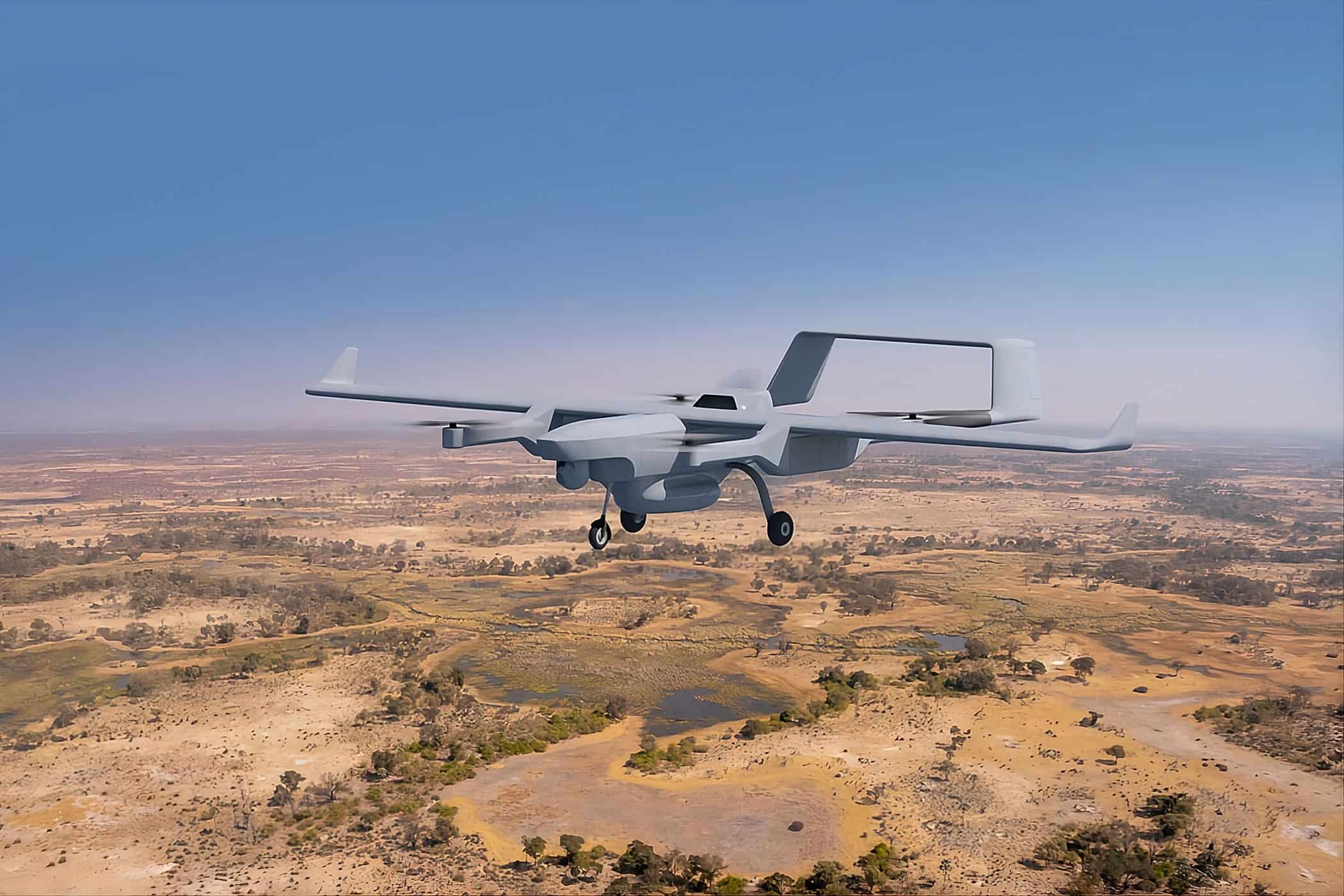
EVA’s selection of Airbus Helicopters reflects the company’s recognized expertise and experience in tactical drone systems. According to Christophe Canguilhem, head of the Capa-X program, the Capa-X system’s characteristics provide an excellent foundation for meeting the requirements of the M2UAS project. The solution’s scalability allows for adaptation to diverse military needs, with the platform’s modularity being particularly noteworthy. This enables flexible system configuration, a crucial feature for modern security and defense strategies.
Technological advancement and operational flexibility
The first phase of the project, spanning twelve months, focuses on a comprehensive analysis of current and future military operational requirements and an assessment of technological challenges. This approach aims to define targeted development paths and further develop existing technologies to achieve optimal versatility and efficiency. The challenge lies in finding a balance between technical capabilities and tactical requirements to ensure a robust and reliable unmanned system.
The innovative nature of the M2UAS project also lies in the flexibility of the Capa-X drone concept. Weighing 120 kilograms, the platform offers an impressive data transmission range of up to 100 kilometers and an endurance of ten hours. Its payload capacity of up to 20 kilograms allows for the integration of a wide variety of sensors and equipment, enabling it to fulfill diverse mission types. The modular design ensures that the system can be quickly adapted to specific combat scenarios, geographical conditions, and regulatory frameworks.
One example of its versatility is the integration of technologies that enable electronic warfare, including jammers and other electronic effects. Surveillance and reconnaissance using high-resolution sensors and cameras are also planned. Furthermore, the capability for automated in-flight refueling is a forward-looking feature that can significantly extend operational endurance and provide strategic advantages in the field.
Impact of the M2UAS project on European security structures
The project has far-reaching consequences for the European defense industry and policy. By establishing a common technological standard, various EVA member states can use interoperable systems that facilitate cooperation on multinational missions. This not only strengthens operational coordination but also leads to economic benefits through joint research and development as well as standardized production processes.
Another advantage is the strengthening of Europe’s self-sufficient defense capabilities. Given increasing global uncertainties and geopolitical tensions, the ability to deploy flexible, versatile, and technologically advanced drone systems is becoming increasingly important. Projects like M2UAS can reduce dependence on non-European technologies while simultaneously providing innovative impetus for local industry.
Airbus Helicopters plays a crucial role in this. By integrating experience and state-of-the-art technology from civil and military aviation, robust systems are created that are characterized by quality, efficiency, and adaptability. The involvement of other stakeholders from research and industry supports the development of a broad network of expertise that can also benefit civilian applications in the long term.
New generation of drone technologies
Airbus Helicopters’ participation in the M2UAS project marks a significant step in the further development of unmanned aerial vehicles for the European defense sector. By combining technological innovation, modular design, and operational flexibility, the project makes a substantial contribution to strengthening the European security architecture. The added value ranges from optimizing operational capabilities to sustainably promoting the regional defense industry. The planned developments promise to further exploit the potential of unmanned systems while simultaneously meeting the highest demands for performance and reliability. In summary, the M2UAS project lays the foundation for a new generation of drone technologies with diverse applications and a significant impact on the future of European defense and security.