Innovations for Sustainable Aviation: An Overview
The aviation industry faces significant environmental challenges, including issues related to emissions that extend beyond carbon dioxide alone. Particular attention is being focused on contrails – clouds of ice crystals formed by aircraft at high altitudes. These clouds can exert an additional influence on the climate, accounting for a substantial portion of aviation’s overall climatic impact. Embraer is participating in the international research project IGNITE-X, which investigates how different fuel compositions affect the formation of contrails. The use of low-sulfur aviation fuels, combined with modern engine generations, offers the potential to achieve a lasting reduction in the environmental impact of air travel.
The Role of Embraer’s E195-E2 in Research
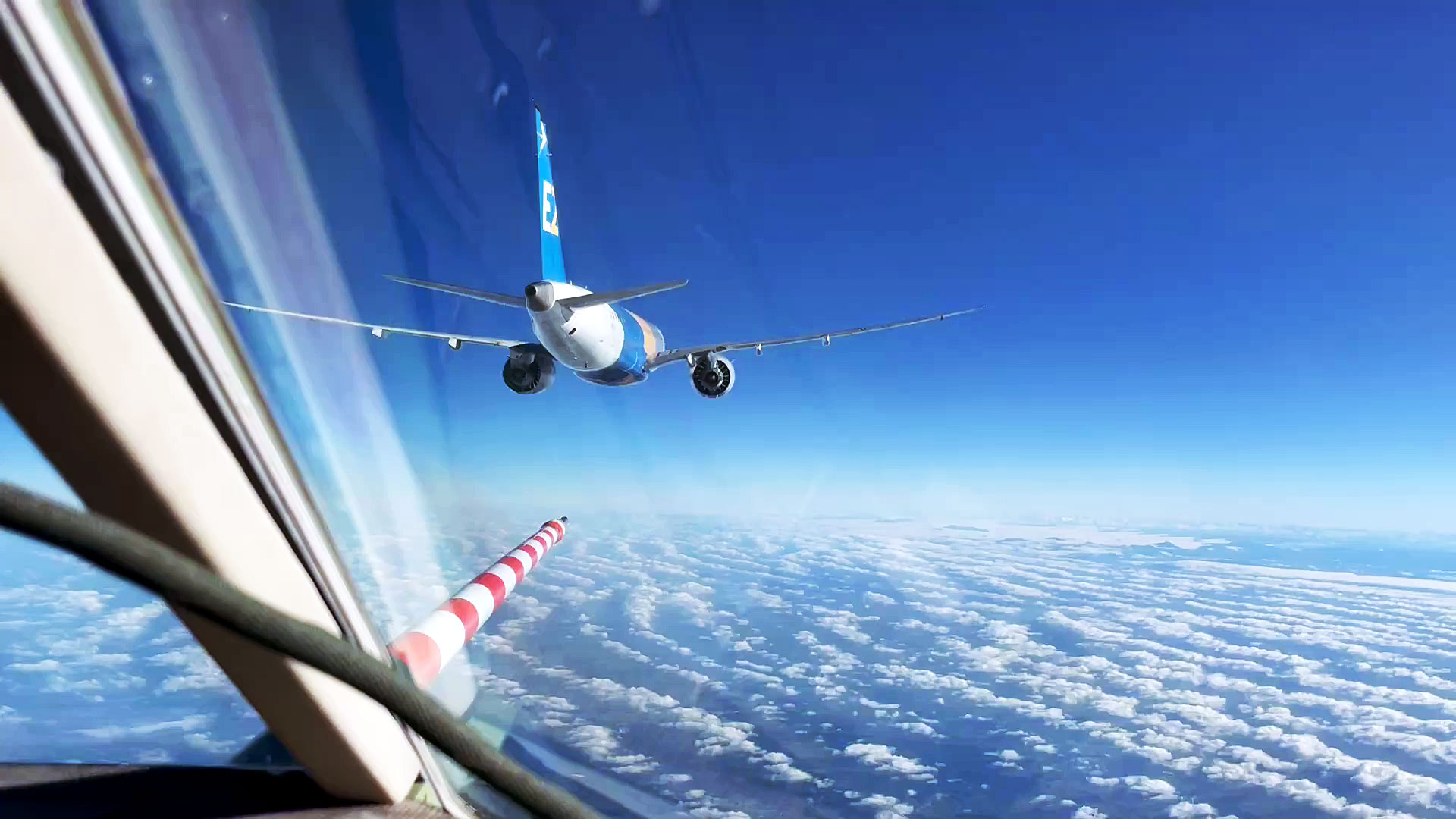
As part of the research project, the Embraer E195-E2 serves as a test platform for analyzing emissions and particulate matter under real-world flight conditions. The aircraft is equipped with advanced Pratt & Whitney GTF™ PW1900G engines, which are noted for their high efficiency and reduced emissions. During the tests, various types of fuel are used, including conventional kerosene and a specially produced low-sulfur aviation fuel. This approach makes it possible to investigate and quantify the impact of the sulfur content in the fuel on the formation of contrails.
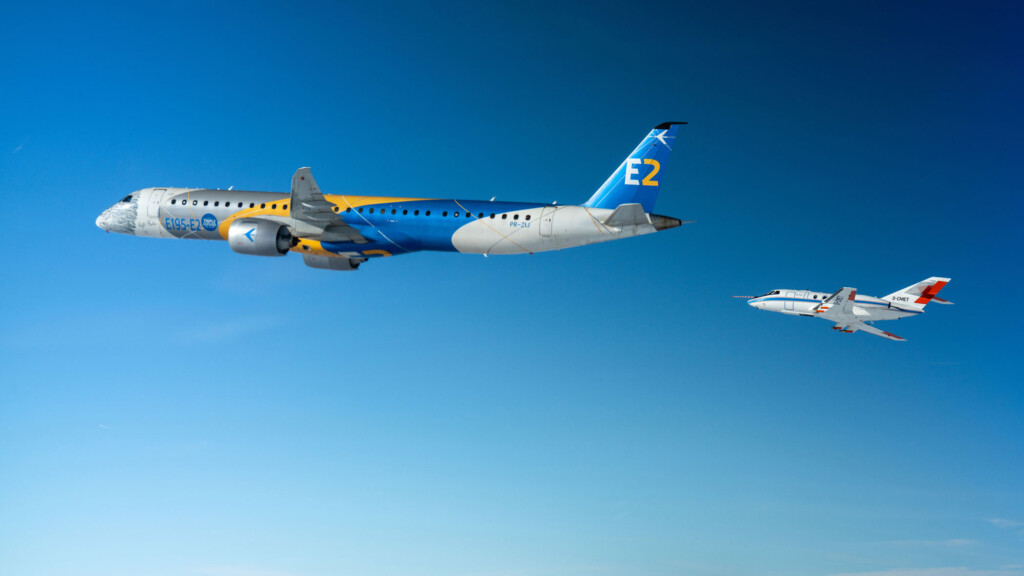
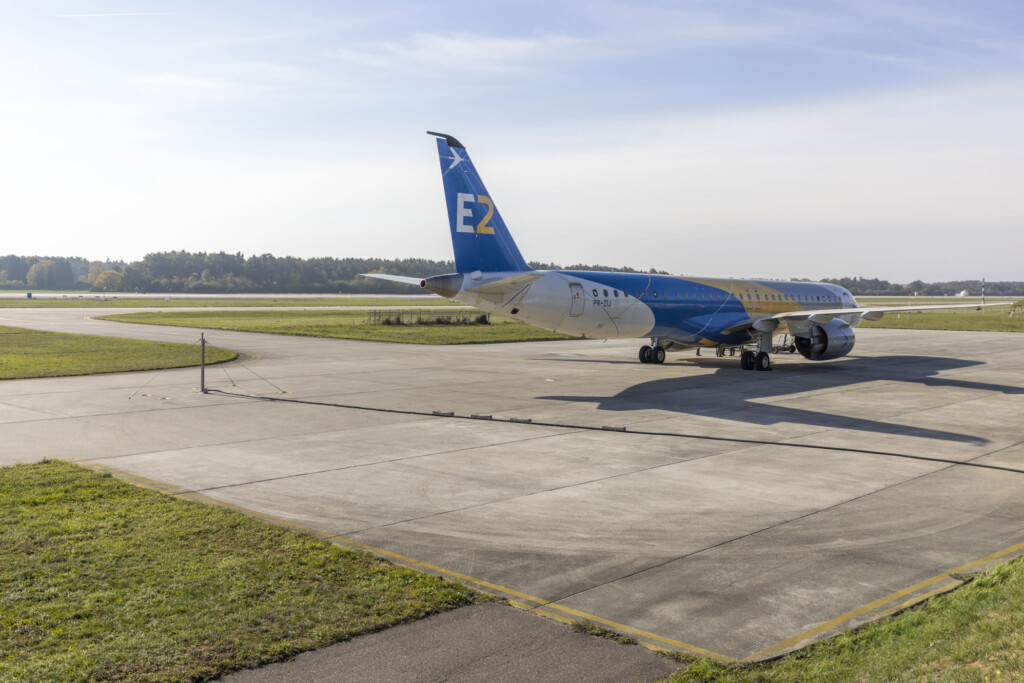
The combination of advanced aerodynamics and innovative engine technology makes the E195-E2 an ideal testbed for evaluating both the efficiency and environmental compatibility of current and future aircraft models. Furthermore, its composite construction and reduced noise emissions facilitate a comprehensive analysis of sustainable technologies.
Scientific objectives and methodology of the IGNITE-X campaign
The IGNITE-X initiative is led by the German Aerospace Center (DLR) and brings together renowned partners from the aviation industry, research, and academia. In addition to Embraer, participants in the project include Pratt & Whitney, Aerodyne Research, and the Missouri University of Science and Technology, among others. The objective is to gather data on the composition of emissions and the formation of particles in aircraft exhaust, and to conduct an in-depth analysis of their contribution to non-CO₂ climate-impacting effects.
By employing specialized research aircraft – such as the DLR’s Falcon 20E – alongside ground-based monitoring stations, it is possible to directly capture data on aircraft exhaust plumes and the subsequent formation of ice clouds. This process involves analyzing various parameters, including particle size, concentration, and composition, at differing distances from the aircraft. Such precise measurements allow for an unprecedented level of accuracy in drawing conclusions about the interplay between fuel composition, engine performance, and atmospheric conditions.
The Significance of Reducing Sulfur in Aviation Fuel
The sulfur content in jet fuel plays a crucial role in the formation of ultrafine particles, which serve as condensation nuclei for the creation of contrails. Consequently, a reduction in sulfur content can lead to fewer or thinner contrails, thereby influencing the climatic impact of aviation. By shifting toward low-sulfur fuels – supported by advanced engine technologies – emissions of particles that contribute to pollution can be significantly reduced.
This strategy complements measures aimed at reducing CO₂ emissions, making it an essential component of a holistic climate policy for the aviation sector. The accompanying analyses from the IGNITE-X project are intended to provide concrete data on which fuel components and engine configurations offer the greatest potential for emissions reduction. Furthermore, research into the mitigation of contrails supports the development of sustainable operational procedures for airlines and air traffic controllers.
Progress through international cooperation
The complexity of the issues surrounding emissions and the formation of contrails requires close cooperation between research institutions and industry partners worldwide. The IGNITE-X project is an example of such a joint endeavor. The high precision of the measurement methods and the expertise of the participating institutions make it possible to arrive at scientifically robust conclusions.
Markus Fischer, DLR Executive Board Member for Aeronautics, highlights the scientific and operational challenges involved in directly measuring exhaust emissions within engine plumes. The successful execution of these complex flight test campaigns relies on a relationship of trust and productive collaboration between the research sector and the industry.
Implications for Future Aviation Strategies
The findings from this research project will significantly influence the debate on sustainable aviation. A robust data foundation will enable policymakers, the industry, and transport operators to make more informed decisions regarding aviation fuel quality and engine design. The research results provide approaches for optimizing fleet operations and flight routes in a way that reduces the formation of contrails.
This information can also serve as a basis for achieving climate-friendly air travel goals in the context of future regulations and environmental objectives, while simultaneously ensuring efficient traffic flow.
Summary
The use of the Embraer E195-E2 as a testbed in an international research project highlights the aviation industry’s commitment to minimizing its environmental impact. By investigating how the sulfur content in fuels influences the formation of contrails, the project yields vital insights into non-CO₂ climate effects. The interdisciplinary approach and the application of advanced measurement technology within the framework of IGNITE-X open up new perspectives for the development of sustainable aviation fuels and low-emission aircraft technologies. Overall, this project helps lay the foundation for a more environmentally friendly aviation sector – one that enhances efficiency while reducing its climate footprint – thereby making a significant contribution to long-term sustainability goals.