

This site is also available on:
 Deutsch
Inhaltsverzeichnis
Expansion of the LEO satellite constellation for global broadband coverage
The growing global demand for reliable and fast internet has significantly increased the need for innovative satellite solutions, particularly in low Earth orbit (LEO). In response, Airbus Defence and Space has been awarded a contract to manufacture 340 additional OneWeb satellites for the renowned satellite operator Eutelsat. Together with a previous order for 100 satellites in December 2024, this brings the total number of satellites ordered to 440. This expansion ensures the long-term operational continuity of the OneWeb satellite constellation.
Significance of the new satellites for European sovereignty and technology
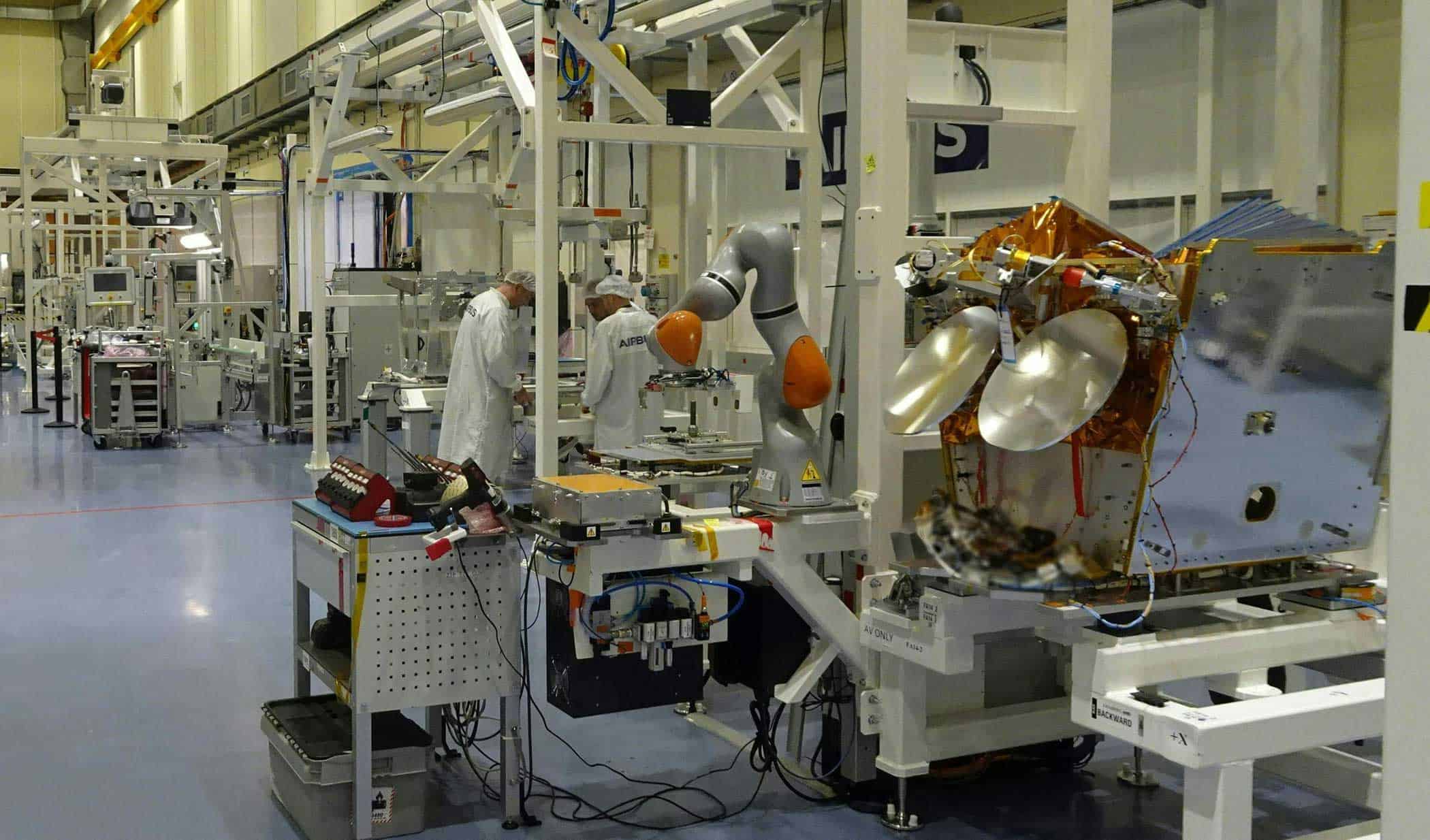
The new LEO satellites are being manufactured at the Airbus plant in Toulouse, which was recently expanded with a dedicated production line to accommodate higher production rates. Deliveries of the satellites are expected to begin at the end of 2026. This step not only underscores Airbus’s technological leadership in satellite manufacturing but also represents a milestone for European independence in space technology. The ability to provide critical infrastructure and key technologies with independent production capabilities strengthens sovereign access to space infrastructure and supports the sustainable development of the space industry in Europe.
Technological advances and operational continuity for LEO satellite operations
The OneWeb network consists of a constellation of over 600 satellites positioned in 12 tightly synchronized orbits at an altitude of approximately 1,200 kilometers. This constellation enables the provision of high-speed, low-latency internet around the globe. Given the continuous use and aging of the satellites, it is crucial to continuously integrate new units to maintain service quality.
The latest generation of satellites features improved digital channelizers and advanced onboard processing units, enabling more efficient resource utilization and greater operational flexibility. This technical optimization results in increased lifetime and improved constellation performance. Furthermore, the modern satellite architecture opens up new possibilities for innovative business models, such as carrying payloads, allowing for commercial and scientific applications on a single platform.
The partnership between Airbus and Eutelsat is the key to success
The long-standing collaboration between the European space company and Eutelsat is of great importance for the development and expansion of LEO satellite networks. Alain Fauré, Head of Space Systems at Airbus, emphasizes the significance of this order as recognition of the company’s extensive expertise in the development and serial production of satellites for low Earth orbit. For more than three decades, Airbus has acted as a reliable partner and supplier for Eutelsat, making a significant contribution to strengthening the European space industry.
Jean-François Fallacher, Chief Executive Officer of Eutelsat, is also confident about the collaboration: The acquisition of the new satellites is intended to guarantee the continuity of services and serve the steadily growing customer base, which benefits from the high-performance and globally available low-latency LEO capacity. The partnership with Airbus also enables Eutelsat to continue its ambitious growth plans and expand its market position.
Future prospects: Sustainability and innovation potential in the satellite business
The production of this expanded satellite fleet will not only improve the reliability of commercial high-speed internet access, but also strengthen the flexibility and adaptability of the orbital infrastructure. The ongoing integration of the latest technologies into the satellites enables the development of future-oriented applications and the opening up of additional business opportunities. The ability to transport diverse payloads opens up potential for sectors such as Earth observation, scientific research, and specific communication services.
Furthermore, the continuous modernization of satellites reflects the growing importance of sustainability and efficiency in space exploration. Optimized operational architectures help conserve resources and maximize orbital availability, thereby comparatively reducing overall costs and environmental impact.
Conclusion: A milestone in the expansion of global satellite communications
Eutelsat’s order of 340 additional LEO satellites from Airbus Defence and Space represents a significant step towards securing and expanding a high-performance global communications infrastructure. This investment strengthens Europe’s position in the global space industry and creates a solid foundation for innovative satellite communications services with high adaptability and efficiency.
Modern satellites are designed to meet the ever-increasing demands for high-speed, low-latency internet while simultaneously enabling new business models through expanded payload options. The collaborative partnership between Airbus and Eutelsat impressively demonstrates how strategic cooperation in space technology can ensure sustainable success and global reach.
Looking to the future, these developments make a key contribution to the digital networking of all regions of the world and promote global connectivity in an increasingly digital age. The combination of technological progress, European expertise, and a strategic approach thus ensures competitiveness and innovation in the dynamic satellite communications market.